Catch up on the essentials
- If you enjoy decorating-heavy management sims you can play at your own pace, Two Point Museum is a strong pick at its current discounted price, especially when you like sending staff on expeditions between layout tweaks.
- Worth considering at its current discount for patient creatives; budget-minded players still struggling after the early game may prefer waiting.
- If you enjoy watching a shipping network hum along on its own, Bering Tonnage is a relaxing buy at $16.99; if you want real management pressure, expect to bounce off the lack of challenge.
Selected from this article · 2026-10-09
Read on for the full picture01Two Point Museum review: a slow, solo-friendly management sim built around decorating, expeditions, and self-paced exhibits
STEAM DEAL · 33% OFF
Two Point Museum
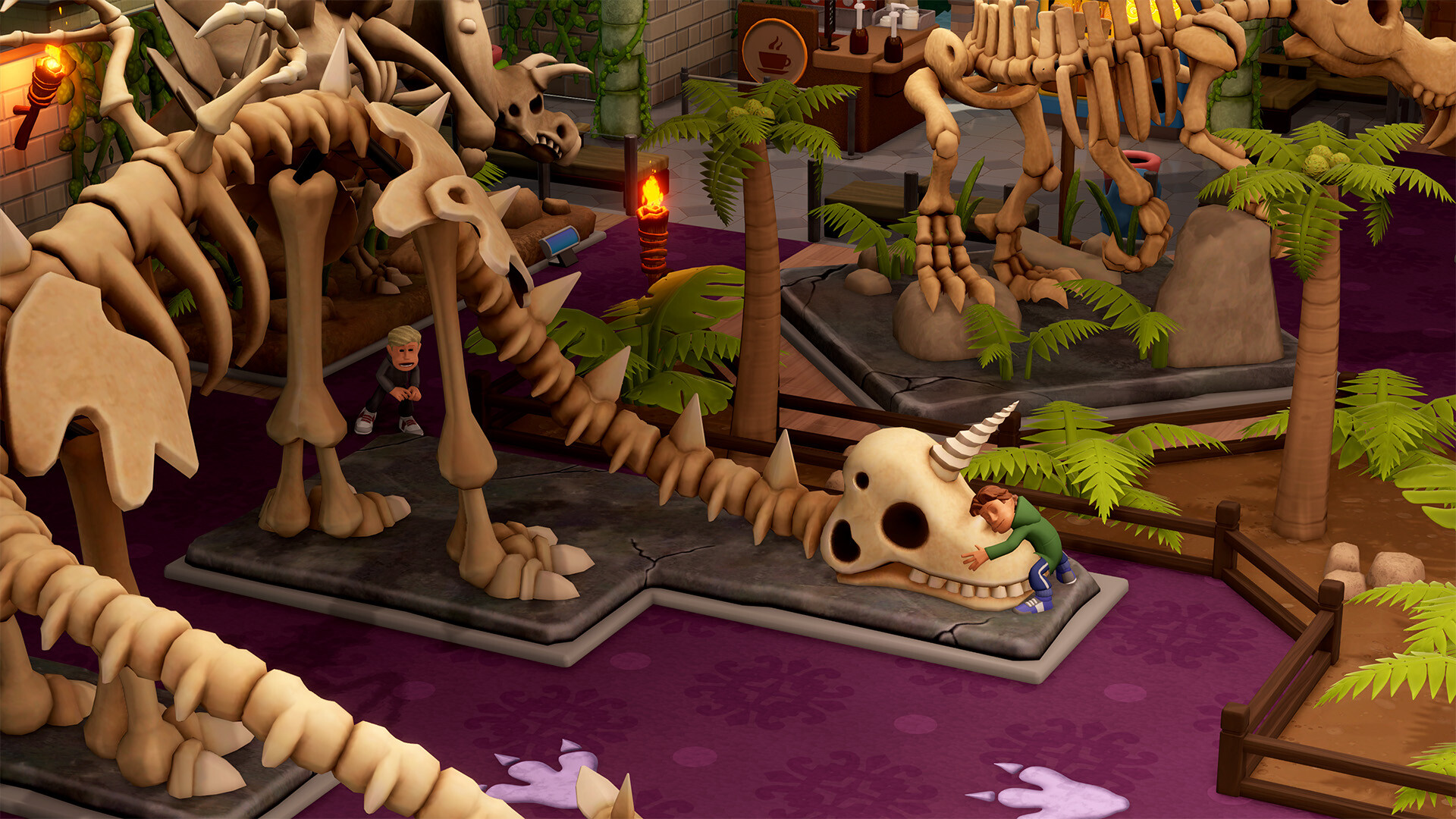
If you enjoy decorating-heavy management sims you can play at your own pace, Two Point Museum is a strong pick at its current discounted price, especially when you like sending staff on expeditions between layout tweaks. It's worth considering if you want a low-pressure tycoon experience rather than a tightly optimized economy game.
Game highlights
Expedition-driven exhibit hunting
The core loop has you sending Experts to expedition maps with over 100 points of interest, then bringing artifacts back to research, upgrade, and display. This adds a discovery element the series has not had before, so the museum slowly fills with finds rather than being unlocked instantly. It also creates natural pauses between decorating sessions, since you are often waiting on staff to return before placing a new centerpiece.
Decoration and layout as the main verb
With 350+ decorative items, themed zones, paint and carpet tools, and guided tour routes, layout design is positioned as the headline activity rather than an afterthought. Players repeatedly spend hours reshaping a single hall, demolishing and redecorating until the walkways and exhibits flow the way they want. The fact that each museum remains open after you 'win' the level keeps that creative tinkering alive instead of pushing you to the next map.
Five main biomes plus sandbox
The campaign covers five distinct locations, each with its own exhibit rules, plus a sandbox mode for building MEGA MUSEUMS without set goals. That variety means the management puzzles shift between Prehistory, Aquarium, Supernatural, Science, and Space rather than repeating the same room layout. Pop-up museums add shorter, goal-driven challenges for when you want a tighter session.
Guest variety and 'info-tainment' demands
Eighteen guest types track their own interests, donation behavior, and reactions to maintenance, info points, and gift shop access. Catering to dinosaur fans versus horror fans gives you a reason to route tours, tune lighting, and place restrooms instead of spamming the same prestige decor everywhere. Reviews and donations rise when you match exhibits to the right audience, so layout choices have a real mechanical payoff.
Accessibility and platform reach
Full controller support, mouse-only play, adjustable text, save anytime, and Steam Cloud plus Mac and Linux support make it easy to pick up for short or long sessions on a wide range of hardware. Steam Workshop support means community decorations can extend the creative sandbox beyond the base 350+ items.
What players are saying
What keeps coming up positively
- Players who enjoy decorating describe it as the strongest entry in the series because layout and aesthetic choices stay rewarding long after victory conditions are met.
- Multiple reviewers call it relaxing and self-paced, with no pressure to rush progression between expeditions and museum management.
- The humor, voice acting, and British-style satire land well with players who like quirky tycoon games rather than serious simulators.
- Several reviewers say there is significant base-game content, with dozens of hours available before any DLC or expansions are needed.
Where the friction shows
- A recurring complaint is a late-game grind as staff leveling and exhibit upgrades slow down without paid potions or DLC helpers.
- Some players feel the expeditions and exhibit recovery loop becomes repetitive once you have seen most biome types, especially past the 60-100 hour mark.
- Difficulty spikes and unpredictable negative events are described as pressure points by players expecting a fully cozy, no-stress experience.
- A few reviewers note that onboarding can be overwhelming because there are many overlapping systems (expeditions, research, guest types, security) thrown at you early.
Is it worth buying?
At $20.09 (33% off the $29.99 regular price), the game sits in a reasonable middle ground for a management sim with this much base content, though it is not a deep historical low. If you already enjoy tycoon or decorating games, the discount makes the asking price easier to justify; if you are cautious about late-game grind, waiting for a deeper sale is a sensible option since the core experience has not changed dramatically.
Price checked 2026-10-09:$20.09,down from $29.99(33% off)。Player-fit tags
Good fit
- Players who want a solo management sim they can pause, save, and return to without pressure.
- Decorators who enjoy redoing layouts, tweaking paths, and placing themed zones for hours at a time.
- Tycoon fans who like sending teams on timed expeditions between rounds of building and upgrading.
- Players looking for a quirky, humor-driven management game rather than a realistic economy simulator.
- Anyone who wants both a guided campaign and an open-ended sandbox mode in the same package.
Probably not for you
- Players who dislike grind, since staff XP and exhibit upgrades slow noticeably in the late game.
- Anyone wanting a tightly tuned difficulty curve, because event pressure spikes can interrupt a cozy session.
- Multiplayer-focused players, since Two Point Museum is single-player only with no co-op modes.
- Players who want a quick-to-learn tycoon, because the many overlapping systems (expeditions, research, guest preferences, security) create a real learning cost early on.
02Foundation: A Gridless Medieval City Builder for Relaxed Solo Creative Management and Organic Organic Village Design
STEAM DEAL · 40% OFF
Foundation
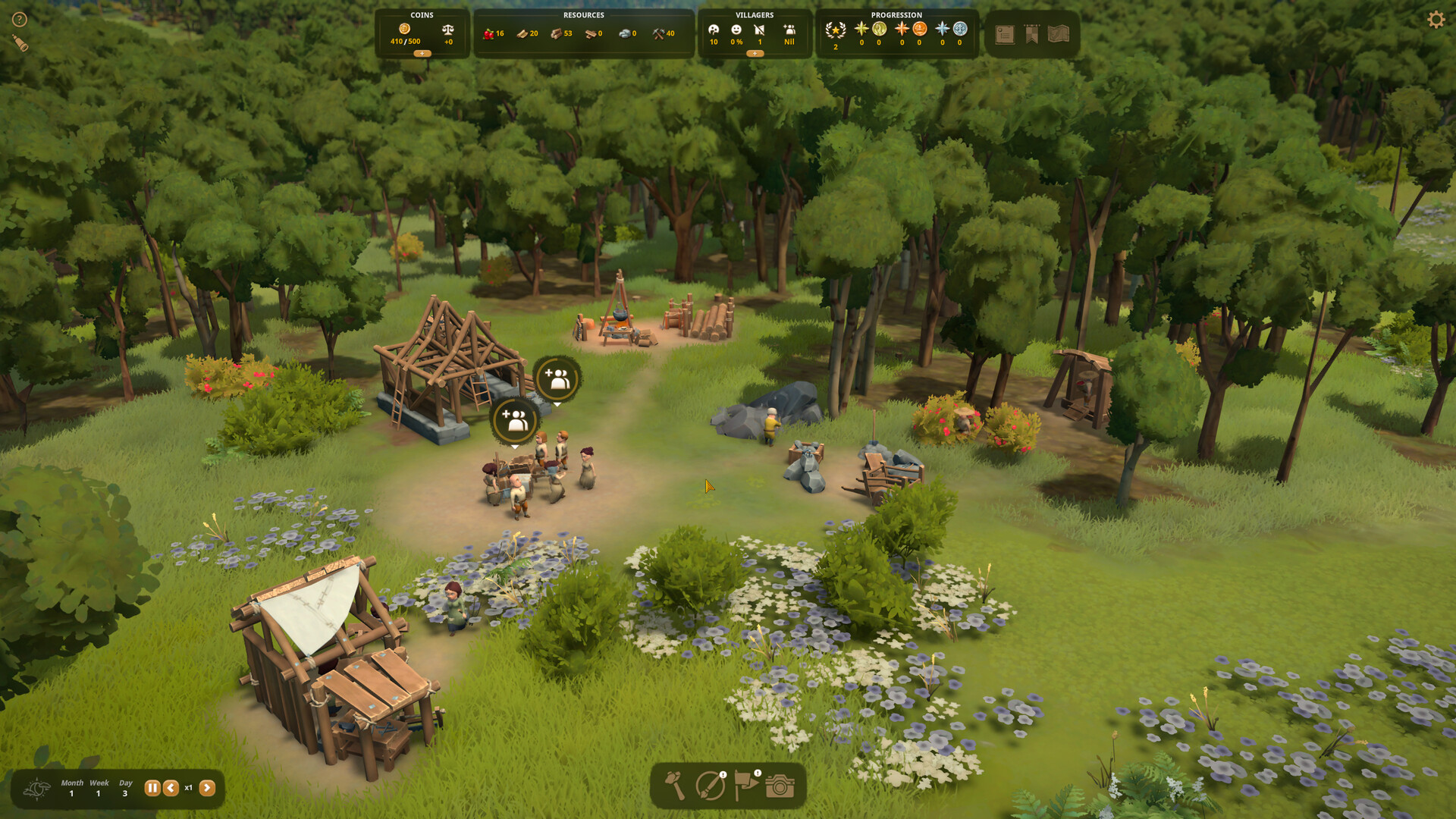
Foundation is a strong pick if you want a calm, single-player medieval city builder where layout and decoration matter more than twitch reflexes, but only when you can tolerate opaque economics and a slow, fiddly learning curve. Worth considering at its current discount for patient creatives; budget-minded players still struggling after the early game may prefer waiting.
Game highlights
Gridless, modular medieval building
Official materials describe a gridless city builder where you piece together modular parts into buildings and shape organic settlements rather than snapping to tiles. The free-building tool lets you beautify or expand structures into monuments, and procedural map generation plus the painting tool support flexible placement of housing zones, roads, and forestry areas. Players repeatedly single out the aesthetic and the way villagers carve their own footpaths as the standout draw of the game.
Self-paced management with three estates
Per the store page, Foundation offers multiple difficulty levels, optional Aspirations, and a stress-free Creative mode so you can tune the experience. You choose progress paths across Labor, Clergy, and Kingdom and can mix all three, while jobs, production chains, taxation, and optional trade or military service sit alongside a full modding integration. Long-running players describe returning specifically for the relaxed, sandbox-style management loop rather than rigid goals.
Production chains and trade as the main challenge
Official features list resource management, production chains, taxation, and trade with neighboring villages as core activities. As settlements grow, you balance food types, refine goods, and decide how to integrate villagers into an economy that can swing on seemingly small changes. Reviewers who enjoy the game most spend long sessions iterating on supply lines and tweaking layouts until production feels smooth.
Presentation: art style, music, and no mandatory combat
Foundation ships with a 100+ minute medieval soundtrack from Audinity and a warm visual style that players consistently call cute and cozy. Combat is fully optional, triggered off-map by the player, so hostile enemies never raid your settlement and you can build a peaceful, production-focused village. Decoration, monument construction, and watching villagers use benches and buildings reinforce the laidback atmosphere the store page advertises.
Single-player focused with broad mod support
The store page lists single-player, Steam Achievements, Steam Cloud, and Family Sharing as supported, with Windows as the only platform. Full modding integration is highlighted as a feature, which players cite as a reason for long-term engagement across multiple saves. There is no online or co-op mode, so the entire experience is designed around solo play on one machine.
What players are saying
What keeps coming up positively
- Players repeatedly praise the organic, gridless look and the satisfaction of villagers forming their own roads and footpaths.
- The calm atmosphere, cute art, and optional combat make it a popular choice for relaxing creative sessions and decoration play.
- Long-term players highlight steady developer support, polish improvements, and meaningful modding support that extend replayability.
- Each new settlement feels distinct thanks to procedural maps and flexible layouts, encouraging multiple playthroughs.
Where the friction shows
- A steep learning curve catches players off guard, with cost changes, advice systems, and upkeep fees explained poorly or not at all in the tutorial.
- Mid- and late-game economics become tedious, with housing tiers, refined food types, and constant notifications creating micromanagement overload.
- Several persistent bugs (wheat yields at higher speeds, markets refusing to stock food, inconsistent production) leave settlements failing despite adequate resources.
- Logistics are limited to walking distance; outposts and territory pricing restrict large-scale, single-city designs many city-builder fans expect.
Is it worth buying?
At roughly $20.99 against a $34.99 regular price (-40%), Foundation is a reasonable buy for patient single-player city-builder fans, though it is not an unprecedented deal and waiting for a deeper discount remains reasonable if the price feels steep.
Price checked 2026-10-09:$20.99,down from $34.99(40% off)。Player-fit tags
Good fit
- Players who enjoy slow, self-paced solo management and sandbox-style city building without external pressure.
- Creative builders who want to design picturesque medieval settlements, decorate with monuments, and tinker with layouts over long sessions.
- Fans of organic, gridless design who care more about aesthetics and storytelling towns than rigid efficiency or challenge.
- Listeners who appreciate a strong ambient soundtrack paired with cozy, low-stakes gameplay and no mandatory combat.
- Mod users and returning players who want a single-player city builder with ongoing developer support and community content.
Probably not for you
- Players who need a polished, well-explained tutorial and clear feedback on why costs, yields, or villager needs change.
- Anyone expecting deep logistics, long-distance trade routes, or a single unified mega-city instead of hub-and-outpost layouts.
- Fans of fast-paced city builders, challenge runs, or games with multiplayer and co-op support, since Foundation is Windows-only and strictly single-player.
- Players who cannot tolerate persistent bugs around food production, markets, and supply chains that can stall otherwise stable economies.
- Completionists who want a directed campaign; the sandbox structure means motivation has to come from your own goals rather than built-in progression.
03Bering Tonnage review: a slow-paced solo logistics tycoon built around route automation and real-world ports
STEAM DEAL · 15% OFF
Bering Tonnage
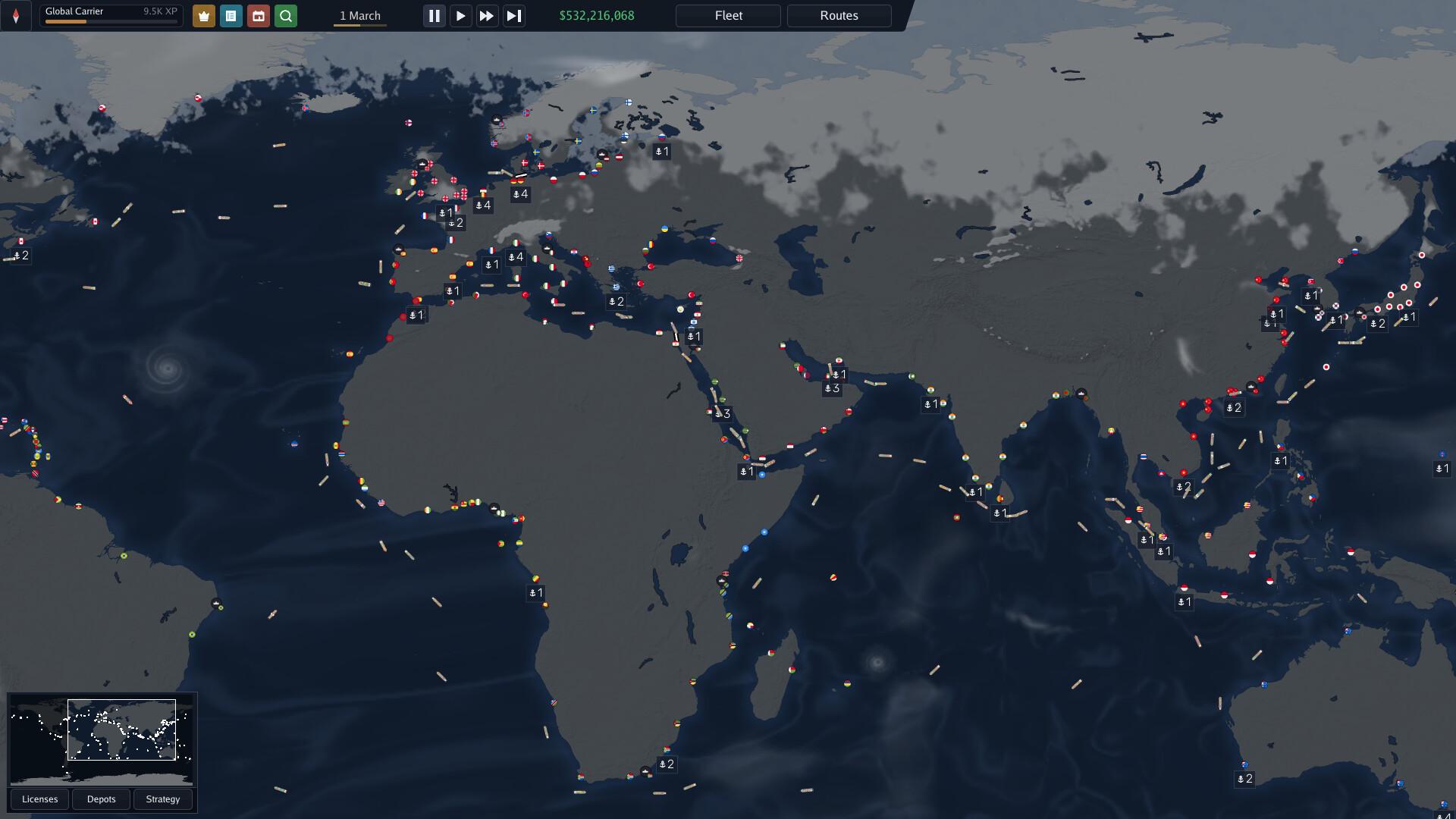
If you enjoy watching a shipping network hum along on its own, Bering Tonnage is a relaxing buy at $16.99; if you want real management pressure, expect to bounce off the lack of challenge.
Game highlights
Route automation across 314 real ports
You set loading, delivery, depot-transfer, and departure rules, then link routes together so ships handle the routine. Reviewers highlight this as the core satisfaction: building the network, then letting the rules carry the workload while you tweak priorities.
Fleet building with 167 ship variants
Ships come from 34 manufacturers via new builds, used purchases, or charter at 20 shipyards. You can upgrade engines, fit icebreaker gear, and swap liveries, so growing from a regional operator to a multi-subsidiary group happens through tangible fleet choices rather than abstract sliders.
Licenses, hubs, and political friction
Over 150 shipping licenses gate new markets, with nationality requirements and domestic restrictions forcing you to hire qualified officers and pick registries. Tropical storms, ice-blocked ports, strikes, sanctions, and war show up in missions, turning what looks like a calm spreadsheet into a geography puzzle.
Corporate group play with subsidiaries and investors
Beyond routes, you create separate subsidiaries with their own fleets, boards, and finances, then hire CEOs and bring in shareholders. You can cash out after a successful run, which gives the slow build a long-term goal beyond watching the bank balance.
Sandbox-level editor and Steam Workshop support
The store page lists a level editor and Workshop support, so route setups and scenarios can be shared. Combined with family sharing and achievements, that's a comfortable package for a patient solo player who wants community-made content later.
What players are saying
What keeps coming up positively
- Setting up the network and watching automation carry the workload feels genuinely satisfying, especially for fans of older Port Royal-style tycoons.
- Real-world port geography and trade relationships make routing decisions feel grounded rather than arbitrary, with hubs like Hong Kong or Singapore behaving intuitively.
- The developer is unusually responsive on Discord, already pushing early patches that address reported FPS drops and broken automation rules.
- Players coming in blind are sinking double-digit hours within days because the core loop of bidding, licensing, and route-building keeps pulling them back.
Where the friction shows
- The tutorial stops highlighting steps partway through, and several players reported getting soft-locked or refunded because they couldn't recover.
- Once routes are stable, cash piles up with no real risk, disasters rarely disrupt anything, and cargo types feel identical, so challenge evaporates.
- The routing UI buckles past roughly 20 ships because each route is limited to one ship at a time, making large fleets painful to manage.
- Performance drops to roughly 10 FPS after extended sessions, automation rules sometimes silently fail, and natural disasters can spam port closures.
Is it worth buying?
At $16.99 with a 15% discount off a $19.99 regular price, the asking price is reasonable for the core tycoon loop, but the rough onboarding, scaling UI limits, and shallow late-game challenge push it away from an unconditional buy; waiting for a deeper sale is sensible if you want polish.
Price checked 2026-10-09:$16.99,down from $19.99(15% off)。Player-fit tags
Good fit
- Players who enjoy setting up rule-based automation and then watching a network run itself in the background
- Solo tycoon fans who like studying a real-world map and picking ports based on geography and trade volume
- Long-session single-player players who measure fun in dozens of hours building one slow-growing shipping empire
- Players who appreciate active developers who respond to feedback and patch issues within days
- Tycoon genre completists looking for a more modern alternative to classic Port Royal-style shipping games
Probably not for you
- Players who want serious management pressure, since cash rarely becomes a constraint once routes are stable
- Anyone expecting rich cargo differentiation like matching ship types to specific goods or chasing market price spreads
- Players who plan to run fleets past roughly twenty ships, because the routing UI and one-ship-per-route limit turn the game into micromanagement
- Anyone unwilling to read external guides or Discord threads, because the in-game tutorial breaks partway and leaves you to figure things out alone
Share this article