Valve and Intel coordinate on SteamOS for handhelds and desktops

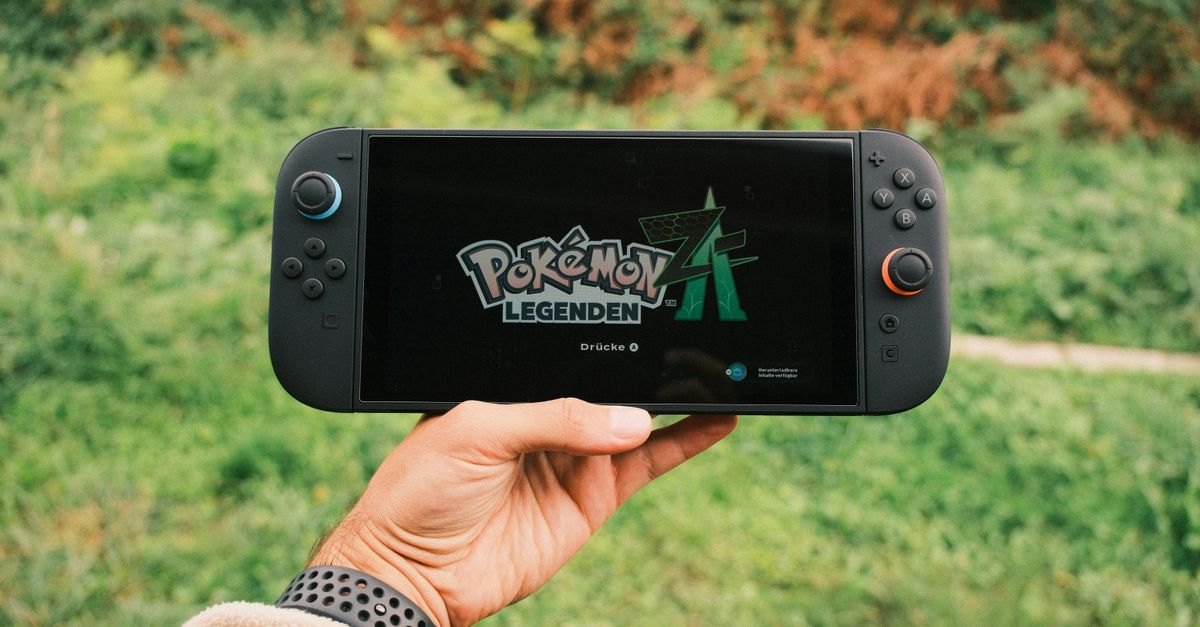
Valve and Intel are working together to bring SteamOS to Intel-based hardware. Pierre-Loup Griffais of Valve told The Verge that Intel has "been doing a lot of hard work on getting the graphics stack up and running there and making sure everything's optimized." The recently launched SteamOS 3.8 update added "initial firmware for upcoming Intel handhelds" alongside controller support for MSI Claw devices, including the 8 AI Plus. YouTuber ETA Prime demonstrated a beta of SteamOS 3.8 running on that machine, and a Reddit user succeeded in booting SteamOS on an Intel Arc B580 desktop GPU. Intel was more cautious in its own comments: representative Nick Mijuskovic said the company had "anything to share timeline-wise on SteamOS support" for Panther Lake architecture and the G3 Extreme chip powering the MSI Claw 8 EX AI Plus, but confirmed Intel is "working on the Mesa driver" and "working with Valve."
Nvidia support remains a longer-term effort
Valve is also engaging Nvidia on driver support, though availability is not expected this year. Griffais confirmed Valve is "collaborating with Nvidia very closely" and has "a growing team" of engineers working on Nvidia drivers, while stressing that broader rollout "might not come this year" and that the work continues "in the background." Until that support lands, SteamOS on desktops will continue to be smoother on AMD systems, with Intel compatibility improving as firmware and graphics-stack work matures.
SteamOS 3.8 series delivers performance and WiFi fixes
Across the 3.8 release line, Valve has pushed several point updates. Version 3.8.15, the stable release, addresses degraded performance that occurred when composition was required, including with AMD's FSR upscaling enabled, and includes HDR fixes for Assassin's Creed Black Flag Resynced. A parallel beta, SteamOS 3.8.23, fixes a delayed start time for games running under Proton when no capture device is present and ships additional security and stability improvements, though Valve acknowledges that performance regression in that beta and urges affected users to switch to the stable channel. Separately, version 3.8.14 targets WiFi throughput, correcting router misadvertising of Modulation Coding Scheme (MCS) requirements that had been forcing devices to default to slower speeds; a 3.8.22 build with the WiFi fix is currently available to Steam Deck owners via the Beta and Preview channels, with broader public release expected to follow.
DIY Steam Machine installations begin with SteamOS 3.8
Valve has opened the door to self-built SteamOS desktops. Starting with the SteamOS 3.8 release, Valve says users "can put together your own Steam Machine using whatever PC parts you want." SteamOS 3.8.10 already shipped with "improved compatibility with recent Intel and AMD platforms," and Griffais described current-day SteamOS on console-like PC setups—TV-connected, single-drive, non-dual-boot machines—as offering an experience "very similar to a Steam Deck docked or a Steam Machine," with caveats including the absence of HDMI-CEC support. The current installer is intended to put a fresh OS on a new PC and does not yet include an install wizard that resizes partitions or moves another OS aside, though Griffais said he "imagines a time where it's a better experience to install on your desktop and have it coexist with a different operating system." Users who prefer not to wipe their drives can consider alternatives such as Bazzite or Nobara in the meantime.
Steam Machine's GPU draws scrutiny against cheap prebuilts
As DIY installation opens up, the silicon inside Valve's own Steam Machine has come under fire. Independent testing reviewed by XDA Developers places its semi-custom RDNA 3 GPU—28 compute units, an 8 GB frame buffer, and roughly a 110 W power ceiling—at performance roughly equivalent to a Radeon RX 6600, an Intel Arc B570, or an RTX 3060, well behind current-generation alternatives. Prebuilts equipped with RTX 5060 or RX 9060 XT cards are said to be available at or below the Steam Machine's roughly $1,000 512 GB entry price, and Valve is reported to be selling its hardware at cost given elevated memory and NAND pricing. Critics argue the Steam Machine's appeal rests on its quiet, palm-sized SteamOS appliance experience rather than raw price-to-performance, and note that, unlike most prebuilts, its GPU is not user-upgradable.
Outlook
The next verifiable milestones are the wider public rollout of the SteamOS 3.8.22 WiFi fix beyond the Beta and Preview channels and continued firmware additions for upcoming Intel handhelds. Nvidia desktop support is the open-ended item: Griffais did not commit to a 2026 timeline, leaving the driver effort to progress "in the background" for now.
Share this article