Enigma emerges from stealth with $71 million seed

Israeli research lab Enigma emerged from stealth on July 27 with a $71 million seed round led by Index Ventures and Ribbit Capital, with Conviction Partners' Sarah Guo participating. Founded less than a year ago by CEO Jonathan Jacobi and CTO Gal Niv, both former Unit 8200 researchers, Enigma is developing foundation AI models and interfaces that allow non-specialists to control robots across tasks. Other participants included executives and researchers from OpenAI, Anthropic, Thinking Machines, xAI and Cognition.
Rather than rely solely on web video or simulations, Enigma is launching a public experiment allowing anyone online to interact with more than 100 of its AI robots housed in hangars in Israel and California. The robots can paint, spar with toy swords, and mix laboratory liquids, and the company said it built both the arms and underlying models from scratch. Enigma plans to spend the new capital on research and engineering hires and additional GPU capacity, and said it is already partnering with companies in entertainment, retail and healthcare.
Generative Bionics unveils sensor-skinned Gene.01 humanoid
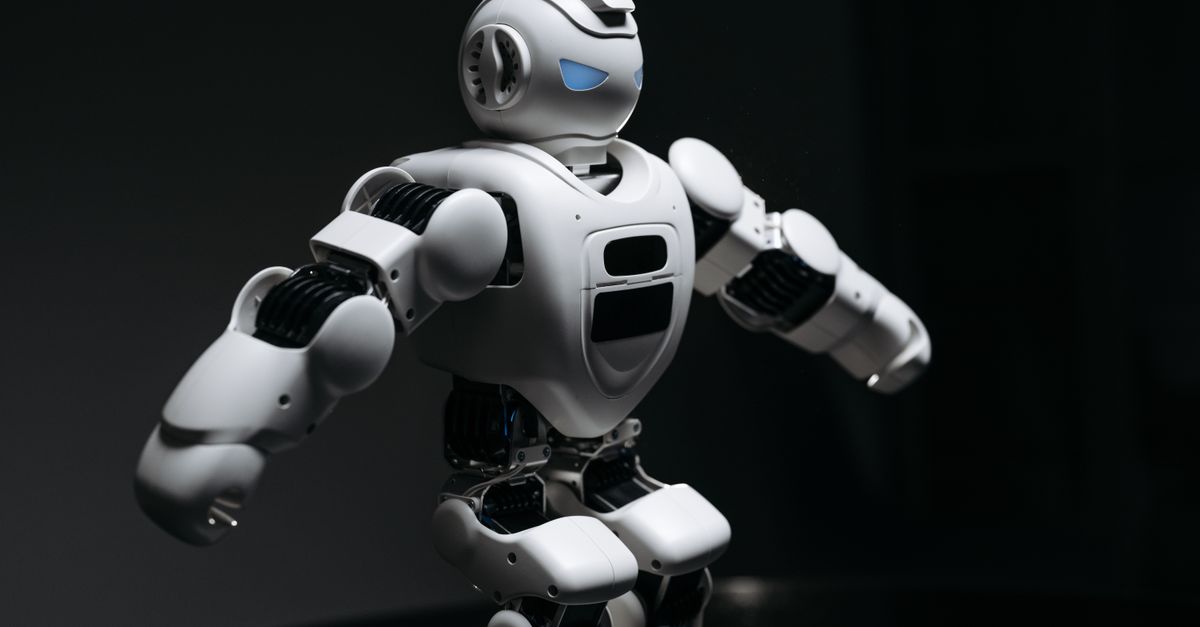
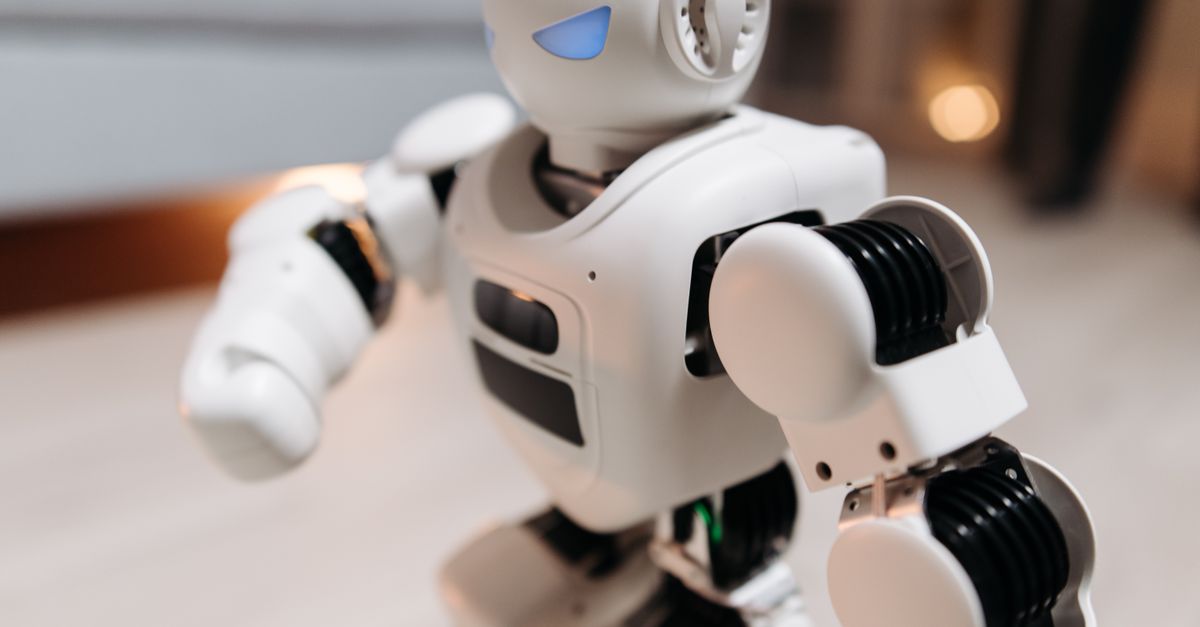
Italian startup Generative Bionics introduced Gene.01, a humanoid wrapped in a sensor network that tracks touch, temperature, proximity and force, letting it anticipate and react to nearby people before contact occurs. The robot emerged from research at the Italian Institute of Technology and is, according to the company, the first industrial platform to apply that peer-reviewed Physical AI method to a fully sensor-covered humanoid. Sensors also allow a person to physically guide the arm to teach new tasks.
Gene.01 is built as a customizable base platform with three adaptation layers — task-specific AI, exterior design and interchangeable end effectors. Generative Bionics raised an $81 million seed round led by CDP Venture Capital, with AMD Ventures, Duferco, Eni Next, RoboIT and Tether participating, and is partnering with shipbuilder Fincantieri on a welding humanoid for shipyards. The company has also signed a strategic alliance with Germany's Synapticon to build a European-made, EU-protected actuator supply chain with final assembly on European soil.
Brain-wave-tagged data joins the race for physical AI training
Data tooling provider Encord, working with German neuroscience startup Zander Labs, has begun testing whether brain-wave readings can label robot training datasets with mental states such as error, intent and surprise. Pilots at Encord's San Leandro, California facility use leader-follower rigs to perform manipulation tasks like pouring coffee and stacking poker chips while wearing headsets that record brain activity. A separate experiment straps sensors to the forearm to capture muscle signals, addressing the problem of egocentric video frequently missing the full hand.
The trial is an early bet that data — not model architecture — may be the binding constraint on humanoids and warehouse robots. Encord's head of robot learning Vineeth Velmurugan, a former OpenAI robot lab and Berkshire Grey veteran, estimated that robotics may need a dataset roughly five times the size of YouTube's video corpus to break through. The company said every humanoid firm it works with has asked for the manipulation data it produces, though Encord declined to name its customers. The brain-wave work will be evaluated for performance gains before any decision to scale.
KNR Systems completes a 300 kg-grip robot hand for its super-humanoid
Korean robotics specialist KNR SYSTEMS Inc. (KRX 199430) said on July 27 that it had completed a robot hand capable of 300 kgf of grip force, roughly six times the average human grip, and designed it for heavy industry and construction sites. The hand is approximately twice the size of an adult hand and uses a minimal actuator count to simultaneously control finger joints, allowing it to wrap around heavy objects or pick up items like eggs and thin cans through dedicated force-control algorithms. The design is compatible with both hydraulic and electric drive systems.
KNR filed a patent in April covering the hand's core drive mechanism and plans to integrate it into a 2.7-meter, roughly 600 kg-payload "Super Humanoid" targeted for unveiling by year-end, with mass-production preparation underway at Seojin System's Vietnam base. The company envisions future coordinated two-arm work in which one hand secures an object while the other cuts or fastens. Unlike stationary industrial robots, the bipedal Super Humanoid is designed to walk directly to a worksite through standard doorways.
Thailand courts humanoid manufacturing inside the Eastern Economic Corridor
Thailand's Board of Investment approved more than 10 billion baht in foreign investments during early 2026 from five major Chinese companies to set up humanoid robotics component production inside the Eastern Economic Corridor (EEC). The government is positioning the EEC as a Southeast Asian hub by repurposing its existing automotive and electronics supply chains, citing an aging workforce and the 2022–2027 National AI Strategy as drivers. Industry analysts cited in the report projected that the global humanoid market could rival the automotive sector in total value by 2050.
Alongside the manufacturing push, Thailand launched ThaiLLM, a sovereign foundation model processed on domestic supercomputers through the National Science and Technology Development Agency (NSTDA). The broader National AI Strategy aims to train 10 million users, 90,000 certified AI professionals and 50,000 dedicated AI developers by 2027.
Veterans group proposes transferring "digital DNA" into humanoids
Veterans First for America unveiled the QAIAx 4E HRR Model Series, a project proposing that a person wear a 40-sensor haptic suit to record movement, vital signs and professional skills — a profile the organizers describe as "Digital DNA" — and later transfer it into humanoid robots or holographic representations. The initiative is linked to a proposed QAIAx clinical trial covering PTSD, substance-use disorders, autism spectrum disorders and reintegration programs, organized around a planned network of 300 decentralized "Microcities."
The project outlines a 90/10 Hybrid Workforce Model in which AI and machines handle roughly 90 percent of routine municipal operations, with proposed licensing fees ranging from $300,000 for 100 years to $1 million for 500 years. Organizers also propose an alternative humanoid supply chain sourcing raw materials from West Africa and Western Australia to reduce dependence on Chinese manufacturing. Substantial technological, legal and scientific validation would be required for the claims to stand up, and a military-veteran waiting list opened in July ahead of an open-enrollment pre-launch phase planned for October.
Share this article