A City Carved by Karst and Centuries of Story
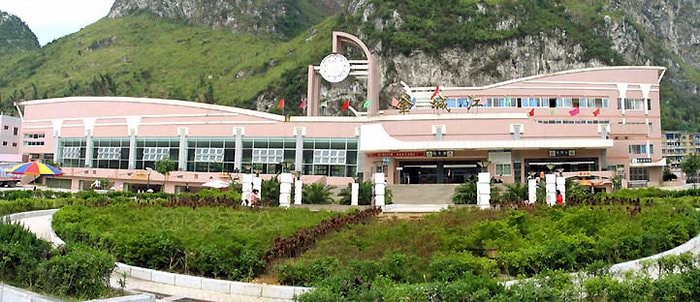
Hechi sits in the rugged karst mountains of the Guangxi Zhuang Autonomous Region, a corner of southern China where limestone peaks rise sharply above valleys shaped by long river systems. Theprefecture-level cityborders Guizhou Province to the north, anchoring a landscape that has carried different names and identities for more than two thousand years.
Even with the rise of China’s megacities, this part ofGuangxiremains an underappreciated region where traditions have survived for centuries. Today those traditions sit alongside modern pressures, from climate change to expanding urbanization, giving the city a quietly layered character.
Where the Mountains Meet Two Provinces
Hechi lies in the northwest of Guangxi, a position that shapes much of its regional identity. To the north, the city’s border meets Guizhou Province, while within Guangxi it sits between Nanning to the south, Liuzhou to the east and Baise to the west. That crossroads setting has long made Hechi a meeting point between distinct cultures, dialects and trade routes that travel through the karst terrain.
The surrounding region is also rich in non-ferrous metals and harnessed for hydropower, adding a modern industrial rhythm to the older river-valley life that still defines much of the local landscape.
Echoes from the Baiyue and Qin Dynasty
Long before the city carried its present name, the region belonged to the land of the Baiyue during the pre-Qin period. In the 33rd year of Emperor Qin Shi Huang, dated to 214 BCE, the Qin Dynasty unified the Lingnan region, extending imperial reach into what would become Hechi and drawing the area into a much wider political and cultural story.
That deep history still lingers in the region today, surfacing in place names, folk traditions and the continued presence of ethnic communities that have shaped local life for generations.
The Red Army Slogan Building at the City’s Heart
At the center of Hechi Town stands the Hechi Hongjun Biaoyulou, also known as the Red Army Slogan Building. This significant historical landmark ties the city to a more recent chapter of Chinese history, when revolutionary forces passed through the Guangxi highlands and left their messages painted onto local walls.
The slogan building is a tangible anchor for visitors curious about the twentieth-century story of the region, sitting among the everyday streets of Hechi Town rather than inside a museum hall.
Practical Considerations
Hechi is reached through the regional road and rail network that links Guangxi’s northwest to Nanning, Liuzhou and Baise, as well as across the provincial border into Guizhou. Local transport options support travel between the town center, where the Red Army Slogan Building is located, and the surrounding karst valleys. Specific schedules, services and operational details may change, so it is worth confirming current information before planning a visit.
Share this article
Place data: Geoapify and OpenStreetMap contributors.