Destination Overview

Chania sits on the northwest shore of Crete, wrapped around a Venetian harbor that doubles as the city's postcard and its social centre. Western Crete's second-largest city layers Minoan, Byzantine, Venetian, Egyptian, and Ottoman history into a compact walkable old town, while the surrounding region — the White Mountains, the Apokoronas villages, the pink-sand lagoon at Elafonissi, and the lagoon at Balos — extends the appeal well beyond the city limits. In July, Chania shifts into peak summer mode: long days, dry skies, a busy harbour promenade at dusk, and a steady flow of day-trippers using the city as their base for gorges and beaches.
The city is small enough to navigate on foot once you're inside the old town, but it sprawls enough to benefit from a local bus network if you want to reach the outlying neighbourhoods and suburbs.
July Weather and Sea Conditions
July is Chania's hottest, driest, and most reliably sunny month. Based on long-term climate averages, daytime highs sit around 31°C and overnight lows near 22°C, with a mean of about 27°C. The 2026 monthly outlook points to daily highs ranging from roughly 30.9°C to 33.3°C, with overnight lows between 19°C and 21.7°C and an average high near 32°C. Rain is essentially absent in July — the long-term average is just 3.1 mm for the month — and humidity averages around 57%. Northern Crete runs on a typical meltemi-influenced summer pattern; wind direction matters more than temperature when choosing a beach, since northern shores can be breezier and choppier while southern or more sheltered spots often feel calmer and warmer.
The sea is warm and inviting throughout July, which makes beach days predictable. The practical challenge is heat management rather than weather disruption: midday sun is intense, so plan indoor activities, long lunches, or a siesta in the hottest hours, then re-emerge for the harbour promenade in the late afternoon and evening.
Practical tips: - Carry water and sun protection for any midday activity. - The cooler morning hours (roughly 7–10am) and the late afternoon (after 5pm) are best for walking the old town. - Lightweight clothing, a hat, and reef-safe sunscreen are essential.
Getting There and Around
**Arriving.** Chania International Airport (CHQ) handles daily flights from Athens and Thessaloniki, plus seasonal flights from other European destinations. There is also a regular ferry service between Athens (Piraeus) and Chania, arriving at Souda Port. The Chania City Bus does not serve the airport — for that leg, you need the KTEL Chania–Rethymno intercity bus, with the central bus station on Kydonias Street in the city centre as the main hub for trips across Crete.
**Moving around the city.** The Chania Urban Bus network covers 13 routes in two fare zones: - **Zone A** (urban core including Chalepa, Mournies, Nea Chora, the General Hospital, the MAIX bus station, and Chrissi Akti): regular ticket €1.30 bought outside the bus, €2.30 bought from the driver. Reduced fare (students, pupils, large families): €0.80 outside, €1.30 inside. - **Zone B** (extended suburbs including Galatas, Daratso, Kalamaki, Souda, Tsikalaria, and the Naval Hospital): regular ticket €1.80 outside, €2.80 inside. Reduced fare: €1.00 outside, €1.60 inside. - **30-day unlimited cards:** Zone A €55 (€35 student); both zones €75 (€45 student). Children under 6 travel free.
The main ticket office at 22 Hatzimichali Giannari Street is open daily in summer from 07:00 to 23:00, where you can buy tickets or top up a smart travel card. Drivers sell tickets at a premium, so it is cheaper to buy in advance from the office, kiosks, or selected local shops. The Chania Urban Bus app supports route planning; online ticket purchase has not always been available on the app, so buying ahead is the safer bet.
**Park & Ride electric bus.** From 6 July to 15 September, the summer timetable for the electric bus service between the peripheral car parks at Kladissos and Markopoulou is in force. The route threads through Agios Nektarios on Kissamou, the Kydonias stop in front of the KTEL bus station, the National Bank stop opposite the Agora, and Hatzimichali Giannari, with frequent 20-minute intervals on weekdays and Saturdays. There is no service on Sundays or public holidays.
**For beaches outside the city.** Dedicated KTEL coastal services depart from the central KTEL bus station on Kydonias Street for the famous out-of-town beaches. A rental car is the most flexible option if you want to combine multiple beach stops in one day.
Old Town and Harbour Highlights
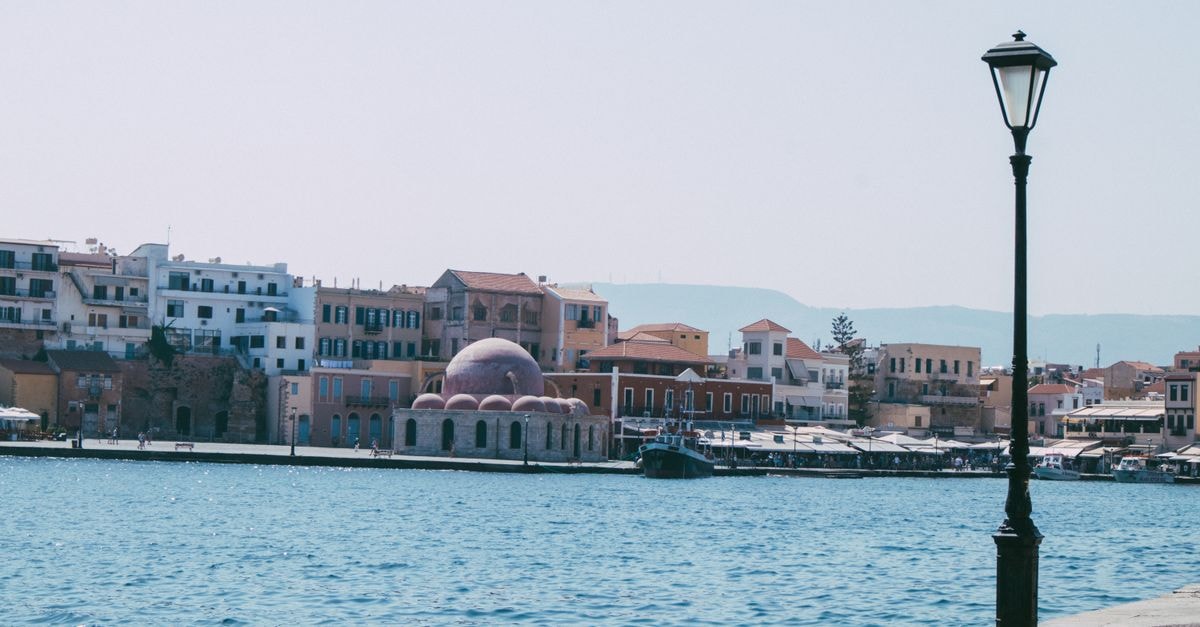
The Venetian Harbour is the centrepiece — a crescent lined with restored Venetian arsenali (ship warehouses) and fronted by a lighthouse whose 16th-century Venetian original was neglected during Ottoman rule and rebuilt in the early 19th century. Walking the breakwater out to the lighthouse is best at golden hour before sunset.
Around the harbour entrance sits Firkas Fortress, constructed in 1629, and the Nautical Museum of Crete next door — worth a stop for nautical instruments and models of ancient ships. Also on the waterfront is the Mosque of Kioutsouk Hassan (Giali Tzamisi), a multi-domed mosque no longer used as a place of worship but hosting rotating art exhibitions.
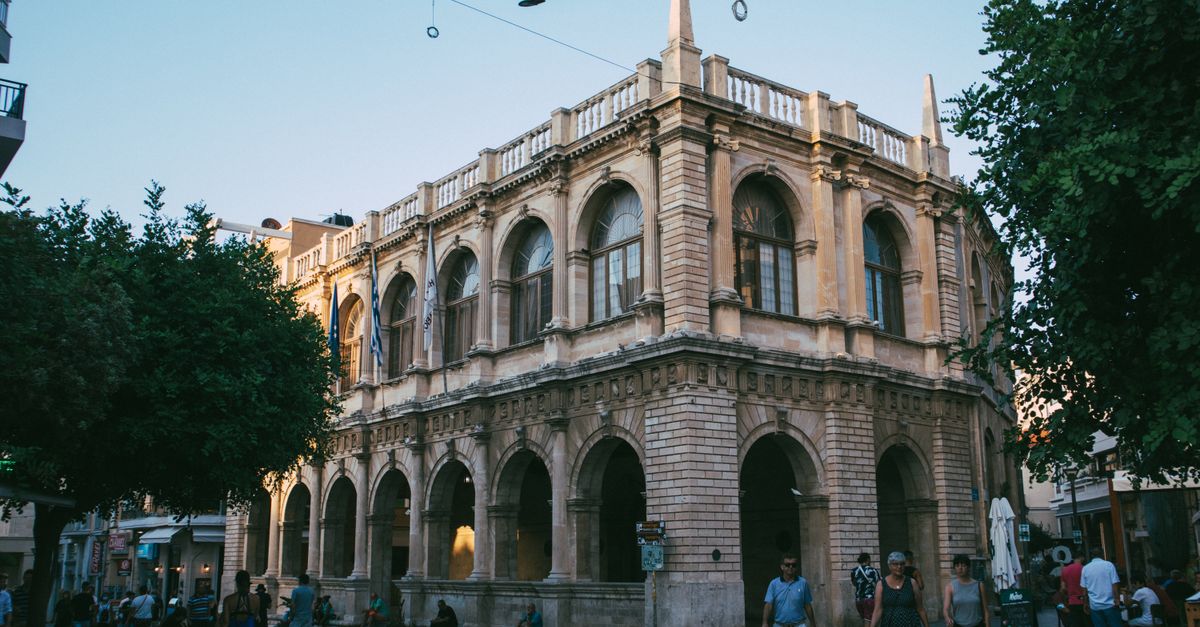
Behind the harbour, the old town unfolds in narrow lanes and small squares. The layered history is visible in the architecture: - **Topanas (Jewish Quarter):** narrow alleys behind the harbour that once formed the Jewish hub of Chania, with Synagogue Etz Hayyim at its heart. - **Splatzia (Turkish Quarter):** a bohemian neighbourhood around Splatzia square (renamed 1821 Square to mark the Greek Revolution against the Ottomans), with cafes and tavernas. - **Koum Kapi ("Gate of Sand"):** just east of the old city, outside the Venetian walls, with small cafes, tavernas, and bars. - **Nea Chora:** the closest beach to the city, framed by fish and seafood restaurants. - **Chalepa:** the 19th-century aristocratic quarter of diplomats and upper-class residents, with mansion-lined streets and the Eleftherios Venizelos Memorial on a wooded hill overlooking the city. The Archaeological Museum of Chania sits here as well, tracing regional history from Neolithic to Roman times with finds from ancient Kydonia. - **Tabakaria:** an eerie former tannery district on the eastern outskirts, now being repurposed for creative uses.
Beaches and Day Trips
Within the city, Nea Chora is the easy reach. Beyond the city, the three headline day trips are each a full-day commitment: - **Balos lagoon** — best by boat; one of the most photographed coastlines in the Mediterranean. - **Elafonissi** — pink-tinged sands and shallow turquoise water on Crete's southwestern edge. - **Samaria Gorge** — the longest gorge in Europe, ending at the Libyan Sea; manageable for most travellers who start very early.
All three need planning for July — summer is the busiest season and parking, boats, and gorge entry points fill early. The ancient Kydonia site, the White Mountains, and the Apokoronas villages (Vamos, Gavalochori, Douliana) make good alternatives if you want to escape the marquee beaches.
Local Food and Markets
Western Crete's food culture runs deeper than the standard Greek-island fare. The Chania Municipal Market — the "Agora" or Covered Market, open Monday to Saturday — is the city's food epicenter, often called the "temple of gastronomy." Wander the aisles for olive oil, thyme honey, graviera and anthotyros cheeses, wild greens, pulses, herbs, fresh fish, and staka butter. Saturday mornings are the lively food-market moment; this is the time and place to see snails (chochlioi boubouristi) sold by the bag.
Specific dishes worth trying in and around Chania: - **Dakos** — barley rusk soaked in olive oil, topped with chopped tomato, mizithra or feta, oregano, and basil. - **Bougatsa** — a cream-filled pastry dusted with powdered sugar, an Asia Minor–influenced breakfast staple. - **Chaniotiko boureki** — Chania's signature vegetable pie. - **Kalitsounia** — sweet mini cheese pies. - **Eggs with staka** — eggs cooked in staka butter (the cream of butter). - **Lamb with stamnagathi** — slow-cooked lamb with wild spiny chicory. - **Snails boubouristi** — popping fried snails with rosemary and olive oil. - **Graviera** — aged sheep's-milk cheese with appellation of controlled origin; **anthotyros** from Sfakia is the soft fresh counterpart; **pichtogalo Chanion** is another local cheese to look for. - **Kserotigana** — honey-dipped spiral pastries for dessert.
To drink, look for local Cretan wines (marouvás is a notable red), or finish a meal with a shot of **tsikoudia** (Cretan raki), often offered on the house as a gesture of hospitality. For a non-alcoholic option, herbal **dittany (diktamo)** — known locally as "erontas" (love) — is the traditional Cretan mountain tea. Olive oil and thyme honey are the local produce pillars; both make good compact souvenirs from the Municipal Market.
Safety and Practical Tips
Crete has an excellent general safety record, and English is widely spoken in tourist areas. The two practical July hazards are heat and sun exposure — stay hydrated, use sunscreen, and treat the midday hours with respect. The harbour walk, the lighthouse breakwater, and the cobbled old-town streets can be uneven in places; sensible footwear helps.
Tickets, Reservations and July Pressure
July is Chania's peak month — hotels and key day-trip experiences book out early. Samaria Gorge has restricted daily entry and closes on some dates for maintenance; check the official channel before travelling. Elafonissi and Balos boat departures are weather-dependent and can sell out in summer. Lighthouse entry, fortress entry, and the Nautical Museum are casual walk-ins; in July they get busy but typically don't require advance booking. For individual sites inside the old town, typical admission is in the €2–8 range. If you're hiring a car for beach or gorge day trips, book early for July.
Travel conditions can change quickly — confirm fares, schedules, attraction opening hours, and any July-specific restrictions with official sources before you depart.
Share this article
TOOLS FOR THIS PLAN
Make the Chania plan measurable
Choose a tool only when it answers the next question in your trip. Your values stay in the browser, and each tool offers a route back to this planning context.