Why July Is Dubrovnik at Full Tilt

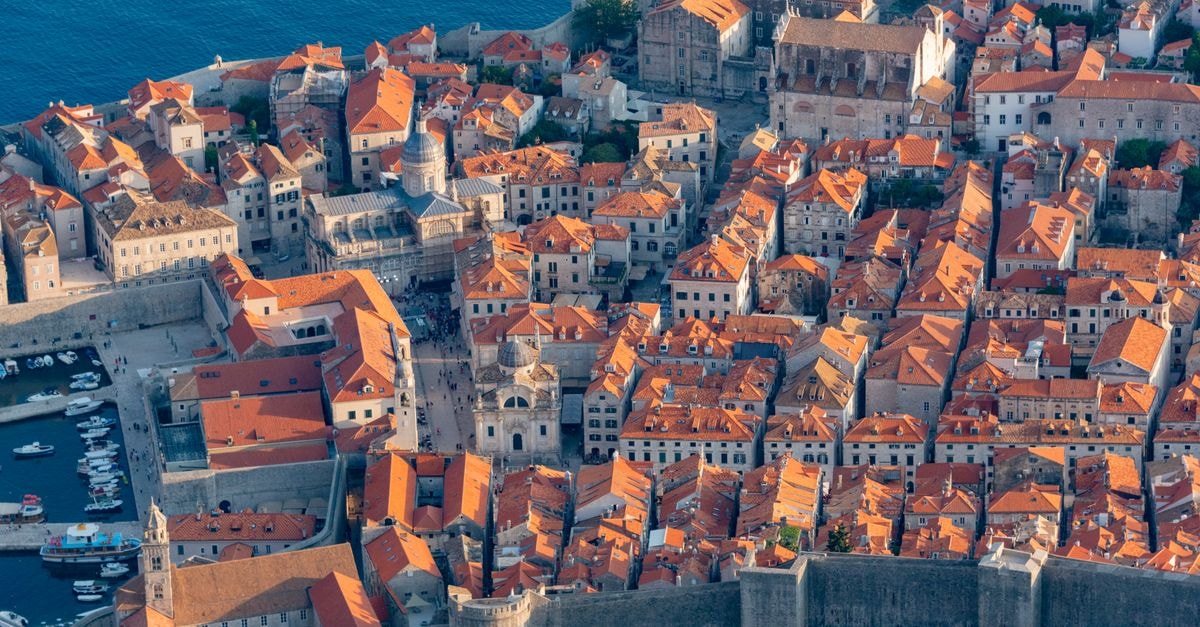
Dubrovnik in July is the city at peak intensity. Daytime temperatures regularly push above 30°C, occasionally toward 35°C late in the month, and the Adriatic warms to 24-26°C - genuinely excellent for swimming, genuinely punishing on the exposed limestone of the City Walls. You will share the Old Town with the year's largest crowds: in peak summer, somewhere between 4,000 and 9,000 cruise passengers can arrive in a single day alongside regular visitors. Inside a roughly 1.2-square-kilometer historic core, that density turns the Stradun into a shoulder-to-shoulder shuffle and fills most restaurants by 7pm. July is also the most expensive month, with hotels charging peak rates. The trade-offs are real: the Dubrovnik Summer Festival is in full swing, swimming is at its best, and the long evenings give you time to explore the neighborhoods locals actually live in - Lapad, Gruž and Babin Kuk.
Getting to Dubrovnik and Moving Around
Most visitors arrive at Dubrovnik Airport in Čilipi, about 20 kilometers southeast of the city. From the airport, the Platanus shuttle bus typically departs shortly after each flight arrival and takes around 30-40 minutes, stopping at Ploče near the Old Town and at the main bus station in Gruž. One-way shuttle tickets are commonly priced at €10. Public Libertas city buses lines 11, 27 and 38 also serve the airport, though you should check schedules before relying on them. If you arrive by intercity bus or ferry, you also land at the main bus station in Gruž, next to the ferry port.
The orange Libertas city buses are the simplest way to connect the Old Town with Lapad, Babin Kuk and Gruž. The most useful line for visitors is Line 6 (Babin Kuk–Pile). The cheapest option is a pre-purchased 1-hour ticket for €1.73; paying on the bus costs €2.50 per ride. A 24-hour daily ticket is €5.31, and a three-day ticket is €11.95. Card payment is accepted on all lines, but backup cash is wise during busy periods. The Old Town itself is a pedestrian zone, and vehicle access is restricted from March through November, so taxis and Ubers cannot drive inside - the final stretch to most accommodation involves steps over polished marble. Wear closed shoes with good grip; flip-flops work for the beach but not for a full sightseeing day.
City Walls, Tickets and Old Town Highlights
The City Walls are the centerpiece of any Dubrovnik trip. The full circuit is 2 kilometers, with walls up to 25 meters high and 6 meters thick in places, taking 1-2 hours to walk. Highlights include Minčeta Tower - the highest point at 37 meters, completed in 1464 to designs by Juraj Dalmatinac, with 360-degree views over the Old Town and Lokrum Island - Bokar Fortress overlooking Fort Lovrijenac, and St John's Fortress at the harbor entrance. The ramparts are open 8am to 7:30pm in summer, with last entry 30 minutes before closing, and they never close. The smartest strategy is to start at the 8am opening, when crowds are thinnest and the limestone is cool; after 5pm is a strong second window, with softer light for photography.
Three entrances exist. Pile Gate, next to Onofrio's Fountain, is the busiest and has the steepest start. Ploče Gate on the east side is the insider choice: shorter lines and a more gradual climb. The third entrance is by the Maritime Museum near St John's Fortress. Fort Lovrijenac, the triangular 11th-century fortress nicknamed "Dubrovnik's Gibraltar," is included with your walls ticket, as is Minčeta Tower and the Foundry Museum. If you visit Lovrijenac first, keep the ticket to deduct the price from the walls later.
Tickets: the 2026 adult City Walls ticket is €40, exactly the same price as a 1-day Dubrovnik Pass. The Pass adds entry to 10 museums and galleries and unlimited Libertas city buses for the same money, so it is the smarter buy if you plan to do more than the walls. The Pass also comes as a 3-day version (€50, with discounts on Lokrum Island and the Račić Family Mausoleum in Cavtat) and a 7-day version (€60, with bigger discounts including 50% off Dubrovnik Summer Festival tickets). You can buy online in advance or on arrival at the airport via QR codes. For July specifically, book a time slot online before you travel - walk-up entry is no longer guaranteed at peak season. Children under 7 are free; youth (7-17) pay €15 with valid ID.
Dubrovnik Summer Festival 2026
The 77th Dubrovnik Summer Festival opens on 10 July at 21:00 in front of St Blaise's Church. Programming runs through August and combines opera, classical music, ballet, folklore and theater at atmospheric venues across the city. July highlights include the Munich Radio Orchestra under Ivan Repušić (11 July), Joshua Bell with the Academy of St Martin in the Fields at the Rector's Palace Atrium (14 July), violinist Renaud Capuçon with pianist Martina Filjak (16 July), the Dubrovnik Symphony Orchestra with pianist Andrey Gugnin (20 July), and the Linđo Folklore Ensemble (12 and 23 July). Plays and ballet are staged at Revelin Fort Terrace, Lovrjenac Fort and Sponza Palace Atrium. Several events show as sold out well in advance; tickets are sold through the official festival channel. Pass holders receive 30% off with the 3-day Dubrovnik Pass or 50% off with the 7-day version.
Where to Stay and Booking Pressure
July and August are the most crowded and expensive months, so reserve accommodation well ahead - particularly anywhere within or just outside the Old Town walls. Staying inside or just outside the walls saves commute time but costs more. Lapad and Babin Kuk, a short Line 6 bus ride from Pile Gate, have many beachfront hotels at slightly lower prices, with calmer evenings and easier swimming access. Gruž, the port district where most residents live, offers more local character and good bus connections. Wherever you stay, air conditioning is essential in July, and afternoon swims or siestas during the hottest hours are the local way to cope with the heat.
Eating Like a Local
Dubrovnik's cuisine is coastal Mediterranean: the sea, olive oil, and the wines of the Pelješac peninsula. Black risotto (crni rižot), colored and flavored with cuttlefish or squid ink, is the most photogenic local specialty. Buzara - shellfish, usually mussels or scampi, simmered quickly in white wine, garlic, olive oil, parsley and breadcrumbs - is one of the most honest dishes on the Dalmatian coast. Grilled Adriatic fish (sea bass, bream or dentex) is simply prepared with olive oil and lemon, often served with Swiss chard and potatoes. Peka is the slow-cooking showpiece: meat or octopus and vegetables cooked for hours under a bell-shaped dome over embers; many konobe require advance notice, so ask when you book. Šporki makaruli, "dirty macaroni," is the signature pasta: tubular noodles in a slow-cooked beef and tomato sauce scented with cinnamon and cloves. For something quick, soparnik (Swiss chard pie) and burek (flaky cheese or meat pastry) are easy on-the-go options. Local wines include Dingač and Plavac Mali reds from Pelješac, crisp Pošip whites, and the revived Malvasija Dubrovačka. For dessert, rozata (a rose-scented caramel custard) and arancini (candied orange peel in sugar) are classic finishes.
Safety and Practicalities
Croatia is a Level 1 destination - Exercise normal precautions - and is generally considered safe for travelers. It is a Schengen member, though land borders with Bosnia and Herzegovina, Serbia and Montenegro still have police and customs checks. U.S. visitors can stay visa-free for up to 90 days, with a passport valid at least 3 months beyond departure and at least one blank page available per stamp. No vaccinations are required for entry. Your accommodation provider will register you with the local police within the required 3 days, so keep your passport handy at check-in. The Old Town is heavy on stairs and polished marble, worth noting for anyone with mobility concerns. Strong sun and reflective stone make sunscreen, hats and refillable water bottles essential during July daytime hours.
Budget Snapshot for July
Costs sit at their annual peak in July. A pre-purchased 1-hour bus ticket is €1.73 (€2.50 on board); a 24-hour Libertas ticket is €5.31. The City Walls ticket or 1-day Dubrovnik Pass is €40, with the 7-day Pass at €60 the strongest value for visitors using buses and visiting multiple museums. The airport shuttle is commonly €10 each way. Hotel rates are at their highest; booking 6-8 weeks ahead brings better options and prices. Konoba lunches of fresh grilled fish with local wine are a worthwhile treat, though restaurant prices inside the Old Town are noticeably higher than in Gruž or Lapad.
*Prices, opening hours, schedules and entry rules change - confirm with the Dubrovnik Pass, Libertas and Dubrovnik Summer Festival official channels before you travel.*
Share this article
TOOLS FOR THIS PLAN
Make the Dubrovnik plan measurable
Choose a tool only when it answers the next question in your trip. Your values stay in the browser, and each tool offers a route back to this planning context.