A first look at Kraków

Kraków has a way of slowing your pace the moment you step into the Old Town. Cobblestones soften the sound of footsteps, church towers trace the skyline, and the everyday rhythm feels folded into a thousand-year story. According to one regional travel overview, the city is a place "where a thousand years of history remain visible in the fabric of the streets," where fine restaurants open in Gothic cellars and some of the most atmospheric hotels occupy buildings older than the printing press. That single sentence captures the texture of a Kraków visit better than any checklist: the past is not behind glass here, it is the backdrop for coffee, conversation and evening strolls.
What follows is a grounded guide built around the city-level evidence available: how to move around, what to anchor a visit around in the historic centre, and what to know about the local food culture that visitors actually encounter.
Getting around
Kraków's centre is wonderfully walkable. The compact layout of the Old Town and Kazimierz means most of the main sights fall within a short radius, so comfortable shoes will do more for a day than any ticket. When the legs want a break, or when a hotel sits just outside the historic core, the city's public transport network is the practical option.
The municipal operator running trams and buses in Cracow is Miejskie Przedsiębiorstwo Komunikacyjne S.A. (commonly shortened to MPK). For a visitor, the operator's role matters less than the everyday experience: an integrated tram and bus system that links the main districts, the train station and the outer neighbourhoods without the need for a car. Tickets are bought before boarding, and the same network is shared by both locals and travellers, which keeps things simple once you understand the basic zones.
For those who prefer not to think about timetables, walking remains the most rewarding way to take in the city. A loose routine of "tram for the long hop, feet for the in-between" tends to suit Kraków's scale well. Authoritative transport guides for the city tend to confirm what visitors discover quickly on the ground: the historic core is best enjoyed on foot, while the tram and bus network fills the gaps efficiently.
The historic centre and what to anchor a visit around
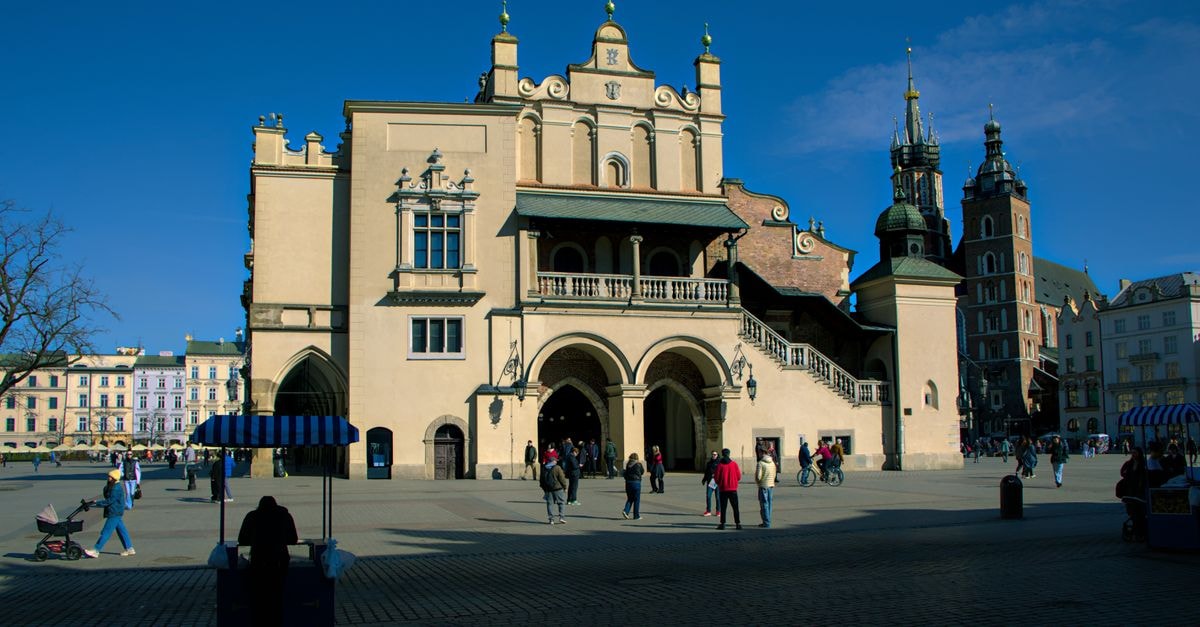
The historic core of Kraków is the obvious anchor for any first visit, and the evidence around it is unusually rich. UNESCO describes it as a 13th-century merchants' town that contains Europe's largest market square, along with numerous historical houses, palaces and churches with magnificent interiors. That single phrase — Europe's largest market square — quietly explains a lot about how the city feels. The Rynek Główny is not a square to be crossed; it is a square to sit in, with a cloth hall at its centre, side streets fanning out to churches and townhouses, and the kind of human-scale architecture that rewards unhurried wandering.
For practical planning, the key insight from the source material is that these sites cluster tightly. The Rynek, the cathedral and university quarter, and Kazimierz form a triangle that can be walked in a single day with time for pauses. Most general listings for things to do in Kraków reflect this same logic: they gather under the umbrella of the historic core and treat the surrounding neighbourhoods as natural extensions rather than separate trips. Treat the historic centre as the spine of your itinerary, and the rest of the city falls into place around it.
Food and local context
Polish food culture has a strong reputation for being hearty and unpretentious, and Kraków sits at the centre of that reputation within the Małopolska region. One regional tourism article frames the city as the culinary centre of its region, the capital of Małopolska, where visitors are invited to "enjoy the journey" through both familiar and less familiar dishes. The same source highlights two names that anyone walking through the Old Town will quickly encounter: obwarzanek, the ring-shaped bread snack sold from small street stalls, and Kraków-style maczanka, a pork sandwich rooted in the city's traditional food crafts. These two items are useful entry points because they are local, recognisable, and easy to find without any planning.
Beyond individual dishes, there is a wider project worth knowing about. A municipal initiative described by the city's official portal aims to "highlight Kraków's rich culinary heritage and include it in the city's tourist offer." The first edition of this trail gathers places that are particularly important for local gastronomy and food crafts. For a traveller, this matters less as a specific route and more as a signal: the city treats its food heritage as part of its identity, and a culinary walk through Kraków is considered a legitimate way to understand the place.
In wider Poland, food culture tends to favour substantial soups, meat dishes and pastries, and visitors may encounter that style throughout their time in Kraków. That national context can shape expectations, but the city-specific evidence above — obwarzanek, maczanka, and the culinary trail — is what should anchor your food plans while you are here.
How to use this guide
A simple way to put it all together: spend one full day inside the triangle of Rynek, Wawel and Kazimierz, leaning on the tram network only when a hotel or dinner sits further out. Build a second day around food and slower wandering, using the culinary trail as a loose map rather than a strict itinerary. Save evenings for the Old Town, when the square lights up and the day's crowds thin out. Kraków rewards travellers who treat the historic centre as a living neighbourhood rather than a museum, and the city's compact scale makes that surprisingly easy to do.
Because travel conditions can change without notice — tram routes, seasonal openings, restaurant hours and ticketed site access — it is always worth double-checking the relevant official channels before departure, and confirming any booking the day before you visit.
Share this article
TOOLS FOR THIS PLAN
Make the Krakow plan measurable
Choose a tool only when it answers the next question in your trip. Your values stay in the browser, and each tool offers a route back to this planning context.