A first look at Matera

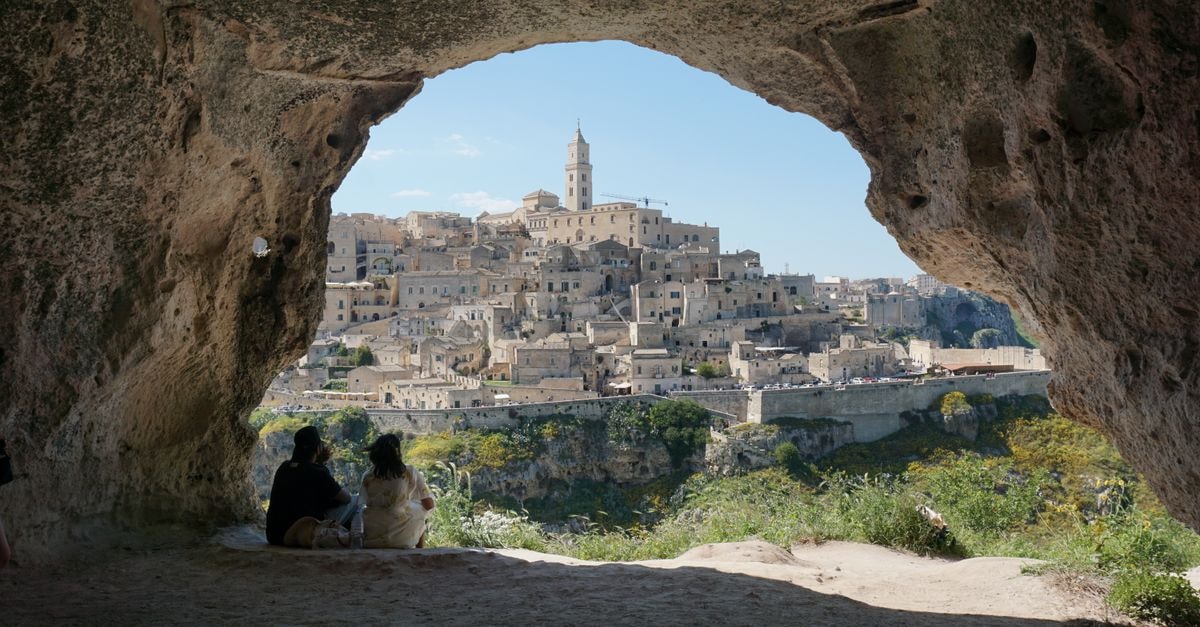
Matera has the kind of presence that lingers long after you leave. Carved into the rock of a deep ravine in southern Italy, the ancient Sassi districts look almost geological at first glance, as if the city grew up out of the hillside rather than being built on top of it. Travelers come here expecting beautiful scenery, and they find something rarer: a place that feels genuinely unlike anywhere else in Europe. The honey-toned stone, the stairways that tumble between cave dwellings, and the wide, golden views over the surrounding countryside give the city a quiet, contemplative rhythm that rewards slow exploration.
What makes Matera special is the layering of time. This is one of the oldest continuously inhabited places in the region, with roots that reach back to prehistoric settlements, and yet it has been carefully revived in recent decades, with old caves transformed into homes, churches, hotels, and restaurants. Walking through the Sassi can feel less like visiting a museum and more like stepping into a living landscape, where every alley, arch, and viewpoint seems to ask you to slow down and pay attention.
Getting around and feeling the place
Matera rewards walkers more than almost any other city in southern Italy. The historic core is dense with stairways, narrow lanes, and sudden vantage points, and much of the joy of a visit comes from wandering on foot and stumbling across small piazzas or cave chapels by accident. Comfortable shoes are practically a requirement, because the stone underfoot can be uneven and there are plenty of steps.
Beyond the Sassi, the landscape opens up quickly. The countryside around Matera is made up of gentle hills, often described as covered in golden wheat, and the contrast between the dense stone city and the wide, soft fields beyond is one of the most striking visual memories many visitors take home. Looking out over that horizon from a terrace at the top of the old town is one of those simple travel moments that tends to stay with you.
Attractions and how to plan your time
In practical terms, that means there is far more here than a single view from a viewpoint. Cave dwellings, rock-cut churches, restored homes, and small museums are woven into the fabric of the city, and many visitors find that a single full day in Matera is enough to get a strong sense of the place, especially when combined with a guided walk. For those who prefer a more relaxed pace, splitting the visit across a day and an evening gives you time to enjoy the Sassi when the light softens and the crowds thin.
Because so much of the experience is about atmosphere rather than a checklist, it helps to leave room in your plans for unhurried moments: a long coffee in a quiet piazza, a slow walk along the ridge above the ravine, or simply sitting on a wall and watching the city shift in the changing light. Matera is a destination that rewards presence as much as sightseeing.
A taste of Matera's table
Matera is to have time stand still in southern Italy, and the same unhurried rhythm shows up at the table. The local cuisine has its roots in rural gastronomic culture, drawing on the slow rhythms of the land and a skillful ability to enhance simple ingredients, transforming them into dishes rich in flavor and meaning. Whether travelers are in modern Matera or wandering the ancient Sassi, the people and the land remain loyal to their heritage, and that heritage continues to shape local cuisine and dining experiences today. The territory relevant to Matera's kitchens stretches from Pollino, where the region meets Puglia and laps the provinces of Potenza and Matera, into the Apennines and the Little Lucanian Dolomites, jewels of the regional natural park, all of which feed into what ends up on the plate.
A few practical notes before you go
Matera works well as either a focused stop or part of a longer southern Italy itinerary. Because the historic core is compact and largely pedestrian, you can cover a lot in a day, but staying overnight lets you experience the Sassi in the evening, when the stone seems to glow, and again in the early morning, when the streets are quiet.
Factual travel conditions can change, so before your trip it is always wise to check official channels and local information sources for the latest on opening hours, ticket details, transport options, and any regional advisories. The information in this guide reflects durable, evergreen context for visiting Matera and is meant to help you plan thoughtfully rather than serve as a last-minute confirmation of specific services.
Share this article
TOOLS FOR THIS PLAN
Make the Matera plan measurable
Choose a tool only when it answers the next question in your trip. Your values stay in the browser, and each tool offers a route back to this planning context.