A Quiet Coastal Welcome

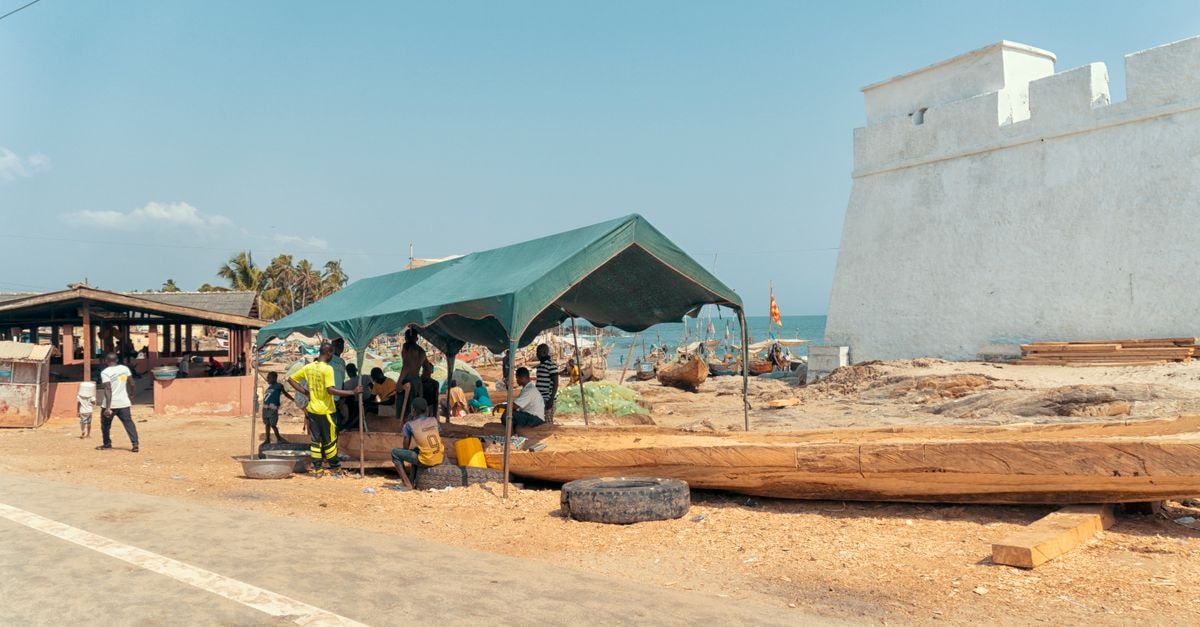
Sekondi sits in Ghana's Western Region as a working companion city to its neighbour Takoradi, the two often spoken of together as a single urban stretch along the Atlantic coast. There is an unhurried quality to the place that tends to suit travellers who are more interested in everyday West African rhythm than in ticking off a checklist. With the basics handled well, the rest of a visit tends to fall into place naturally.
The city itself reads as a regional hub rather than a polished postcard, and visitors who lean into that texture usually feel most rewarded. Before worrying about plans, it is worth understanding two things well: how the climate tends to shape the day, and how to move between Sekondi and the wider region with as little friction as possible.
Weather and Seasonal Context
The evidence available for Sekondi does not include direct temperature readings or current-condition figures for a specific month, so any precise figure would be guesswork. What is safe to say is that the city sits within Ghana's coastal climate belt, where warmth and humidity tend to be the dominant background feel of the year. For visitors, that typically means pacing the day with the weather in mind: lighter mornings, slower afternoons, and cooler evenings that suit a long walk or a relaxed meal.
Rain is part of the picture in this part of West Africa. Travellers generally find it useful to keep a light layer or compact umbrella close to hand and to think of outdoor plans as flexible rather than fixed. Because there is no approved temperature or precipitation data for a particular period, this guide avoids naming a best month or promising a dry run; instead, treat the weather as background context that can shape the rhythm of a visit rather than dictate it.
If readers want firmer numbers for a specific week, it is worth checking an up-to-date forecast closer to departure, since coastal Ghana can shift quickly between bright skies and a passing shower even within a single afternoon.
Getting to Sekondi
For a city of its size and regional role, Sekondi is reached less by quick flights and more by overland routes that connect Ghana's main centres. The approved figures for the wider Sekondi-Takoradi area put Accra at roughly 223 km away with an estimated travel time of about 5 hours and 27 minutes, Kumasi at about 292 km with an estimated 5 hours and 55 minutes, and Abidjan across the border at roughly 306 km with an estimated 5 hours and 39 minutes. These are the kind of distances that suit travellers who enjoy scenic overland movement through West Africa rather than those hoping for a short hop.
Driving is presented in the available guidance as a way to enjoy the scenic views of West Africa at a personal pace, which suits visitors who like the freedom to stop along the way. Where intercity transfers are arranged by taxi, the same source notes that the cost is often discussed individually and based on average regional rates, which simply means haggling and clarity on the total price before setting off is a sensible habit rather than an optional extra.
For travellers who prefer not to drive themselves, buses and shared intercity options typically connect Ghanaian regional capitals, and it is reasonable to expect that pattern to apply on the routes leading toward Sekondi from Accra or Kumasi. The published evidence does not name a specific operator or timetable, so confirming the current schedule with a local source before travel is the safer move.
Getting Around
Once on the ground, the same general pattern applies: the city is navigable without complex planning, and visitors tend to do best by combining a few simple modes. Short taxi rides cover most of what an independent traveller needs day to day, and arranging a driver in advance, particularly for longer cross-town trips, tends to make the day feel smoother. Walking is realistic for the central stretch around the city centre, where a number of accommodation options sit within a kilometre or two of the main activity.
For visitors thinking about staying close to the centre, the evidence mentions guesthouse-style options like Menson Mansion, described in the source material as "your home away from home", with locations noted at about 1 km from the city centre in one listing and 2 km from the centre in another. That kind of central positioning is useful because it removes the need for frequent transport during a short stay and puts restaurants, services and the waterfront within walking range.
Because Sekondi and Takoradi effectively form a single urban area, moving between them is usually straightforward by road, and travellers tend to treat the pair as one destination rather than two separate stops. There is no approved schedule or timetable in the evidence for local buses or shared taxis, so the practical approach is to ask locally for the current rhythm of the routes rather than assume a fixed timetable.
Planning the Days
A useful frame for this kind of compact regional city is to think in one- to three-day arcs rather than a long checklist. The available source material explicitly points to one- to three-day itinerary patterns for both Sekondi on its own and the combined Sekondi-Takoradi area, which mirrors how most visitors tend to experience the place. A short stay keeps the pace comfortable, leaves room for weather adjustments and lets the coastal rhythm set the tempo.
Within that arc, mixing a slow morning, a midday pause, and an afternoon shaped around either the waterfront or a short drive tends to work better than trying to compress many stops into a single day. Where an itinerary plan is wanted, personalising a base route from A to B to C, as the source suggests, is a reasonable approach: start with a central landmark, move to a secondary neighbourhood or coastal point, and close the day somewhere relaxed.
Because the evidence does not name specific opening hours, ticket prices, reservation rules or seasonal conditions for individual venues, this guide deliberately does not prescribe a timed schedule. Visitors who want firmer details on a particular site should confirm locally before heading out.
A Final Word on Practicalities
A small number of habits tend to make a Sekondi visit feel easier. Confirm intercity transport options the day before, especially for evening departures. Agree taxi fares or transfer prices in advance rather than at the end of the ride. Carry a light layer for the coastal breeze and the occasional rain. And treat distances between Sekondi and Takoradi as part of the same trip rather than separate journeys.
Factual travel conditions can change, and official channels should be checked before departure for the latest on routes, prices and local guidance. Currency and exchange details, where relevant, should be confirmed against the live rate on the day of travel, since published figures are only a reference point. With those basics in place, Sekondi offers the kind of straightforward, regionally grounded West African experience that rewards travellers who arrive prepared to move at the city's own pace.
Verification note
This guide draws only on the approved factual ledger provided for Sekondi. Where the source material did not include a specific detail, that detail has been deliberately omitted rather than estimated. Readers should treat the guidance as a starting framework and verify any time-sensitive or checkable fact, such as current fares, schedules or weather, through official or local sources before relying on it for travel decisions.
Share this article
TOOLS FOR THIS PLAN
Make the Sekondi plan measurable
Choose a tool only when it answers the next question in your trip. Your values stay in the browser, and each tool offers a route back to this planning context.