Split at a Glance

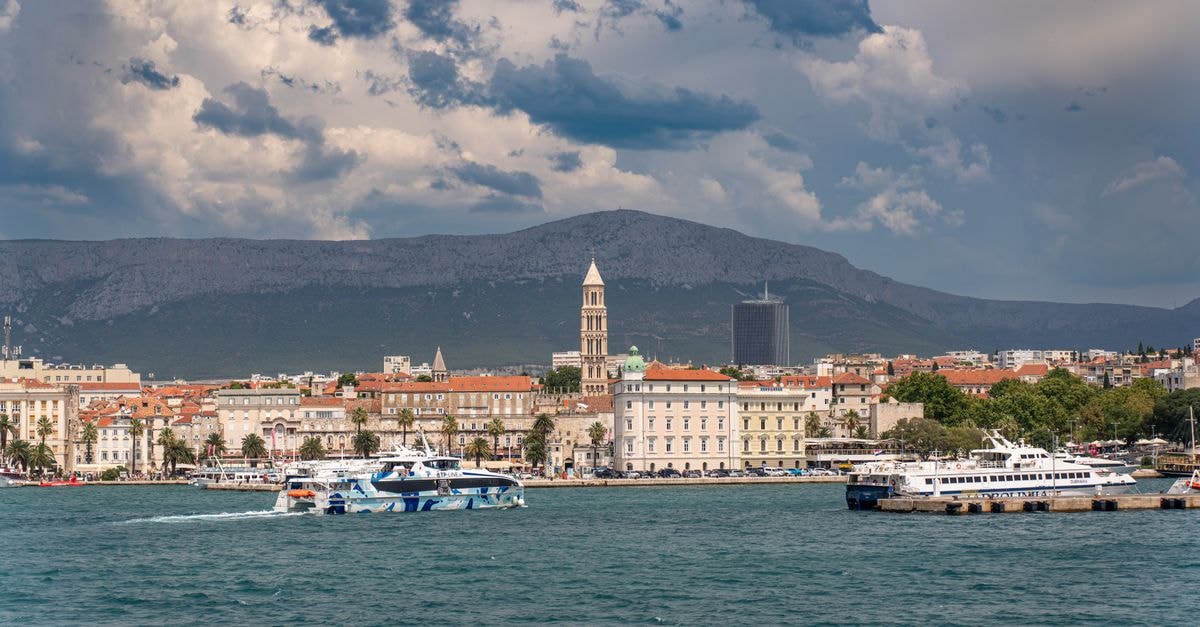
Split is Croatia's second-largest city and the cultural capital of Dalmatia, built around the UNESCO-listed ruins of Diocletian's Palace. The Roman palace forms the spine of the old town, with the Riva waterfront, the Peristyle, and the Cathedral of Saint Domnius at its heart. Beyond the palace walls, the city spreads onto the Marjan peninsula and a string of beaches, while ferries fan out to the islands of Hvar, Brač, Šolta, and Vis.
July is high summer in Split: festival-filled, hot, and crowded. The city hosts the 72nd Split Summer Festival, Ultra Europe, and a packed calendar of exhibitions, sports events, and street happenings. If you want a quieter visit, the shoulder months (May, June, September) are calmer, but July delivers the most energetic version of the city.
July Weather and What to Expect
July is one of the hottest and driest months in Split. Daytime highs typically land around 28–31°C (82–88°F), with overnight lows around 21–23°C (70–73°F). Long-term climate data shows only about 26 mm of rainfall across the month, often as one or two brief afternoon thunderstorms that pass quickly.
The AccuWeather July 2026 forecast for Split lists daily highs ranging from 83°F to 98°F (28–37°C) and lows of 70–80°F (21–27°C), with the average high at 91°F (33°C). The Adriatic sea is at its warmest, around 25–26°C (77–79°F), making swimming exceptionally inviting.
Sunshine runs 10–12 hours per day, so bring SPF 50, a wide-brimmed hat, and UV-protective sunglasses; UV levels are consistently very high. The maestral, a local afternoon sea breeze, typically picks up between 1 PM and 5 PM and provides real relief during the hottest hours.
A few practical considerations:
- Limestone and marble surfaces inside Diocletian's Palace absorb and radiate heat aggressively, making the narrow lanes genuinely uncomfortable between 11 AM and 5 PM. Schedule major sightseeing before 10 AM or after 6 PM. - Carry a refillable water bottle and know where your nearest shaded café is. - The official local concept of fjaka, the afternoon state of striving for nothing during high heat, is real. Plan around it.
Getting There and Getting Around
Split is served by Split Airport (SPU), with bus and shuttle connections into the city. Croatia's main international gateways are Zagreb, Split, and Dubrovnik, with regular flights across Europe in summer.
Within the city, the Promet bus network covers most neighborhoods. Single tickets run €1–2 and daily passes around €4–5. Buses are useful for reaching outlying beaches, the West Coast (Zapadna obala), and Poljud Stadium.
For the islands, ferries and catamarans run from Split's port to Hvar, Brač, Šolta, and Vis. In July, ferries increase frequency, but queues build quickly at the port. Arrive early, especially on Fridays and weekends, and pre-book when possible.
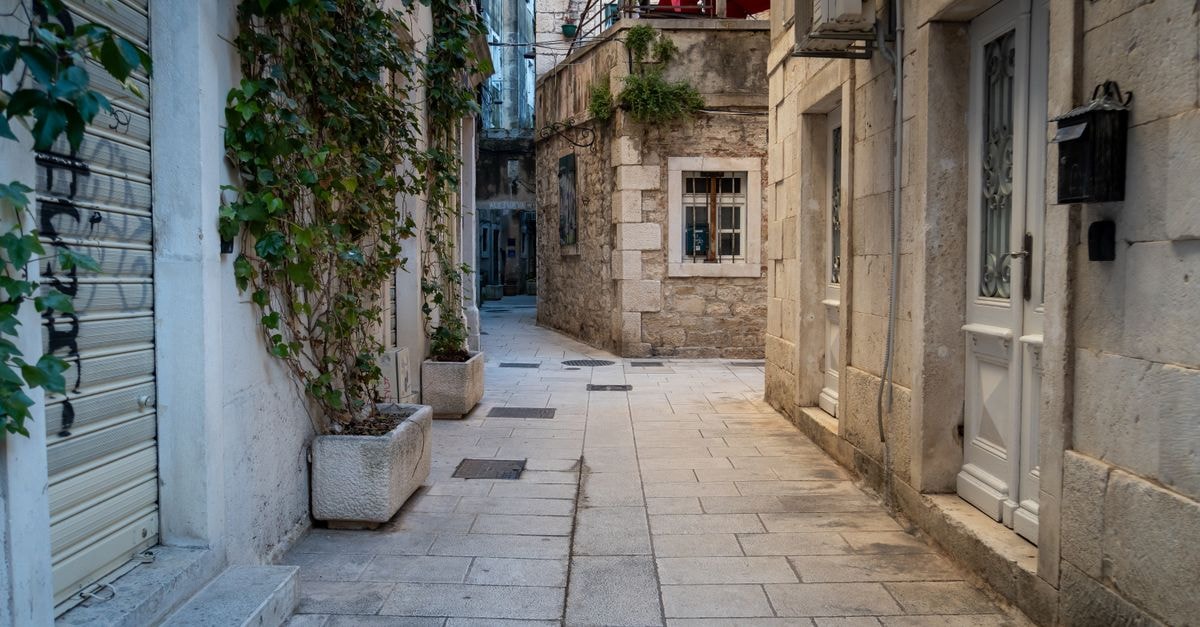
Walking is the best way to explore the old town; the lanes inside Diocletian's Palace are pedestrian-only. E-scooters and bikes are widely available for the broader city.
Top Sights and July Events
The essentials are concentrated in and around Diocletian's Palace. The Peristyle and Cathedral of Saint Domnius sit at the centre, with the bell tower offering panoramic views over the rooftops. The Riva is the palm-lined waterfront promenade where daily life unfolds. Marjan, the forested peninsula that overlooks the city, has walking trails, chapels, lookouts, and quiet coves such as Kašjuni.
Neighborhoods worth exploring include Varoš (the old fishermen's quarter), Manuš, Radunica, and the West Coast area. The Prokurative (Trg Republike) is a grand neoclassical square used for evening concerts and gatherings. The Meštrović Gallery, outside the palace, holds major works by Ivan Meštrović.
July 2026 is unusually busy on the events calendar. Listings on the Split Tourist Board include:
- 72nd Split Summer Festival (music, theatre, and dance across multiple venues) - Ultra Europe, one of the biggest electronic music events in the world, drawing hundreds of thousands of partygoers - 15th Summer Charms of Classical Music - Rugby Europe 7s Championship 2026 - 36th Fair of Authentic Products of Dalmatia - Handpan Festival "Svarog's Wheel" - World Championship of Street Football on the Steps (Balun na Skaline) - 15th Split Open – Chess Festival 2026 - Split Night Half by Split Marathon - Tennis Summer by Goran Ivanišević - NOISE Open Air @ Porat – UMEK - Concert by Nessi Gomes - 4 Summer Night Shows Split 2026 (dog exhibition) - 2nd Boxing Summer Camp Split 2026 - Cirkus Kolektiv Summer Circus Camp for children - Lito po domaću! (Ethnographic Museum promotion) - Summer Colours of Split 2026 - Horror in the Youth Center 2 - Exhibitions across the city
Ultra Europe week (typically mid-July) drives the sharpest spike in demand. Hotel and ferry prices in that week can run 50–100% above early-July weekday rates, and the city gets visibly busier. If you don't want festival energy, plan your dates outside that window.
A temporary closure of the Museum of Croatian Archaeological Monuments is currently noted on the Tourist Board site, so confirm before planning a museum visit.
Hotels and Booking Pressure
July is one of the two busiest months in Split. For July stays in general, book hotels at least 2–3 months ahead. If your trip overlaps with Ultra Europe week, 4–6 months ahead is safer.
Demand for island ferries, boat tours, and small-group experiences also peaks. Prime boat days and small-group slots tend to go first; book 4–8 weeks ahead for those. Weekend ferry crossings (Friday–Sunday) often run 10–20% more than midweek.
Peak-season (June–September) accommodation prices run roughly 30% higher than shoulder season, with ferry tickets about 20% higher. The narrow lanes inside Diocletian's Palace and the Riva waterfront can feel genuinely congested between 10 AM and 6 PM, especially during cruise-ship arrival times.
Food and Drink
Split's cuisine is built on olive oil, seafood, lamb, seasonal vegetables, garlic, herbs, and wine. The local concept of marenda is a mid-morning brunch equivalent to an afternoon tea, a relaxed social meal of fish, meat, soup, pasta, or risotto, often eaten in a konoba (traditional tavern).
Dishes worth seeking out:
- Pasticada: a slow-cooked beef stew marinated overnight in red wine and vinegar, then braised with vegetables, dried fruit, and spices. Traditionally served with homemade gnocchi that soaks up the sauce. A Dalmatian classic often reserved for celebrations. - Crni rižot (black risotto): rice cooked with squid or cuttlefish ink, garlic, onions, white wine, and herbs. Squeeze fresh lemon over the top. - Grilled Adriatic fish: whole sea bass (brancin), sea bream (orada), or sardines, simply grilled with olive oil, garlic, and parsley. - Peka: octopus, veal, or lamb slow-cooked under a bell-shaped iron lid covered with hot embers. Many restaurants ask you to order peka in advance because it takes hours to prepare. - Octopus salad: a light starter of boiled octopus with onion, tomato, parsley, and olive oil. - Fuži with truffle sauce: hand-rolled tube pasta in a creamy truffle sauce. - Soparnik: a savory Swiss chard pie from the Dalmatian hinterland with EU Protected Geographical Indication status. - Fritule: small Dalmatian doughnuts flavored with citrus zest, raisins, and sometimes rakija. - Arancini: candied orange peel, a traditional Dalmatian sweet. - Dalmatian pršut: dry-cured ham air-dried in the bura wind for up to two years.
Many restaurants display the day's catch for you to choose before preparation. Wine-wise, Plavac mali from the wider Split area and Crljenak (the parent grape of Californian Zinfandel) from the Kaštela wineries are both worth a taste. Central Dalmatia has been officially awarded the title of European Region of Gastronomy for 2027.
Costs and Saving Tips
Croatia adopted the euro in January 2023, simplifying travel for visitors from the eurozone. For other travelers, the rates shown here are only a reference; check the live rate before exchanging money.
Indicative daily budgets in 2026 (per person):
- Budget: around €54/day - Mid-range: €115–€133/day - Luxury: €270–€314/day
Restaurant meals in Split run around €13–€20 per person, mid-range hotels €60–€90 per night, and luxury hotels €150–€300 per night.
Ways to save:
- Visit in May, June, or September if peak crowds and prices don't suit you. - Walking through Diocletian's Palace is free; only the cellars, cathedral, and bell tower require tickets. - Consider the Split Card for free museum entries and discounts at participating restaurants and shops if you plan to visit multiple sights. - Pre-book ferries in high season and arrive early for weekend sailings. - Use the local bus network rather than taxis. - Eat at the Green Market (Pazar) and try traditional konobas for better-value Dalmatian cooking.
Safety and Practical Tips
Split is generally a safe destination. The Tourist Board's "Welcome to Dalmatia – Safety First" guide covers practical advice for visitors, and tourist healthcare services are available in Split-Dalmatia County.
A few considerations:
- Heat is the main health concern. Drink water, rest during the midday heat, and apply sunscreen regularly. - The Split Public Order Act regulates behavior in public spaces; observe posted rules. - A temporary closure of the Museum of Croatian Archaeological Monuments is currently in effect; check before visiting. - Important notices on visitor access in Marjan Forest Park have been issued; review the current rules before hiking. - If you drive into Bosnia and Herzegovina or Serbia, bring your passport or ID; Croatia is in the Schengen area. - Travel insurance is not mandatory for visitors with a Schengen visa but is always advisable.
Schedules, ticket prices, opening hours, and event details can change. Always confirm ferries, Palace entry, the Split Card's current benefits, and event-specific information through official channels before your trip.
Exchange rates shown are for reference only; check the current live exchange rate before departure.
Share this article
TOOLS FOR THIS PLAN
Make the Split plan measurable
Choose a tool only when it answers the next question in your trip. Your values stay in the browser, and each tool offers a route back to this planning context.