Valletta at a Glance

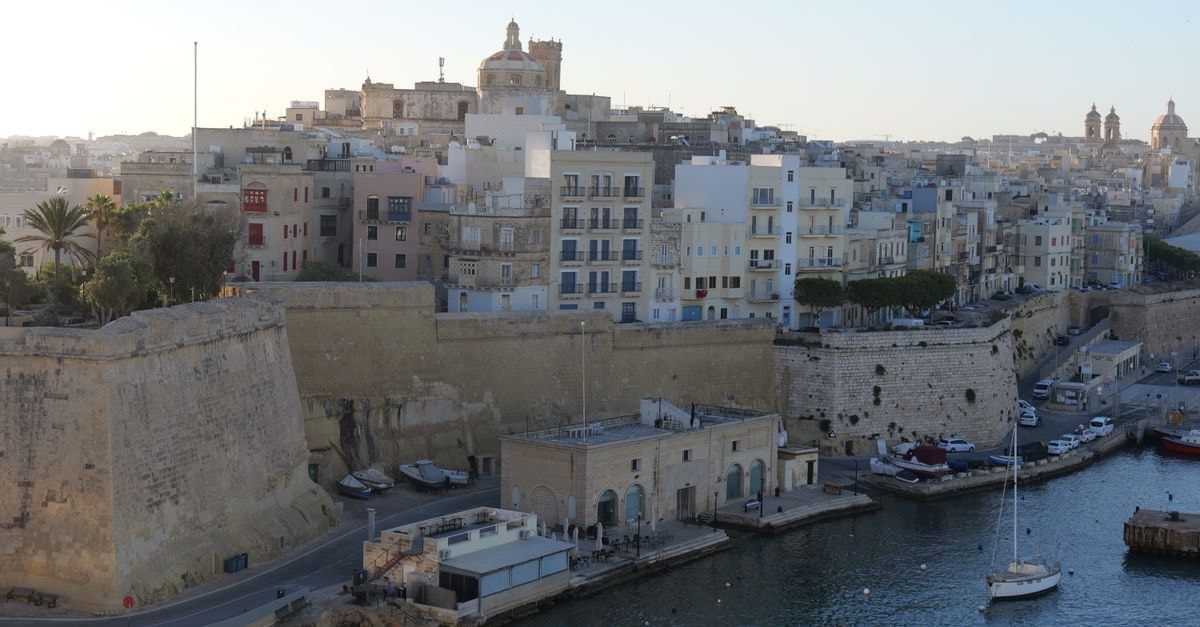
Valletta is the smallest national capital in the European Union by both area and population, occupying just 0.61 km² on the Sciberras Peninsula between Grand Harbour to the east and Marsamxett Harbour to the west. Built by the Knights Hospitaller after the Great Siege of 1565, it packs 320 registered monuments into a Baroque grid small enough to walk end-to-end in about 20 minutes. As of the 2021 census, only about 5,157 residents live within the walls, yet the city carries the full weight of Malta's political, cultural and commercial life.
Republic Street (Triq ir-Repubblika) is the city's spine, running from City Gate—rebuilt in 2014, with Renzo Piano's open-air theatre beside it—down to Fort St Elmo at the peninsula tip. Parallel streets drop steeply toward one harbour or the other. Across Grand Harbour, the Three Cities (Birgu, Senglea, and Cospicua) are a short ferry ride; across Marsamxett, Sliema and St Julian's connect by ferry or a longer bus trip. The main bus terminus sits just outside City Gate, making Valletta the easiest arrival point on the island.
July Weather and the Festa Calendar
July is Malta's hottest and driest month. Climate normals for July cluster closely: Weather Atlas reports an average high of 30.7°C (87.3°F) and average low of 21°C (69.8°F), and notes that rainfall is essentially zero; a separate Open Meteo climate summary lists 32°C highs, 23°C lows, about 11 hours of sun per day and 1 mm of rainfall for the month. For July 2026 specifically, AccuWeather's month-ahead forecast projects daily highs between 87°F and 98°F and lows between 73°F and 78°F, with a monthly average high of 93°F and average low of 76°F. A Malta Meteorological Office forecast cited for early July 2026 pointed to daytime highs of 33–34°C with "feels like" temperatures near 35°C and a UV index of 9–10.
In practical terms: dry, sunny, and punishing on exposed stone. Midday on the upper peninsula climbs toward 32°C and the limestone walls throw heat back, so uphill stretches of Strait Street toward Castille Square are best cleared before 10 a.m. Evenings cool to about 24°C, and the northwesterly "il-mitħna" (the windmill-effect) breeze off Marsamxett can make harbour-side walks genuinely pleasant. Rain is essentially zero, sunshine runs 11–14 hours a day depending on source and date, and the Mediterranean is at its annual warmest for swimming morning to night—one guide puts the average at 25.5°C in July, another puts the broader range at 25–27°C. Heatwaves can push past 40°C during Saharan-dust episodes; Malta's national record high of 43.8°C was set in August 1999.
The other fixed July item is the village festa circuit. Almost every weekend, a different town's saint's day fills streets with processions, brass bands and fireworks, and the 15 July feast break sends many Maltese families out of Valletta for the holiday.
Getting Around in July
Within the city walls, walking is enough. Beyond them, the network is bus-led, with the main terminus right outside City Gate. The summer single-journey bus fare is €2.50 (mid-June through mid-October, reverting to €2 in winter), and a 7-day Explore Card costs €25 for unlimited bus travel across Malta and Gozo—roughly under €4 per day for anyone making more than a handful of trips.
The harbour ferries are the smartest cross-water option: services run across Grand Harbour to the Three Cities and across Marsamxett to Sliema and St Julian's. Driving in July is generally discouraged; parking inside Valletta is scarce, festa road closures around the island can disrupt plans, and the buses and ferries handle peak crowds more reliably.
What to Do in July
A handful of items are genuinely month-specific. **Casa Rocca Piccola**, a 16th-century palace near Republic Street, opens its underground WWII shelters for night tours only in July and August, when the rock temperature underneath holds at about 20°C. Evening slots must be booked about a week ahead, and a daytime ticket does not cover night entry. **Grand Harbour vintage boat tours** depart from the booking pontoon below the Upper Barrakka Lift, and the first 8 a.m. slot typically sells out around 48 hours ahead; the morning light is also the cleanest hour to photograph the Three Cities. **Marsamxett kayak sunset paddles** slot into the 6–7 p.m. lull when cruise tenders head back to ship and the fort walls glow ochre, with water at 25°C. For a casual evening, **street-food walks** around Is-Suq tal-Belt food hall from around 6 p.m. catch pastizzerias swapping lunchtime qassatat for hot timpana, with rabbit-fennel stew aromas drifting down Old Bakery Street; guided food walks reserve 5–7 days out.
The evergreen anchors are still worth the queue. St John's Co-Cathedral (€15; free during Sunday Mass) is best taken at around 9:30 a.m. when it opens. The Upper and Lower Barrakka Gardens are free and lift you above Grand Harbour for the canonical panorama. Fort St Elmo at the peninsula tip holds the National War Museum. The Manoel Theatre, dating to the 1660s, sometimes programmes open-air baroque opera in July that drifts onto Republic Street.
Tickets, Queues and Cruise-Day Tactics
July's worst bottleneck is cruise-ship days. When liners tie up at the Three Cities, 4,000-plus passengers empty onto the 600 m (1,970 ft) grid between City Gate and the co-Cathedral; alleys jam by 11 a.m., and café prices along Archbishop Street tend to lift the moment horns echo across Marsamxett. The local tactic is timing: arrive before 9 a.m. or after 6 p.m., book restaurants ahead and avoid uphill walks like Strait Street to Castille Square in the worst of midday. Tour operators publish cruise schedules in advance; a quick check the night before saves a frustrating morning.
Booking lead times shift by activity. Casa Rocca Piccola night tours ask for about a week. Grand Harbour boat tours lock in 48 hours ahead. Guided food walks reserve 5–7 days out. Heritage Malta's multi-site pass costs €60 and covers 23 sites over 30 days, a meaningful discount for anyone planning a string of museum stops beyond Valletta.
Where to Sleep and the Mid-Month Sweet Spot
July is the priciest month for accommodation across the Maltese islands, and rooms in restored 17th-century palazzi around Valletta book out months ahead at peak-summer rates. Rates dip toward shoulder-season levels once Maltese families head home after the 15 July feast-day break, even though the weather stays locked at peak-summer levels for the rest of the month. Travellers with flexible dates can target mid-month onwards to lock in sea-view rooms over the harbour at lower prices. As a wider benchmark, the same categories of accommodation drop 30–40% outside the July–August window.
Where in Valletta to base yourself matters less than in many capitals; almost every sight is on or within a few streets of Republic Street, and the bus terminus is at the doorstep. The main decision is views over Grand Harbour or Marsamxett versus proximity to the restaurants and bars around Strait Street.
Eating in Valletta
Maltese food here is Mediterranean with island logic: seafood when the catch is good, slow-cooked stews for depth, and a few snack rituals that turn up everywhere. **Stuffat tal-Fenek**—rabbit stewed overnight in wine, garlic and bay leaves until the meat slides off the bone—is the national dish and appears on most Valletta menus; one specific kitchen on Old Bakery Street serves it with crusty bread for €12–15. **Ftira**, the Maltese answer to pizza with a cracked, breadstick-like crust and tomato, caper, olive and tuna topping, comes out of one St Dominic Street wood-fired oven from around 11 a.m. until it sells out, usually by 3 p.m., at €6–8 a pie. **Ħobż biż-żejt**—a crusty roll rubbed with ripe tomato, drizzled with olive oil, and topped with tuna, capers and olives—is the national sandwich and appears at street carts near the Upper Barrakka Gardens for €3–4.
**Pastizzi** are the everyday snack: flaky pastry parcels filled with ricotta or curried peas, sold from bakery counters for €1–2 (sometimes under €0.50 from a street vendor), eaten at any hour. **Bragioli** (beef olives braised in wine) and **bigilla** (broad-bean dip with crackers) are minor classics worth a try. **Lampuki pie** (mahi-mahi baked under pastry with spinach, olives, mint and capers) is the seasonal fish dish to know about; its legal fishing season opens on the Feast of Santa Marija on 15 August, just after July ends. Kinnie, the local bitter-orange soft drink, pairs with most of the above. Diners eat late—kitchens fill from around 7 p.m., and Maltese restaurants typically serve dinner from evening onward.
Safety, Heat and Festa-Season Practicalities
Two things deserve attention before any July packing list. The first is heat. UV runs at index 9–10, classed as very high to extreme, and locals recommend SPF 50+, a wide-brim hat and a refillable water bottle; tap water in Malta is safe to drink, and dehydration sets in faster than visitors expect once temperatures clear 35°C. The second is the calendar. Festa nights bring road closures in the celebrating village (not usually Valletta itself), which can reshape driving or parking plans; the official VisitMalta listings are the cleanest place to check before committing to a car.
Valletta is generally a low-risk capital; the practical hazards are heat exposure and crowded streets on cruise days rather than crime. After dark, the city is quieter than its 2018 European Capital of Culture reputation might suggest, with most of the evening revolving around dinner, a waterfront walk and the occasional Manoel Theatre concert. Anyone chasing serious nightlife heads to Paceville in St Julian's.
Daily Budgets and Saving Tips
Daily budget ranges, drawn from a Valletta-focused budget review, sit in three bands: around €50–75 per person per day for budget travellers using hostels, street food, free attractions and the bus pass; €105–150 for mid-range travellers sharing a hotel room with café breakfasts and restaurant dinners; and €205–295 for boutique stays and private tours. A simple mid-range day's spend works out as roughly €50–75 for the hotel share, €43–60 on meals, €4 on transport and €8–12 on museum admissions.
The easy savings: walk Valletta (it is small), use the €25/7-day bus card, take the Heritage Malta €60/30-day pass if visiting multiple sites, eat pastizzi and ħobż biż-żejt for cheap local snacks, take harbour ferries instead of taxis, and time arrivals at peak sights before 9 a.m. or after 6 p.m. Self-catering from supermarkets can drop food spend to €15–25 a day if your accommodation has a kitchen.
---
**Information can change.** Bus fares, opening hours, ticket prices, cruise schedules and the July 2026 weather pattern are subject to change; check Malta Public Transport, Heritage Malta, ferry operators, the Manoel Theatre programme and VisitMalta's official listings before travelling.
Prices, opening hours, schedules, reservation rules, and local conditions can change; verify them through official channels before departure.
Share this article
TOOLS FOR THIS PLAN
Make the Valletta plan measurable
Choose a tool only when it answers the next question in your trip. Your values stay in the browser, and each tool offers a route back to this planning context.