01Detroit: Become Human review: a branching cinematic adventure best for players who prioritize story and character choices
STEAM DEAL · 80% OFF
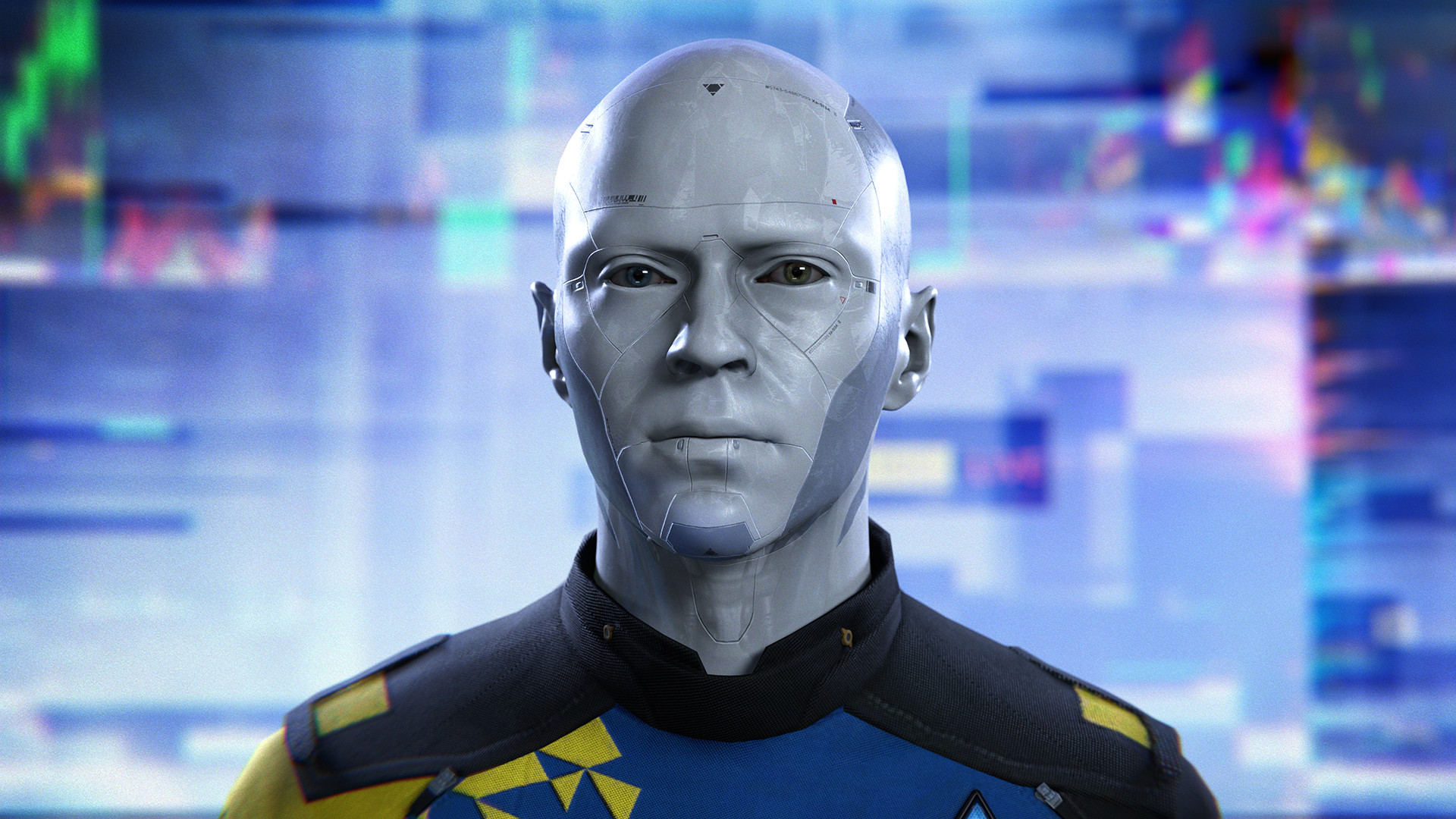
Detroit: Become Human
Detroit: Become Human is a strong pick for anyone who treats games like interactive cinema and wants their choices to visibly reshape multiple protagonists. At $7.99 (80% off the $39.99 regular price) it is a comfortable buy for a single weekend of narrative play, though anyone who dislikes timed QTEs or replay loops should look elsewhere.
Game highlights
Three protagonists, one branching story
The game lets you step into three androids — Kara, Connor, and Markus — whose perspectives interlock across a near-future Detroit. Every scene is built around moral choices that the official description describes as affecting both individual fates and the wider city. The branching design is one of the most elaborate on Steam, with dozens of possible endings, and the in-game flowchart makes it clear how a single decision funnels or rescues a storyline.
A cast with Hollywood-level motion capture
Quantic Dream's PC edition features performances from Jesse Williams, Clancy Brown, Lance Henriksen, Bryan Dechart, and Valorie Curry. The motion-capture work is repeatedly singled out by players as the element that sells the android-versus-human tension. Full controller support and clean mouse/keyboard bindings make the choice-and-dialogue interface feel like directing a film rather than playing a shooter.
PC build optimized for modern hardware
The Steam release targets 4K resolution and 60 fps, with Steam Achievements, Steam Cloud, Remote Play on TV, and Family Sharing all enabled. Players with mid-to-upper tier PCs report stable performance, and the file footprint is sizable but not punishing. Save-anywhere flowcharts make it easy to scrub back, branch, and explore divergent outcomes without replaying from scratch.
Meaningful, visible player agency
Small actions — who you comfort, what evidence you collect, whether Connor pushes or restrains — ripple into later chapters and can determine which characters survive a given route. The flowcharts constantly visualize what you missed, so the "what if" feeling that usually dies after the credits stays alive across multiple runs. The result is a narrative that rewards curiosity rather than just one clean playthrough.
Themes that resonate with current AI discourse
Set in 2038, the story revolves around automation displacing workers, protests against tech companies, and humans forming emotional bonds with AI. Multiple players note the script lands harder in 2025–2026 than it did on PS4 in 2018, because the social questions it raises are now news headlines. That thematic weight gives replays an extra layer beyond just unlocking new branches.
What players are saying
What keeps coming up positively
- The branching flowchart system makes player choice feel tangible and encourages multiple playthroughs to explore missed paths.
- Motion-capture performances and the soundtrack consistently land emotional beats, especially in Kara and Connor's arcs.
- Visuals and facial animation are held up as a benchmark, with the 4K/60 PC port taking good advantage of modern hardware.
Where the friction shows
- Several chapters layer timed quick-time events on top of moral choices, which can interrupt the cinematic flow and feel punishing on failure.
- Repetitive investigative sequences — scanning rooms for clues and reconstructing timelines — have been called out as filler between the stronger dramatic scenes.
- The overall length feels short for the price, pushing players toward replays and flowchart completion to feel they got full value.
Is it worth buying?
At $7.99 against a $39.99 regular price, the current 80% discount is a meaningful cut that lines up well with a one-to-two-sittings narrative experience. If you have ever bounced off a Quantic Dream title because of QTEs, the moderate sale may not be enough to change that, so it is worth watching for a deeper discount. If branching stories and motion-capture drama are your thing, this is a fair entry point without waiting.
Price checked 2026-08-15:$7.99,down from $39.99(80% off)。Player-fit tags
Good fit
- Players who primarily want a story-driven experience and treat games like interactive films
- Fans of choice-and-consequence systems who enjoy chasing every branch and ending
- Players curious about AI-and-automation themes discussed through sci-fi characters
- Mature players comfortable with violence, tense moral dilemmas, and emotional subject matter
- Anyone who wants a controller-friendly cinematic game that runs well on a modern PC
Probably not for you
- Players who dislike timed quick-time events layered on top of story moments
- Anyone expecting a traditional action or shooter loop rather than choice-driven scenes
- Players who resent replaying chapters to unlock alternate branches and endings
02The Life and Suffering of Sir Brante — a hardcore narrative RPG for players who love punishing, choice-driven lifetime sagas
STEAM DEAL · 70% OFF
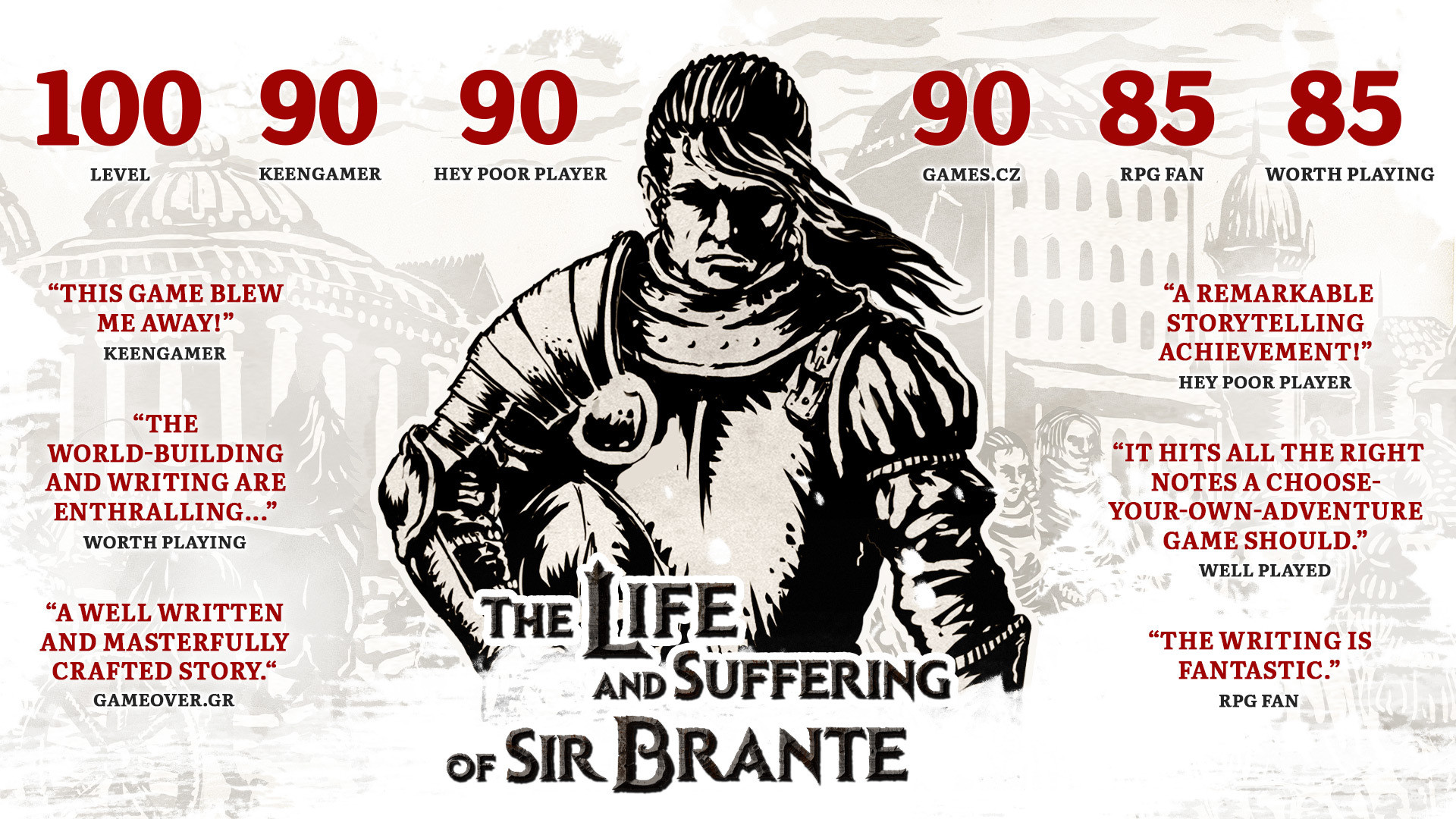
The Life and Suffering of Sir Brante
If you enjoy text-driven RPGs where every decision reshapes a lifetime and you don't mind a steep stat-driven learning curve, Sir Brante rewards careful planning and replaying; pick it up at the current 70% discount.
Game highlights
One life, dozens of forks
The game follows Brante from infancy to death across four chapters, with choices about class, faith, and rebellion shaping his lot in the Great Arknian Empire. Official material lists three main paths and two sub-paths each, giving meaningfully different runs rather than cosmetic variations. Player commentary confirms the design intention that the same character cannot realistically do everything.
Stats quietly decide your ending
Traits like determination, sensitivity, and endurance accumulate from earliest childhood and gate which dialogue options, careers, and revolution outcomes you can pick. The developer pitches it as a hardcore RPG for a reason: branching without the right willpower or reputation can leave you staring at the worst choice in a menu of four. Several players note this is closer to 'calculate your adventure' than freeform roleplay.
Resurrection softens the punishment
Deaths are not permanent within a run; you respawn with experience intact and can re-evaluate past investments. That recovery loop lets you course-correct after a bad gamble instead of restarting from zero, which suits the game's unforgiving tone. It is, however, the same reason many newcomers end up repeating chapters until their numbers line up.
First run clocks around 15 hours
A guided completion lands in the 15-hour range per official text, with multiple playthroughs extending that for completionists chasing every ending. The chapter structure makes it easy to stop between life stages, though save access between chapters is sometimes restricted. Solo only, with Steam Achievements and Trading Cards as the meta layer.
What players are saying
What keeps coming up positively
- Writing, soundtrack, and worldbuilding carry the experience even when mechanics feel rigid.
- Branching paths and dramatically different endings give strong reason to replay.
- Thematic weight about class, faith, and rebellion lands emotionally for engaged readers.
- Short runtime compared with traditional RPGs is refreshing for players tired of filler.
Where the friction shows
- Stat requirements can lock you into a single viable option late in a run, frustrating players who want pure roleplay.
- Early-life choices you didn't know mattered come back to block major decisions three chapters later.
- Repetition from restarting runs and grinding specific stats turns the lifetime into a slog for some.
- Typos and continuity errors occasionally make earlier choices feel ignored, breaking immersion.
Is it worth buying?
At $5.99 against a $19.99 regular price (70% off), the asking price is small for a 15-plus-hour narrative RPG with multiple endings, and the discount materially lowers the risk of bouncing off its learning curve. If you are easily frustrated by stat-gated choices or dislike restarting runs, the same dollar buys better fits; otherwise the current cut is a fair entry point.
Price checked 2026-08-15:$5.99,down from $19.99(70% off)。Player-fit tags
Good fit
- Players who replay chapters to optimize a build and chase every ending
- Readers who enjoy text-heavy, choice-driven interactive novels
- Story-first players who accept stat checks as part of the challenge
- Anyone curious about hardcore social-class RPGs without a 100-hour commitment
- Fans of grim alternate-history settings with active gods and rigid caste systems
Probably not for you
- Players who want freeform roleplay without consulting guides
- Anyone averse to restarting runs after a failed stat check
- Readers who need voice acting to stay engaged with long stretches of text
- Short-session players frustrated by chapter-gated save progression
- Completionists expecting many independently acquirable resources outside scripted events
03Pentiment review: a slow-burn medieval murder mystery for players who read every line and savor illustrated worlds
STEAM DEAL · 50% OFF
Pentiment
Pentiment is a tightly written investigation that rewards careful readers with one of the most distinctive art styles in recent narrative games, though its time-passing rules and limited saves can punish the unprepared. At 50% off, it is a strong pick for patient story-first players.
Game highlights
Choice-driven historical investigation
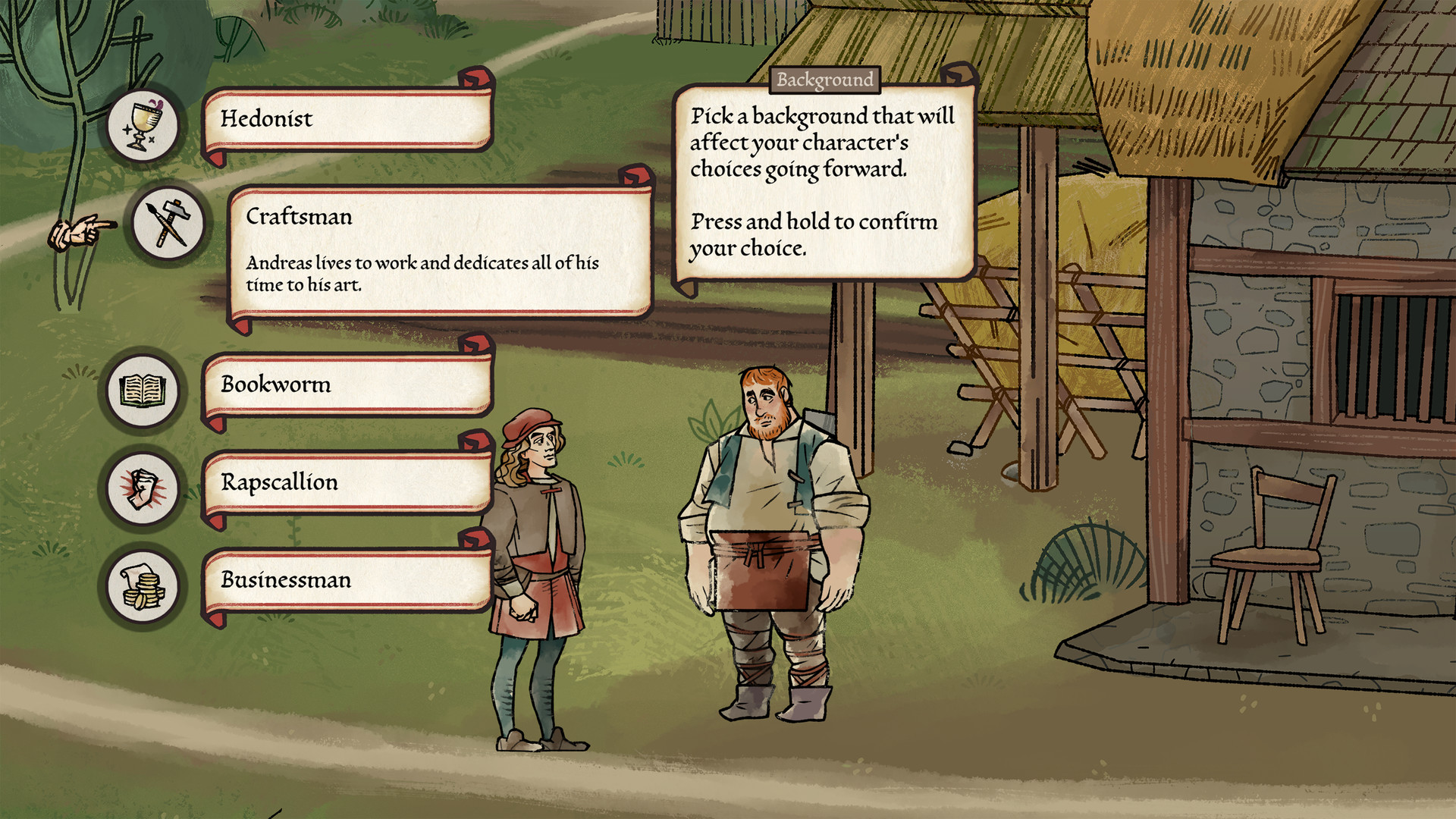
Players guide Andreas Maler through three murders set over roughly twenty-five years in 16th-century Bavaria, with academic and social backgrounds chosen at the start shaping which conversations and clues are accessible. Every decision is framed as carrying weight for the community, and the official description stresses lasting consequences across generations rather than a single branching path.
Manuscript-inspired visual identity
The world is rendered in the style of illuminated manuscripts and early printed books, with art, fonts, and UI all carrying period flavor. Official materials indicate this look is intentional rather than decorative, and reviewers consistently treat the aesthetic as a major reason the game stays memorable long after playing.
Short, focused runtime
Pentiment is built as a contained narrative rather than an open-world RPG, with typical playthroughs reported in the ten to twenty-five hour range. That makes it easy to finish in a long weekend and easy to revisit with a different background for a different interpretation.
Tense time and save constraints
Days are split into fixed time blocks, and activities such as working in the scriptorium force time forward whether the player is ready or not. The game does not allow manual saving, so a missed conversation or a wrong accusation can lock out events until a new run, which is the design feature most likely to frustrate.
Mature historical content
Pentiment ships with content descriptors covering public executions, stylized gore, suicide, references to abortion, sexual assault, and heavy alcohol use, so its tone is unflinching rather than sanitized. Players who want light medieval atmosphere should expect harder subjects woven into the investigation.
What players are saying
What keeps coming up positively
- Reviewers repeatedly call the writing exceptional and emotionally affecting, often comparing it to Disco Elysium as the highest praise available for narrative games.
- The illuminated-manuscript art direction is described as one of the most distinctive looks in recent years, with the style growing on players who initially felt unsure about it.
- The investigation structure across decades is praised for making choices feel meaningful and for letting an ending land hard after a measured build.
- Small touches such as being able to pet cats and the eccentric, human characters are repeatedly highlighted as reasons the world feels lived-in.
Where the friction shows
- Several reviewers report struggling badly with the time-passing rules, saying the game changes when time advances without warning and forces restarts after a wasted block.
- Backtracking through the same map every time block is a common complaint, with players describing it as a chore rather than exploration once the story momentum drops.
- The lack of manual saves is mentioned repeatedly, and combined with opaque time rules it is the main reason some negative reviews refuse to continue.
- A recurring negative criticism targets the writing's thematic slant, with players claiming the script treats religious and traditional figures more harshly than other worldviews.
Is it worth buying?
At $9.99 against a $19.99 regular price (50% off as observed on 2026-08-15), Pentiment is reasonable for a single-player narrative that most players finish in well under twenty hours, but it is not a deep discount beyond the usual Obsidian/Xbox sale cadence, so a patient reader can safely wait for a larger cut without missing the window.
Price checked 2026-08-15:$9.99,down from $19.99(50% off)。Player-fit tags
Good fit
- Players who treat narrative games like reading a novel and re-read dialogue to catch details
- History fans who enjoy 16th-century European religious and political context
- Single-player players who want a contained, no-grind story without multiplayer or live-service features
- Artists and writers who appreciate stylistically distinct presentation and period typography
- Players who want a short commitment they can finish in a couple of long sessions and then revisit with a different background
Probably not for you
- Players who want manual save control or clear warnings before time advances, since forced progression and no manual saves are the most common friction points
- Anyone expecting a traditional RPG with combat, skill trees, or open-world exploration, as Pentiment is a pure narrative adventure
- Players who dislike backtracking through the same map across multiple time blocks each day
- Readers who want light or sanitized medieval atmosphere, given the mature content descriptors covering violence, suicide, and sexual assault
04Torment: Tides of Numenera review: a deep, text-heavy narrative RPG for patient, Planescape-loving readers who value ideas over combat
STEAM DEAL · 75% OFF
Torment: Tides of Numenera
A patient, reading-heavy narrative RPG for players who want dialogue choices and lore to carry the experience, but expectations of meaningful combat or tight pacing will frustrate. Best approached at a deep discount by players who already enjoy visual-novel weight inside an isometric RPG shell.
Game highlights
Branching dialogue and Tides as moral currency
Words, choices, and actions are billed as the primary weapons, with nontraditional companions whose own goals shape outcomes. Instead of a strict good-or-evil axis, the Tides system measures how your decisions nudge your castoff toward distinct mental and philosophical dispositions, so reputation carries through to how NPCs respond later.
A far-future Numenera setting powered by familiar tech
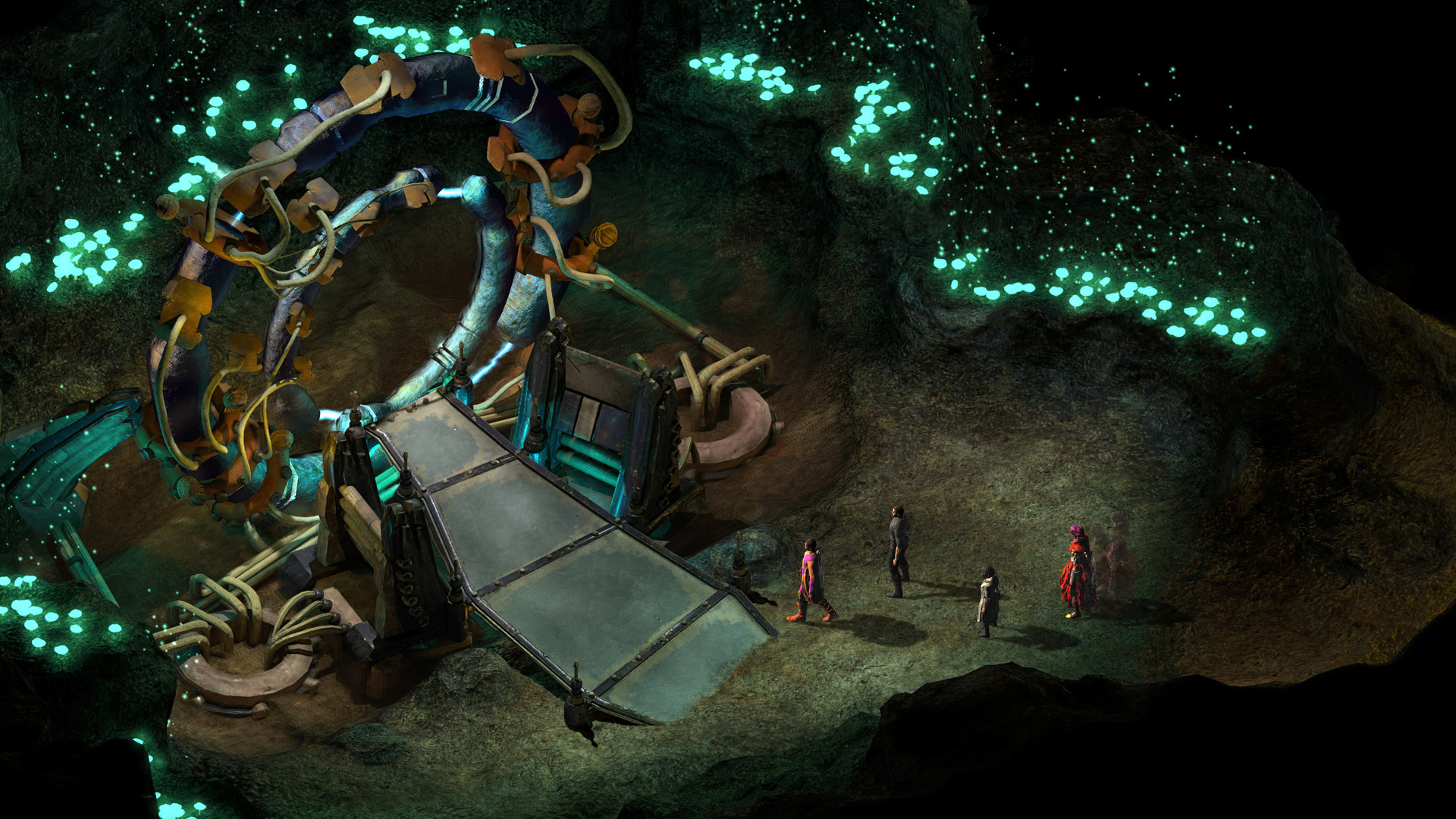
The game runs on technology from Pillars of Eternity and adapts the Numenera pen-and-paper setting, dropping you into a billion-years-hence Earth where casually advanced artifacts read as magic. Screenshots lean into strange locations and unpredictable items you can experiment with inside and outside of combat, which is where much of the worldbuilding lives.
Crisis-system combat that blends battles with puzzles
Fights lean on the Crisis system, where encounters are hand-crafted set-pieces that mix brawling with environmental puzzles, stealth, and social interaction rather than long trash pulls. That means fewer set-piece encounters and more scenario-style resolutions, though several reviewers describe the actual combat math as serviceable rather than exciting.
Single-player, isometric, cross-platform RPG scope
It is strictly single-player, available on Windows, Mac, and Linux, with Steam Cloud, Achievements, partial controller support, and Remote Play on Tablet for couch or handheld sessions. The Legacy and Immortal editions add soundtracks, novellas, concept art, and a strategy guide, so buyers who want the full package can get substantial extra reading material alongside the game.
Replayability built from choices rather than classes
Because morality in the Ninth World is intentionally murkier than a binary meter, the developer pitches the result as a deeply replayable experience where decisions and reputation ripple outward from your actions. Multiple named companion archetypes and Tide dispositions give very different playthrough flavors without leaning on traditional class branching.
What players are saying
What keeps coming up positively
- The Numenera setting and its strangeness are widely praised, with reviewers calling the worldbuilding and lore one of the game's strongest draws and a clear improvement over a generic fantasy backdrop.
- Fans of Planescape: Torment consistently highlight the philosophical tone, the big existential question framing the whole campaign, and the willingness to let dialogue do the heavy lifting.
- Several long-time players describe the story as genuinely moving or memorable, with named companion arcs and late-game twists landing for readers who give the text time to breathe.
Where the friction shows
- Multiple players describe the experience as essentially a reading-heavy visual novel in RPG clothing, where you spend most of your time in dialogue and never see side characters again after resolving their quests.
- Recurring frustration with build gates: skill checks are heavily weighted toward intellect-heavy builds like the Nano, leaving Jack and Glaive players locked out of content in the early game.
- The Crisis combat system is widely described as shallow or clunky, and reviewers report bugs, uneven pacing, and a sense that the main story wraps far earlier than expected.
Is it worth buying?
At the observed 75% discount, the price lands well below the regular ask, which softens the risk on a slow, text-heavy RPG. It is a sensible buy for narrative-first players curious about Numenera, but anyone who mainly wants a tight combat loop or a true Planescape replacement should wait for a deeper discount or try a smaller session first.
Price checked 2026-08-15:$8.74,down from $34.99(75% off)。Player-fit tags
Good fit
- Players who enjoy long stretches of branching dialogue and are happy treating a session as mostly reading and clicking.
- Fans of Planescape: Torment and other Obsidian-era CRPGs who want a newer, stranger setting to inhabit.
- Readers who like piecing together lore through item flavor text and NPC backstories rather than questlog breadcrumbs.
- Patient single-player explorers who prefer hand-crafted set-piece encounters over random battles and grinding.
- Players who enjoy replaying for reputation, companion, and disposition shifts instead of class combinations.
Probably not for you
- Action-focused RPG fans who want engaging, mechanically deep turn-based or real-time-with-pause combat as the main event.
- Players who dislike heavy exposition, multi-screen NPC dialogue, or visual-novel-length text dumps between action beats.
- Anyone expecting a strict, faithful Planescape: Torment sequel rather than a thematic successor in a new setting.
- Players who prefer offline or sandbox RPG loops with meaningful post-quest consequences in the open world, since side content often resolves and ends in a single conversation.
05Copycat: A 3-hour feline narrative indie built for cat lovers who want a meaningful story experience
STEAM DEAL · 60% OFF
Copycat
Worth grabbing on sale if you want a short, emotionally heavy story about a shelter cat being replaced, and you can tolerate heavy themes like abandonment and suicidal ideation. Skip at full price because the runtime is only around three hours and many players feel the ending undercuts its own message.
Game highlights
Narrative centered on Dawn the shelter cat
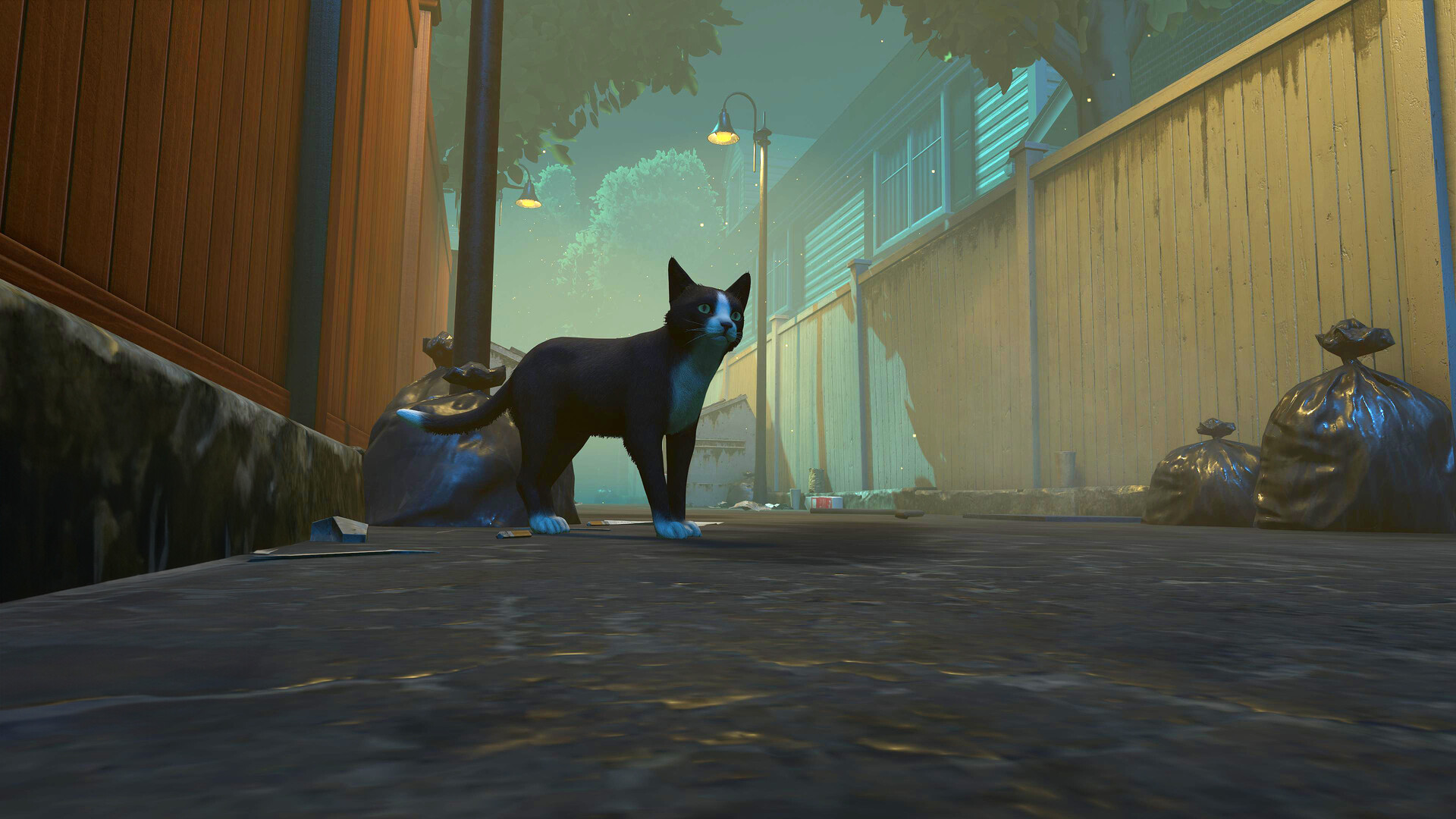
Copycat is a single-player adventure that follows Dawn, a sceptical newly adopted cat who dreams of being wild, and her owner Olive, a lonely older Australian woman grieving her missing companion. The official description confirms the plot pivots when Olive falls ill and a stray copycat takes Dawn's place, forcing her onto streets, alleyways and rooftops. Story and character work is the main reason many players push through the short runtime.
Heavy themes with emotional safety cues up front
Steam's content descriptors flag family trauma, abandonment and suicidal ideation, and the store page tells players in difficulty to seek support and play at their own pace. The developer spoon-feeds those warnings rather than burying them, which matters given how dark the late-game beats get. If you are sensitive to pet loss, animal neglect or depictions of self-harm, treat this as a content warning, not flavor text.
Short, linear runtime and minimal mechanics
Multiple reviewers report clearing the story in roughly three hours, which puts it right around or just past the Steam refund window. The loop blends light exploration with quick time events; failing a QTE simply retries the same prompt with no narrative penalty, which undercuts stakes. There is no multiplayer, no co-op, and no branching build system, so pacing depends almost entirely on the writing rather than mechanical variety.
Single-player comfort features and full voice acting
Steam categories list single-player only, full controller support with DualShock and DualSense recognized, Steam Cloud saves, captions available, family sharing, and achievements. The official description states the game is fully voice acted with hours of dialogue and an original music score by Daniel Bunting. That audio hand-off makes it a good fit for players who want to sit back with a controller instead of clicking through text.
What players are saying
What keeps coming up positively
- Many players describe the story as quietly heartbreaking and say the themes around pet loyalty and abandonment land hard, especially for current or former cat owners.
- Reviewers consistently praise the voice acting, original music and the colorful visuals that contrast the darker subject matter.
- Several players call it a memorable, model-to-be-inspired-by narrative experience and say the emotional beats stay with them after the credits.
- A noticeable group appreciates how openly the developers warn about sensitive content and frame the game as something to play at your own pace.
Where the friction shows
- Multiple reviewers reject the ending as a forced happy resolution, arguing that the owner abandons the cat in unsafe ways and yet is rewarded, which undercuts the moral message.
- Players repeatedly call out the quick time events as meaningless because failing just retries the same prompt without altering the story, which kills tension.
- Several negative reviews describe the human characters, especially Olive and her daughter Mae, as unlikeable and say the rails force affection you have been actively rejecting.
- Reviewers note the game is only about three hours long, which sits right around the refund cutoff and feels thin at full price, and minor visibility bugs like seeing through walls get mentioned often enough to be a recurring friction point.
Is it worth buying?
At $5.99 on a 60% discount versus a $14.99 regular price, Copycat lands in a reasonable zone for a three-hour narrative, but only if the themes appeal to you. The current sale price is the sensible entry point; paying full price is hard to justify when most players finish in a single evening. Treat this as a thoughtful curiosity rather than a value buy, since the runtime, QTE design and controversial ending are real caveats that the discount softens but does not erase.
Price checked 2026-08-15:$5.99,down from $14.99(60% off)。Player-fit tags
Good fit
- Cat owners or shelter volunteers who want a story that mirrors their bond with rescued animals and do not mind being emotionally wrecked
- Players who primarily want a short, voice-acted narrative they can finish in one or two sittings and then move on
- Anyone who prefers controller-driven single-player adventures with accessibility-friendly options like captions and Steam Cloud saves
- Readers who enjoy heavy indie dramas about family trauma, letting go and complicated love, and who appreciate upfront content warnings
- Players who enjoy reflecting on moral themes after the credits rather than chasing unlockables, builds or competitive replay
Probably not for you
- Anyone sensitive to depictions of pet abandonment, animal neglect or suicidal ideation, even with the built-in content warnings
- Players looking for meaningful player choice, branching endings or mechanically consequential QTE design, since the story is largely railroading despite surface-level prompts
- Anyone who wants longer-than-three-hour value per dollar at full price, given the short runtime and limited mechanical depth
- Multiplayer or co-op seekers, because the Steam listing and description confirm single-player only with no online or shared modes
- Players who dislike being pushed toward a happy ending they feel undermines the story's stated message about responsibility toward animals
06Heaven's Vault review: a patient sci-fi archaeology adventure for players who love deciphering worlds and story over action
STEAM DEAL · 60% OFF
Heaven's Vault
Buy now if you enjoy slow, contemplative exploration of a hand-built sci-fi setting and don't mind long stretches between plot beats; otherwise wait for a deeper discount or skip entirely. The 60% price cut makes the asking price much easier to justify for the right mindset.
Game highlights
Adaptive non-linear story
The official store page confirms a fully adaptive narrative that remembers every choice, discovery, and action, with characters whose attitudes shift accordingly. Progress can happen in any order, which encourages revisiting earlier sites once new vocabulary unlocks earlier scenes. This structure rewards players who replay or take their time, but does punish anyone hoping for a tight, linear plot.
Decipher-your-own-language puzzle loop
Players translate an entire ancient hieroglyphic script whose solutions carry narrative weight, not just abstract points. The store copy stresses that mistranslations can send you down wrong tracks, meaning guessing has real consequences even if it rarely blocks you. Reviews note the system is more world-building tool than hardcore linguistics challenge, which is worth knowing going in.
Open-world space river sailing
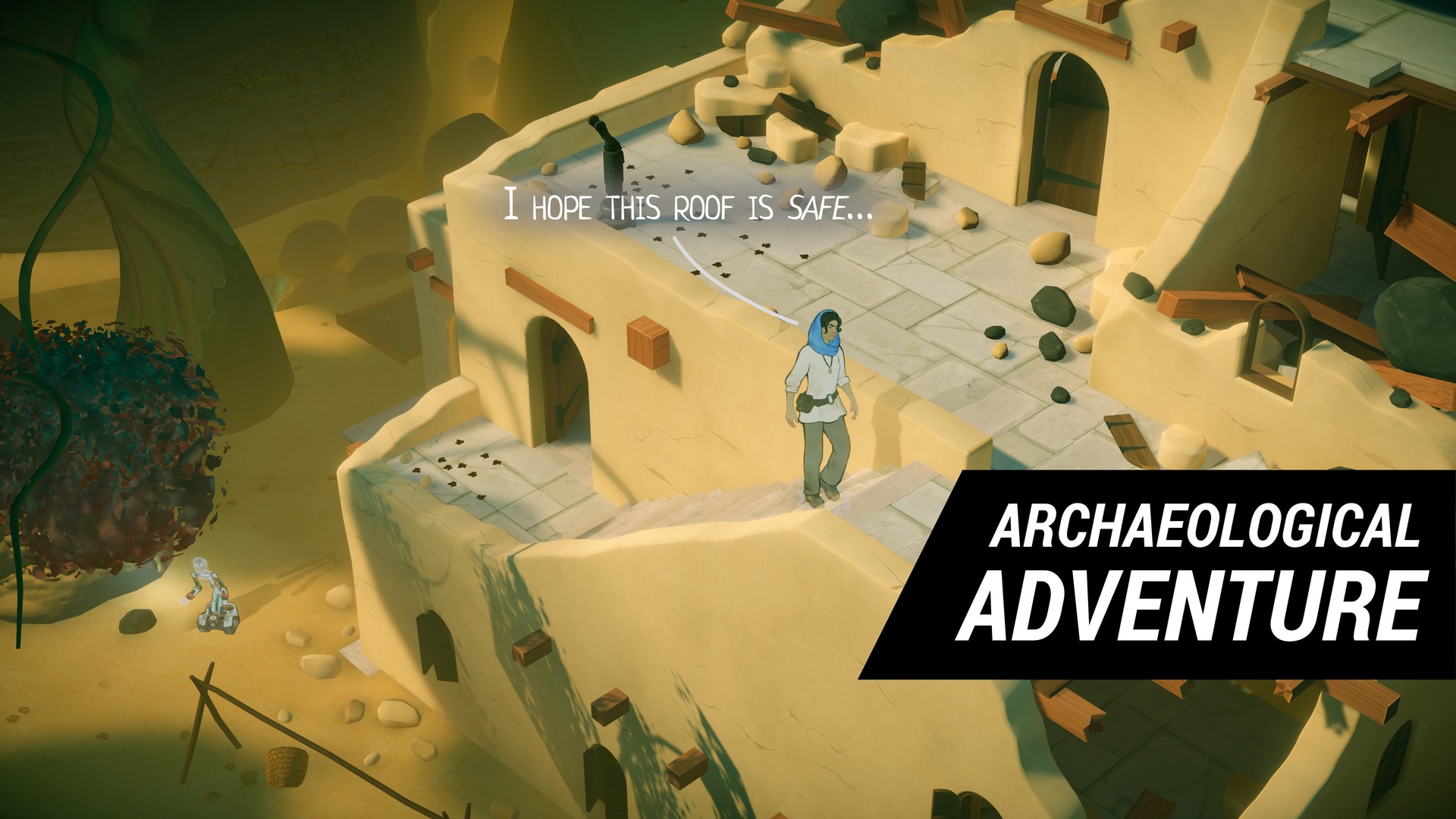
Exploration moves through fast-flowing space rivers connecting ancient ruins, with a small sailboat and companion Six handling navigation. Traversal between regions is a deliberate, time-consuming process; some travelers can be handed to the robot once familiar, but new routes require manual piloting. The pace is intentionally slow, and reviewers regularly call out travel as the biggest source of friction.
Hand-drawn worldbuilding and atmosphere
Official art direction and repeated praise call out gorgeous vistas, a distinctive sci-fi archaeology aesthetic, and music that fits the lonely, quiet mood. Characters like Six and Enkei are written to feel reactive rather than scripted. For players who value aesthetic and lore over mechanical depth, this is the main draw.
Long, branching mystery with multiple endings
Store materials describe a missing-robotist case that escalates into uncovering the secret of Heaven's Vault itself, with choices affecting relationships and outcomes. The story adapts to the order in which you explore, so two playthroughs can look very different. Replay value hinges entirely on whether you want a second pass through the same locations.
What players are saying
What keeps coming up positively
- Worldbuilding and the ancient Nebula setting feel deeply considered, with lore that sticks with players long after finishing.
- Companion characters, especially Six and Enkei, are widely seen as the highlight and make exploration feel inhabited.
- The translation mechanic gives a real sense of slowly learning a new language and uncovering cultural history, even when solutions are generous.
- Atmosphere, music, and hand-drawn art create a calm, contemplative tone that players describe as a welcome change from action-heavy games.
Where the friction shows
- Movement, sailing, and inter-region travel are slow and largely unspeeded, with no sprint, no quick travel, and frequent unskippable transitions that eat session time.
- Dialogue frequently fades in and out without an obvious pause, and missed lines or chosen options can be permanently locked without a checkpoint reload option.
- The translation UI is clunky to navigate, requiring repeated menu swaps and animations to cross-reference symbols, which frustrates players expecting a Chants-of-Sennaar-style puzzle.
- Random companion interruptions during walking and sailing break momentum and are widely cited as the single biggest source of friction.
Is it worth buying?
At $9.99 USD, down from $24.99 (a 60% discount observed 2026-08-15), this is a reasonable price for players who already know they want a slow narrative adventure. If you bounced off previous inkle titles, hated pacing in Sable, or specifically wanted the language puzzles from Chants of Sennaar, the discount helps but does not fix the underlying pacing and UI complaints, so waiting for a deeper cut is fair. Anyone new to the genre should weigh whether 15+ hours of deliberate exploration sounds like relaxation or homework.
Price checked 2026-08-15:$9.99,down from $24.99(60% off)。Player-fit tags
Good fit
- Readers who want a slow, novel-like sci-fi mystery they can chip away at over multiple evenings.
- Players who enjoy gently learning a fictional language as part of a story rather than as a standalone puzzle.
- Lone explorers who like taking their own notes about history, geography, and characters as they piece things together.
- Fans of inkle's previous branching narratives who already accept that pacing will be unhurried.
- Anyone looking for a calm, low-stakes adventure focused on discovery rather than combat or platforming.
Probably not for you
- Action-oriented players who want combat, platforming, or any real mechanical challenge beyond reading and clicking.
- Short-session players, since travel and transitions are slow and save points are sparse, making 15-minute sessions largely impractical.
- Players who want a hard linguistic puzzle on the level of dedicated translation games, since the system is forgiving and shallow.
- Anyone who dislikes frequent unskippable animations, dialogue that auto-fades, or dialogue choices that lock permanently without a rewind option.
07Under The Waves review: a contemplative narrative dive for players craving grief-driven story and quiet ocean exploration
STEAM DEAL · 95% OFF
Under The Waves
Under The Waves is worth picking up at its heavy discount if you want a short, melancholic narrative journey rather than a survival challenge, but skip it if you prefer tight controls or branching choices.
Game highlights
Narrative-first grief story
The official description frames the game as a poetic adventure about professional diver Stan confronting loss in a techno-futuristic 1979 North Sea, with strange events pulling him deeper into his own psyche. Reviews consistently describe the plot as the main reason to keep playing, with one player calling the emotional arc 'sweet and moving' and another highlighting how Stan's internal thoughts fill the silence during longer swims. If you buy games for character-driven storytelling, that pillar is the strongest piece on offer.
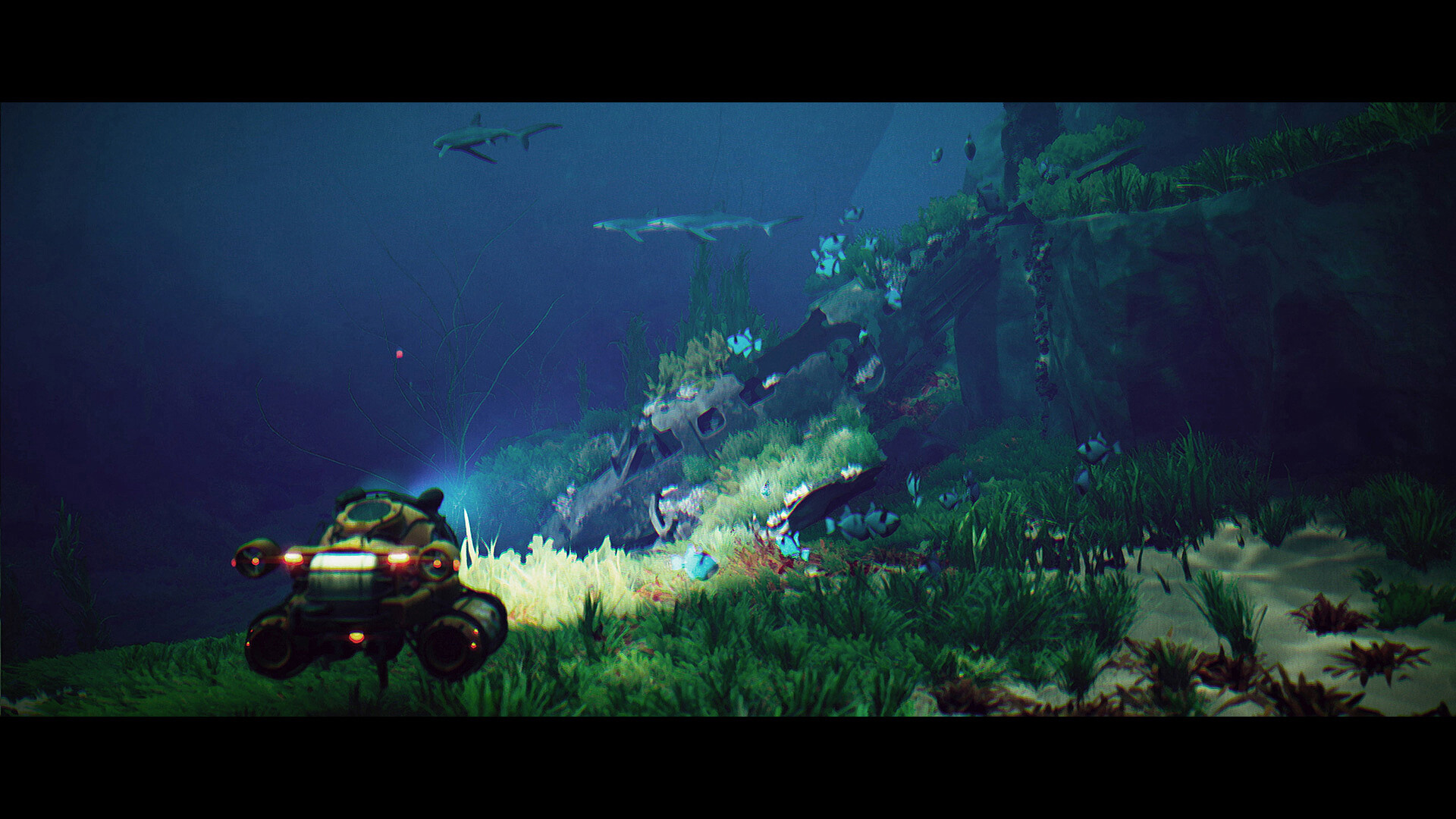
Submarine and scuba exploration
You pilot a one-man submarine across the seabed and dive on foot into caves, wrecks, and submerged plants, following memory manifestations as collectible-driven breadcrumbs. Several reviews praise the sense of scale and the way radio chatter from Stan's handler breaks up travel, while one player who logged roughly 30 hours noted the map is large enough to feel like real exploration without demanding fast-travel systems. The exploration loop is intentionally paced for atmosphere rather than efficiency.
Light crafting and salvage layer
Materials gathered from wreckage and seabed debris feed into oxygen and fuel upgrades, plus equipment that lets Stan push further into the abyss. Reviewers describe the system as minimal and unobtrusive: no inventory weight, no carry limit, and resources are typically abundant enough that grind rarely becomes the bottleneck. The official pitch confirms that crafting exists to enable more exploration rather than gate progression.
Atmosphere and visual identity
The official feature list highlights retro-futuristic facilities, varied underwater biomes, and an atmospheric soundtrack meant to evoke contemplation. Players regularly single out the marine life, lighting, and music as the strongest elements, with one reviewer calling the visuals 'gorgeous and relatively solid' and another crediting the game with genuinely capturing the feeling of being underwater.
Controller-first input design
Steam categories list full controller support and a 'Gamepad Recommended' badge, and the game itself surfaces a warning at launch that keyboard and mouse play is not the intended experience. That design choice is a defining feature rather than a footnote, because it shapes how comfortable the roughly 4-8 hour campaign feels moment to moment.
What players are saying
What keeps coming up positively
- Atmosphere, soundtrack, and underwater visuals are widely described as the standout strengths of the experience.
- Story is consistently called emotional, sweet, and the main reason to finish, with Stan's inner monologue adding weight to quiet exploration.
- Crafting is repeatedly praised for being lightweight, with no weight limits and resources that rarely force grinding.
- Map size and pacing feel rewarding to explore, with collectibles and secrets scattered without overwhelming the player.
Where the friction shows
- Keyboard and mouse controls are repeatedly called frustrating or unplayable, and the game warns at startup that a controller is expected.
- Multiple players report crashes, performance hiccups, and rough optimization, including notably slow behavior on Steam Deck.
- Some reviewers find the narrative clichéd, melodramatic, or underdeveloped, with characters and themes they could not connect to.
- Repeated swimming segments, slow travel between objectives, and a mandatory coffee-making routine at the start of each in-game day are cited as pacing friction.
Is it worth buying?
At $1.49 against a $29.99 regular price (95% off), this is an easy impulse buy for anyone curious, but only if you own a controller and tolerate a short, story-led campaign without meaningful mechanical depth.
Price checked 2026-08-15:$1.49,down from $29.99(95% off)。Player-fit tags
Good fit
- Players who primarily buy games for emotional, character-driven storytelling
- Fans of slow, contemplative exploration who enjoy reading environmental details and listening to internal monologue
- Controller owners looking for a 4-8 hour atmospheric diving experience on a tight budget
- Players curious about Quantic Dream-adjacent narratives who want a low-risk entry point at deep discount
- Anyone who enjoys lightweight crafting woven into exploration rather than as a core progression gate
Probably not for you
- PC players without a usable controller, given the launch warning and repeated complaints about keyboard and mouse handling
- Fans of Subnautica-style survival who expect danger, hunger, or systemic pressure from the ocean
- Players who want branching choices, puzzles, or mechanical depth beyond swim-and-collect
- Anyone sensitive to unskippable cutscenes or repetitive daily routines baked into the story structure
- Buyers hoping for active wildlife interaction, since reviews note fish and sharks are non-threatening and largely ornamental
08Heavy Rain on PC: a choice-driven thriller that rewards patient players who value story and tough decisions
STEAM DEAL · 95% OFF
Heavy Rain
Heavy Rain is a strong pick for anyone who treats a narrative like a movie they can steer, especially at a deep discount. Skip it if you want tight mechanical gameplay or a relaxed, low-stakes wind-down.
Game highlights
Four-protagonist crime thriller
You rotate between four playable characters on their own leads, each tied to the hunt for the Origami Killer. The hunt unfolds across roughly four in-game days, with multiple leads and motives that braid together. Because characters can live or die based on what you do, replays are a built-in part of the experience rather than an afterthought.
Choice-driven, consequence-heavy design
Per the official description, every choice and move can result in dramatic, game-changing consequences, including determining who lives and dies. The PC version retains that branching structure, and chapter select with save options makes it easier to chase alternative outcomes without replaying entire acts. A specific ending-tied achievement encourages thorough exploration across runs.
Accessible controls designed for immersion
The game deliberately keeps the HUD uncomplicated so the story stays front and center. It supports both gamepad and keyboard/mouse input, and is fully optimized for PC with 4K resolution and a 60 fps target. That said, controller players in particular may need patience while learning the input language.
Built for single-player, story-first sessions
Steam categories confirm single-player only, with Steam Achievements, Cloud saves, full controller support, and Trading Cards. There is no multiplayer or co-op component, which fits the intimate, character-driven framing. Sessions can stretch, so planning longer sits helps with momentum.
Multi-award pedigree with PC-era polish
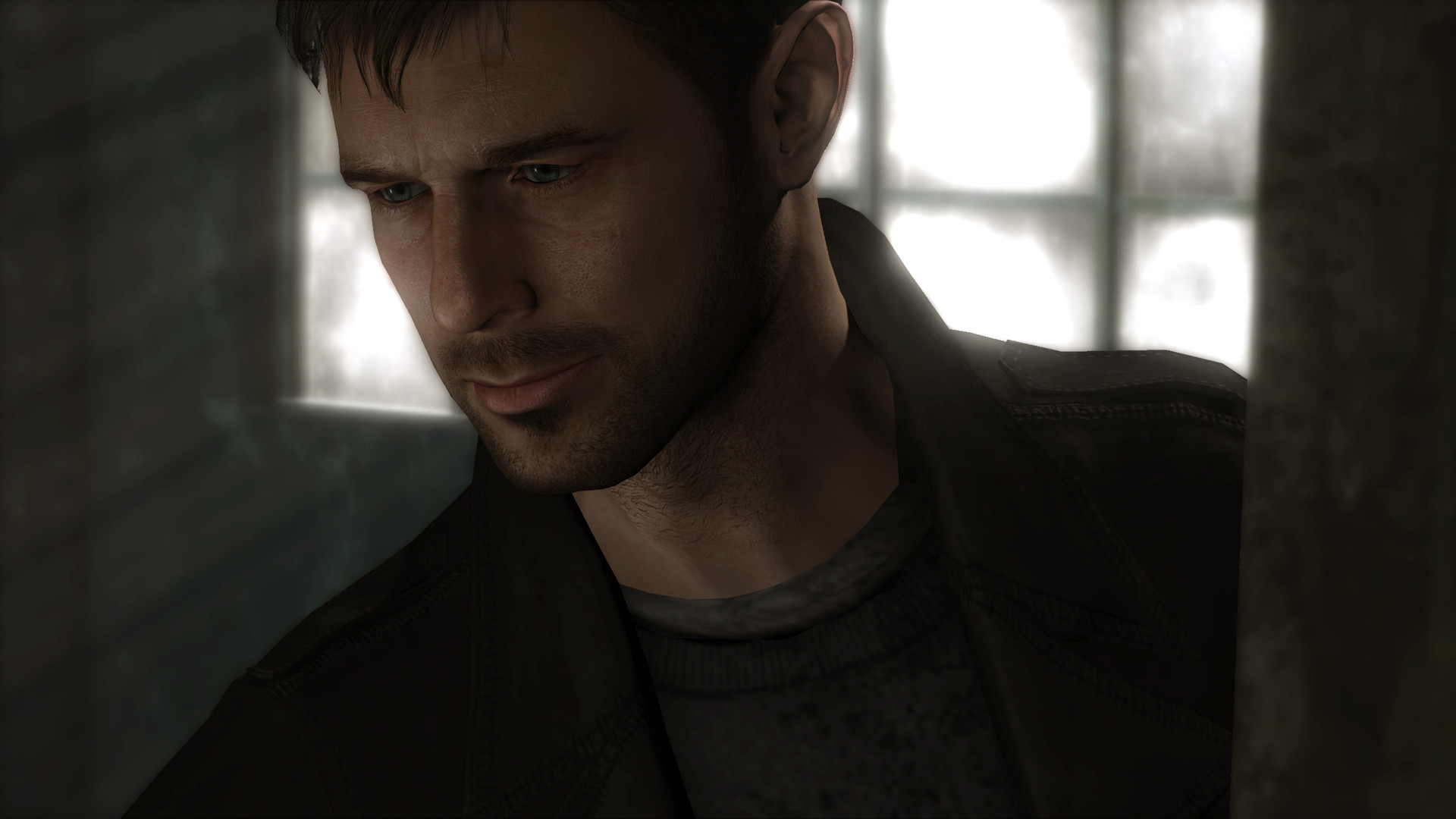
Heavy Rain won the 2011 BAFTA for Best Story among other Story, Music, and Technical Innovation honors, and the PC release brings it forward with modern visuals. Genres listed are Action and Adventure, with the story doing the structural heavy lifting over combat mechanics.
What players are saying
What keeps coming up positively
- A gripping, emotionally heavy narrative that lingers long after the credits, with multiple protagonists that feel distinct and human.
- Choices carry real weight because the story adapts to mistakes instead of reloading, making outcomes feel earned.
- Strong replay value through chapter select and branching endings, with at least one notoriously difficult achievement tied to seeing all outcomes.
- Atmosphere and tension are a standout, including set-pieces that turn ordinary moments into stressful, memorable scenes.
Where the friction shows
- The control scheme is divisive: walking, aiming, and several quick-time inputs feel awkward, especially when precise stick motions are required.
- Some plot twists and connective logic are criticized as not holding up under scrutiny, with reviewers suggesting a playthrough video tells the story more comfortably.
- The opening stretch is repeatedly described as slow or boring before the main plot hooks in, raising the bar for patience.
- Quick-time events demand specific directional inputs that can frustrate players using certain controller setups.
Is it worth buying?
At the current discounted price of $0.99 versus a regular $19.99, this is a very low entry cost for a multi-award-winning narrative game. The discount is steep at 95 percent off, making it easy to justify even if the mechanics end up not clicking for you. Worth grabbing now rather than waiting for a deeper cut that may not come.
Price checked 2026-08-15:$0.99,down from $19.99(95% off)。Player-fit tags
Good fit
- Players who prioritize branching story and character drama over mechanical challenge.
- Patient players willing to push through a slow first hour before the main plot takes hold.
- Replay-minded players who enjoy using chapter select to chase alternate outcomes and endings.
- Single-player only, so it suits people who want a self-contained experience without co-op or multiplayer.
- Anyone curious about interactive thrillers and willing to tolerate awkward controls for the sake of the story.
Probably not for you
- Players looking for tight, responsive action gameplay or skill-based combat.
- Anyone wanting a cozy, low-pressure wind-down rather than a tense, high-stakes thriller.
- Short-session players, since pacing and momentum favor longer sits.
- Players unwilling to wrestle with clunky controls and finicky quick-time inputs.
09Discounty game: a charming shop-management sim for players who enjoy stocking shelves while uncovering Blomkest’s unfinished small-town mysteries

STEAM DEAL · 40% OFF
Discounty
Discounty is worth considering at $11.99 if its combination of shelf arrangement, checkout work, trading, and small-town narrative appeals to you. The core shop loop can be absorbing, but recurring reports of repetitive progression, limited customization, unresolved story threads, technical friction, and a weak ending make a deep discount preferable to buying impulsively.
Game highlights
Run the whole supermarket
You stock shelves, organize storage, clean floors, ring up purchases, and rearrange products to create efficient aisles. Prompt service matters because customers do not like waiting, while reinvesting profits lets you expand the store and advertise around town.
Trade and town relationships shape the campaign
The official campaign has you earn manufacturers’ trust, negotiate supply deals, sell local specialties, and get to know Blomkest’s residents after hours. Your decisions sit between pursuing profit and benefiting the community, giving the otherwise hands-on store work a narrative purpose.
A focused single-player campaign
Discounty is built around a 20–25 hour single-player campaign, with Steam Achievements, cloud saves, full controller support, and family sharing. Its Windows-only listing also matters for players whose library centers on Mac or Linux.
Customize within a compact layout
You can choose your character’s appearance, outfit, and name, then redesign the shop with shelves, products, aisles, and decorations. The available space is limited, though, and reviews commonly describe the resulting customization and layout options as too restricted for sustained experimentation.
Management with pressure, not pure relaxation
The store routine initially provides a satisfying, low-stress loop, but review evidence points to repeated gathering and progression demands. Timers or punishing recovery can also reduce room to experiment, so this is more engaging as a goal-driven management session than a fully carefree wind-down game.
What players are saying
What keeps coming up positively
- Many players enjoy the early shop routine of stocking, serving customers, arranging products, and completing practical tasks without excessive complexity.
- The distinctive pixel-art town and quirky local atmosphere are recurring sources of charm, especially for players looking for a setting that does not simply imitate other farming or village sims.
- Several reviews find the core management loop satisfying and absorbing once the store begins operating, with trade deals adding variety beyond basic checkout work.
- Playing at a self-directed pace works well for solo players who want short management sessions alongside exploration, relationship-building, and story progression.
Where the friction shows
- Repeated gathering, stock management, and progression work become grindy for some players, particularly after the opening stretch of the campaign.
- The town contains buildings, upgrades, and plot hooks that players expect to develop, but recurring criticism says many are never meaningfully used or resolved.
- Customization is widely described as limited: the store and house are small, decoration choices are scarce, and the final layout leaves little space for creative arrangements.
- Reviews report an abrupt, underwhelming ending, with shallow quests, repetitive town dialogue, little reason to continue afterward, and several unresolved character threads.
Is it worth buying?
At the observed $11.99 price, down from $19.99, Discounty offers a more reasonable entry point for management fans who can accept repetition and an uneven story. It is best treated as a compact campaign rather than a long-term shop sandbox: wait for a deeper discount if unfinished narrative threads, limited layout freedom, or Steam Deck performance would bother you.
Price checked 2026-08-15:$11.99,down from $19.99(40% off)。Player-fit tags
Good fit
- Players who enjoy stocking shelves, organizing displays, serving customers, and reinvesting shop profits
- Solo players who prefer self-paced management campaigns with controller support
- Players drawn to quirky small-town settings, local characters, and trade relationships
- Buyers comfortable with a finite story campaign rather than an open-ended shop sandbox
- Players willing to tolerate repetition and technical rough edges in exchange for a distinctive store-management premise
Probably not for you
- Players who dislike repetitive gathering, stock handling, or progression grind
- Story-focused players who want meaningful town restoration, character development, and resolved plot threads
- Builders seeking extensive shop, house, decoration, or character customization
- Steam Deck users requiring smooth town performance and robust graphics settings
- Players expecting a polished sandbox that remains engaging after the main campaign ends
10CHAOS;CHILD review: a dark Shibuya murder mystery visual novel for story-first players who crave layered routes

STEAM DEAL · 80% OFF
CHAOS;CHILD
If you want a heavy, character-driven visual novel with multiple routes and a payoff that lingers, CHAOS;CHILD is an easy buy at 80% off. If you dislike reading walls of text or need quick gameplay loops, skip it.
Game highlights
Standalone Science Adventure entry
The official store listing positions CHAOS;CHILD as a self-contained story in the Science Adventure universe, developed by MAGES. Inc. and published by Spike Chunsoft. It runs on Windows with partial controller support, Steam Cloud, achievements, trading cards, and remote play on phone and tablet. Single-player only, so plan solo sessions rather than couch co-op.
Post-quake Shibuya setting and New Generation Madness
You play as Takuru Miyashiro, an arrogant newspaper club president investigating a string of bizarre murders in a Shibuya rebuilt after a devastating 2015 earthquake. The killers echo a six-year-old series of killings, and suspects called gigalomaniacs can manifest their delusions as reality. Players who enjoy urban Japanese atmosphere and grounded high-school casts will find the premise immediately gripping.
Choice-driven delusions and six endings
Takuru can pivot between disturbing nightmares and pleasurable daydreams, and the route you push shapes what he perceives. Official features promise six endings unlocked by shifting investigations and relationship events, meaning a first playthrough is rarely the full story. Returning players spend tens of hours chasing the true ending, with reviewers reporting 70 to 100+ hour completion runs.
Heavy visual novel content warnings
The Steam page carries descriptors for graphic violence, blood-soaked crime scenes, exposed corpses, torture imagery, sexual content, partial nudity, and strong language. Crime scenes include dangling entrails and exposed brains, so players sensitive to horror imagery should check the warnings before buying. Reviewers also flag recurring depictions of disturbing death that hit close to home.
Multiple routes with thematic depth
Each heroine route reflects a different angle on truth and morality, and reviewers consistently describe emotionally scarring payoffs across branches. The route structure rewards committing to several playthroughs, especially if you want the true ending that recontextualizes earlier routes. Plan on managing save files carefully, since the choice between delusion and reality branches the story permanently.
What players are saying
What keeps coming up positively
- Reviewers repeatedly call the writing emotionally devastating and describe routes that linger long after finishing, with several naming it the best Science Adventure title they have played.
- The mystery structure, serial-killer atmosphere, and thematic depth about truth and echo chambers earn consistent praise, with characters like Arimura and Senri highlighted as standouts.
- Long-term fans report 70 to 100 hour completion runs and emotional payoffs at the true ending, suggesting strong replay value for completionists willing to grind every route.
- The OST and slice-of-life beats woven into the thriller plot get frequent mentions as effective pacing tools that keep momentum through dense reading sections.
Where the friction shows
- Multiple negative and mixed reviews call the descriptive prose bloated, citing endless text crawls and filler conversations that bury the murder mystery in padding.
- Some reviewers flag late-game plot twists that do not land, noting two or three reveals that feel unnecessary compared with the stronger ones earlier in the story.
- A recurring complaint targets one prominent heroine as insufferable, with critics arguing she reads as a one-dimensional trope that breaks immersion during her route.
- Players coming from Chaos;Head Noah sometimes describe CHAOS;CHILD as a downgrade in execution, suggesting newcomers may want to play Chaos;Head Noah first for context.
Is it worth buying?
At $4.99 versus a $24.99 regular price during the 80% off sale snapshot on 2026-08-15, this is a low-risk pickup for visual novel fans. Anyone outside that niche should still wait for a deeper sale because the reading volume is punishing and the value lives in replaying routes you may never finish.
Price checked 2026-08-15:$4.99,down from $24.99(80% off)。Player-fit tags
Good fit
- Players who want a slow-burn serial-killer visual novel with branching routes and a true ending worth chasing
- Readers comfortable with 50 to 100 hours of dense Japanese prose and descriptive narration
- Fans of the Science Adventure series looking for a standalone entry that ties into the broader universe
- Completionists who enjoy unlocking six endings and comparing route-specific twists across playthroughs
- Solo players who want atmospheric horror, urban Shibuya flavor, and character-driven mysteries without co-op pressure
Probably not for you
- Players who dislike long stretches of text, descriptive crawls, or visual novels with minimal gameplay interaction
- Anyone sensitive to graphic violence, blood-heavy crime scenes, sexual content, or disturbing horror imagery as listed in the content descriptors
- Readers who prefer single-pass stories and do not want to replay routes or manage save files for alternate endings
- Action or puzzle gamers expecting mechanical depth, since CHAOS;CHILD is a pure choice-driven adventure with no combat or co-op modes
Share this article