01Dicey Dungeons: charming dice roguelike for players who enjoy mastering six wildly different classes and adapting to relentless RNG punishment
STEAM DEAL · 80% OFF
Dicey Dungeons
A breezy, charming dice-driven roguelike that's easy to recommend at the current 80% discount, especially if short run-based sessions appeal to you. Players who dislike luck-heavy outcomes or want long-term meta-progression should look elsewhere.
Game highlights
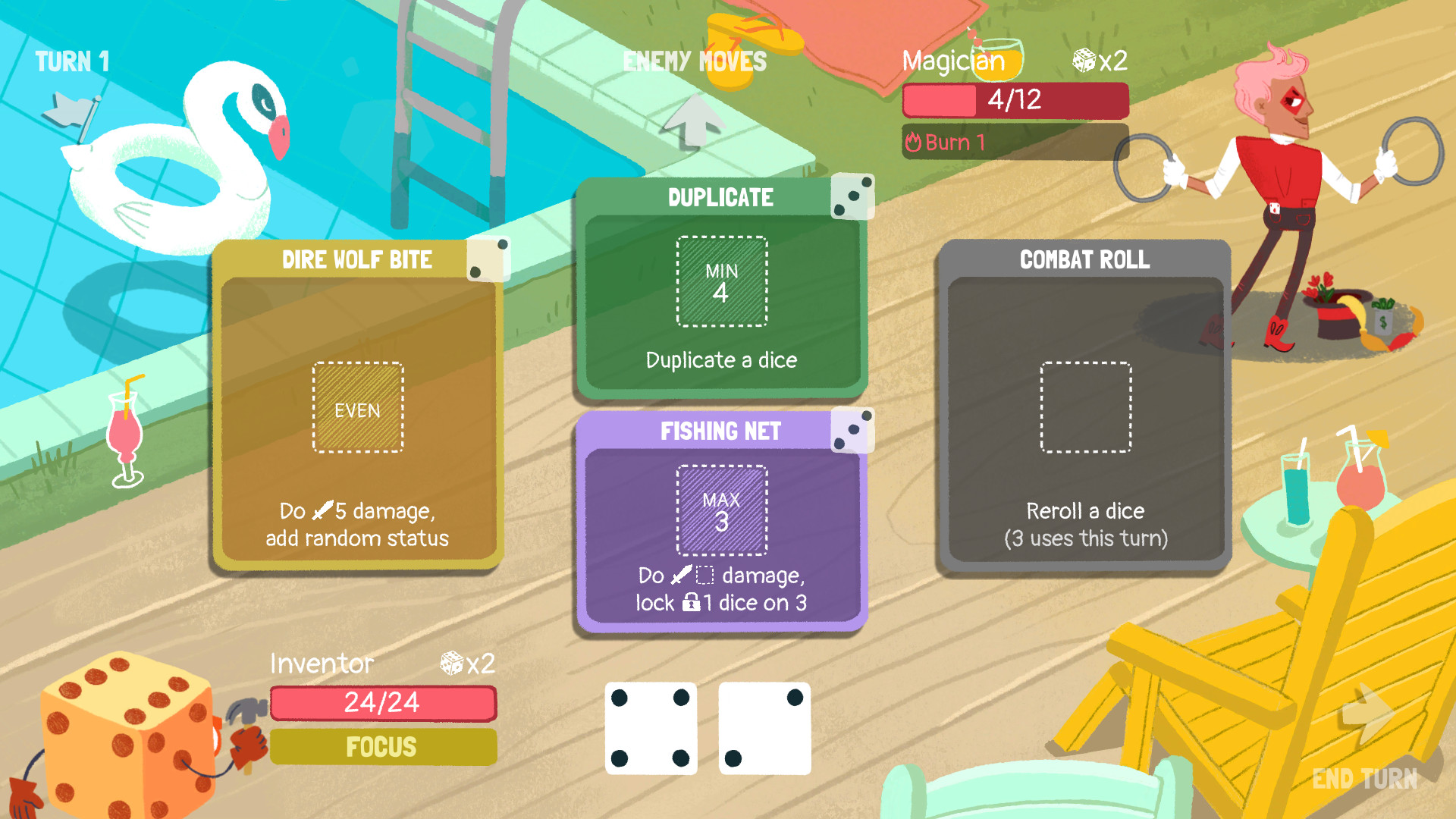
Six distinct class identities
The official description lists six playable classes - Warrior, Thief, Robot, Jester, Inventor, and Witch - each with mechanics that meaningfully change how you spend your dice. Reviewers repeatedly call out the Witch and Inventor as feeling especially different from a standard deckbuilder, which keeps the early hours of switching classes interesting.
Fast, run-based roguelike structure
Each character has six chapters plus a finale, and the Reunion DLC adds another six episodes, so a single run stays short. The store page describes it as a fast-paced deckbuilding roguelike, and reviewers confirm runs fit nicely into short breaks or low-energy evenings.
Procedurally generated dungeons with personality
Official details promise endless procedurally generated play-throughs against a roster of unusual enemies, from vacuum cleaners to Irish mythology creatures. Reviewers highlight how the quirky monster designs and upbeat art from Marlowe Dobbe keep repeats from feeling identical, even when underlying levels repeat.
Strong presentation and soundtrack
The store page credits Chipzel for the soundtrack and praises the adorable artwork, and multiple reviews back this up by calling the music funky and the visuals charming. That polish is one of the main reasons players keep coming back for another run despite frustration with the dice.
Accessible onboarding, escalating RNG frustration
Several reviews note the game is easy to pick up and exciting for the first few hours while you learn the mechanics. Once difficulty climbs, the same reviewers report that the tactical space shrinks and outcomes hinge more on the dice than on your choices, which is the core friction to weigh before buying.
What players are saying
What keeps coming up positively
- The art, character animations, and Chipzel soundtrack are repeatedly called charming and a major reason to keep playing.
- Short run length and quick restarts make it work well as a casual pick-up-and-put-down game, including on a work laptop.
- The six classes genuinely play differently, so swapping characters feels like a fresh puzzle rather than a reskin.
- The early hours and lower difficulty settings are widely described as fun, snappy, and easy to learn.
Where the friction shows
- Multiple players report that higher difficulties tilt the game toward luck over strategy, with runs decided by dice rolls rather than planning.
- There is no meta-progression between runs, which several veteran roguelike fans cite as a reason the game feels hollow after the first few hours.
- Some characters, most often the Witch, are singled out as weaker or more frustrating to pilot than others.
- Enemies appearing to roll disproportionately well fuels a recurring perception that the dice are stacked against the player.
Is it worth buying?
At $2.99 against a $14.99 regular price (80% off in the supplied snapshot), the cost of entry is low and easy to justify for a short, charming roguelike. If you specifically want deep meta-progression or skill-driven combat, the recurring complaints about luck and lack of long-term hooks suggest waiting for an even deeper discount or skipping it entirely.
Price checked 2026-08-15:$2.99,down from $14.99(80% off)。Player-fit tags
Good fit
- Players who enjoy short, run-based roguelike sessions they can complete in a single sitting.
- Fans of dice mechanics, push-your-luck systems, and adapting builds on the fly.
- Players who value strong art and soundtrack as a reason to replay a roguelike.
- Roguelike newcomers who want a gentle onboarding curve before tackling harder episodes.
- Anyone looking for an inexpensive, low-stakes game that runs well on modest hardware or a laptop.
Probably not for you
- Roguelike veterans who want a deep meta-progression system to advance between runs.
- Players who dislike luck-heavy combat where dice rolls routinely override planning.
- Anyone expecting long, branching campaigns rather than short repeatable runs.
- Players sensitive to perceived RNG streaks, since multiple reviews complain about the dice feeling stacked against them.
02For The King review: dice-driven roguelike RPG best tackled with co-op friends who enjoy punishing mastery runs

STEAM DEAL · 80% OFF
For The King
A board-game-styled roguelike RPG that sings with a co-op partner and punishes careless play. At 80% off, the asking price is low enough that curious strategic players can safely try it, but the relentless randomness means it is not for everyone.
Game highlights
Dice-driven turn-based combat with a slot twist
IronOak Games built the combat around dice rolls, with a unique slot system governing attacks and special abilities rather than free-form menus. Fights are presented as JRPG-style turn-based engagements, but the underlying RNG means every swing can land or miss in surprising ways. The official store page explicitly markets this as the central combat mechanic, so players who dislike chance-driven outcomes should know exactly what they are signing up for.
Procedural maps, quests, and unlocks across runs
Each playthrough reshuffles map layouts, side quests, loot, and random events so two campaigns rarely feel identical. Progress is not lost between runs either, since the Lore store lets players spend currency earned across runs to unlock new weapons, items, NPC types, classes, and events. That long-term meta layer gives losing runs a tangible payoff and adds real reason to start over after a frustrating defeat.
Flexible solo, local, and online co-op with party splitting
For The King officially supports single player, local shared-screen co-op, and online co-op with phones, tablets, or TVs via Remote Play, plus Steam Remote Play Together. A standout tactical option is splitting the party so members cover more of the map, at the cost of weaker individual encounters. Several reviewers specifically praised this flexibility, though others warn that solo play can feel lonelier and more punishing than the co-op version.
All expansions bundled in the base product
The store page advertises that For The King ships with every previously released addition, including Dungeon Crawl, the Frozen Expanse Adventure, Gold Rush Un-Cooperative Mode, and Into The Deep. Players who buy the base entry get the full content lineup instead of being pushed toward DLC. That breadth matters for a replay-heavy roguelike since each expansion reworks enemy types, biomes, and rules.
Cross-platform PC support and approachable accessibility
IronOak officially supports Windows, macOS, and Linux, with full controller support, adjustable difficulty, save-anywhere, and keyboard- or mouse-only input options listed in the categories. The game also tracks Steam Achievements and supports Steam Cloud. These toggles lower the barrier for casual or controller-first players who want to sample the punishing difficulty before committing to long runs.
What players are saying
What keeps coming up positively
- Co-op play, both online and local couch, is widely called the strongest way to experience the game, with group sessions turning rough dice rolls into shared laughs rather than solo frustration.
- Procedural maps, unlockable classes, and a meta-progression store keep repeat runs feeling fresh, with multiple reviewers reporting dozens or even hundreds of hours invested.
- Runs are quick to pause and resume thanks to save-anywhere support, which working parents and busy players pointed to as a major practical plus.
- The board-game aesthetic and turn-based combat read as intuitive even to players who do not normally identify as RPG fans, making group onboarding smoother than expected.
Where the friction shows
- Randomness pervades nearly every system, from combat hits and loot drops to map generation, and multiple experienced players report losing long, optimized runs to a single bad roll they could not mitigate.
- Difficulty scaling is repeatedly called unfair, with early mistakes or low-RNG shops snowballing into failed campaigns, and players note that even the easiest setting still feels punishing.
- Solo play is functional but widely described as a stripped-down shadow of the co-op loop, lacking the camaraderie that softens heavy RNG streaks.
- Long runs can be wiped out by hours of bad luck, so players with limited session windows or low tolerance for repetition may find the loop demoralizing rather than rewarding.
Is it worth buying?
The game is currently $3.99 against a $19.99 regular price on Steam, an 80% discount at the time of writing. That price point is friendly for a curiosity buy, especially since all expansions are bundled in and Steam Cloud plus Remote Play expand the setup options. Players who cringe at dice-driven defeat should still watch a stream first, because the recurring complaint about unforgiving RNG has not gone away with the expansions. Anyone strongly averse to repetition-driven grind should temper expectations regardless of price.
Price checked 2026-08-15:$3.99,down from $19.99(80% off)。Player-fit tags
Good fit
- Players who host regular online or local co-op nights and want a turn-based RPG that rewards party banter.
- Roguelike fans who actively enjoy losing runs as long as unlocks and procedural variety carry them forward.
- Strategy-leaning players who like planning route choices, party splits, and risk evaluation between dice rolls.
- Parents or busy adults who need a save-anywhere game with short, pausable turns that can be picked up and dropped.
- Collectors building a deep Steam library at discount, given the bundled expansions and cross-platform PC support.
Probably not for you
- Players who avoid RNG-heavy systems and demand reliable, skill-only outcomes.
- Anyone hoping for a tightly balanced solo campaign, since the co-op experience is widely treated as the intended mode.
- Short-session or casual players who dislike repeating the same several-hour run after a bad dice streak.
- Speedrunners or efficiency-focused optimizers frustrated by long losing runs that can collapse from a single low-percentage check.
03Dinotica: a prehistoric roguelite where taming, breeding, and punishing jungle runs reward patient dinosaur tamers
STEAM DEAL · 25% OFF
Dinotica
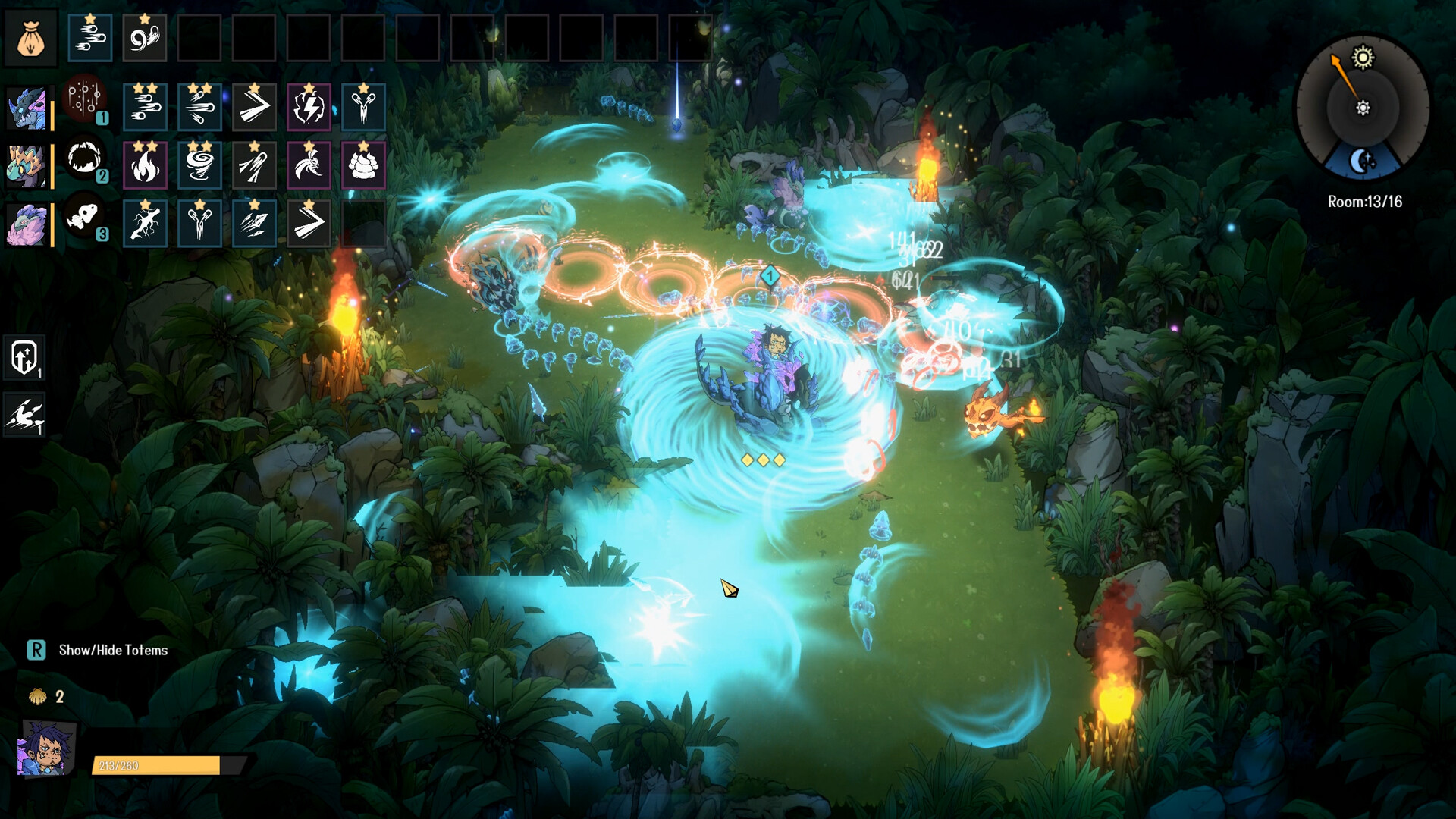
Dinotica is a charming but rough-edged early-access sandbox roguelite where taming dinos, breeding stronger companions, and building a settlement form a loop that rewards repeated failure. It earns a look from anyone who enjoyed Cult of the Lamb or Palworld, but the grind and repetitive combat mean you should wait for a deeper sale unless the concept clicks immediately.
Game highlights
Tame, breed, and customize a roster
The official pitch and several reviews center on finding, taming, and breeding prehistoric creatures. Eggs drop during runs and three of the same species can be combined to level up, while stronger specimens are kept for breeding better combat or worker companions. Personalities and qualities are explicitly mentioned, giving the collection layer a Pokémon-style hook that early players describe as highly addictive.
Roguelite combat where failure is expected
Runs take you into the jungle with your character riding a dinosaur and up to two companion dinos assisting in shoot-and-dodge fights. Difficulty ramps as you push deeper, and reviews repeatedly frame death as a learning step rather than a setback, with skills developed between attempts. Sessions are short enough that a run can be wrapped up in around twenty minutes for a focused play loop.
Settlement building with creature helpers
Back at base you gather resources, unlock technologies, and freely design your home. Dinosaurs tend farms, sleep in beds you place, and help with planting, watering, fertilizing, and harvesting, so your roster is actually doing chores. Decorations and layout choices are highlighted by players as a genuine creative outlet rather than busywork.
Co-op and couch play are central
Multiplayer support is broad, covering online co-op, LAN, shared/split-screen, and Remote Play Together. Reviews specifically call out couch co-op as good family or parent-kid fun, though one player notes you must unlock a second dino battle slot in solo before shared-screen becomes usable. The group framing is treated as a core feature rather than a bolt-on.
Short-session design fits busy evenings
Runs are deliberately compact and the home loop is built around incremental upgrades between attempts. That pacing is repeatedly praised as a chill alternative to high-stress roguelites, making it approachable for players who want progress without long mandatory sessions.
What players are saying
What keeps coming up positively
- The dinosaur collecting and breeding loop is described as addictive, with distinct personalities giving each creature a role
- Co-op, especially shared-screen, is highlighted as a standout way to play with family or friends
- The art style is consistently called cute and polished, and runs are praised for being short and digestible
- Players who like Palworld or Cult of the Lamb often click with the mix of base-building and creature collection
Where the friction shows
- Combat and progression become repetitive once the main story is finished, with several reviews describing a grind
- Egg hatching times grow longer as you progress, frustrating players who want to focus on breeding
- Several reviewers feel the maps are cramped and the roguelike systems are underdeveloped for an EA title
- Locked isometric camera and arbitrarily limited summon counts are recurring complaints that reduce player agency
Is it worth buying?
At $13.49 with a 25 percent discount off the $17.99 regular price, Dinotica is a fair-but-not-steal for early access. The concept lands for creature-collector fans and the co-op angle is real, but the repetitive combat, expanding grind, and long hatch timers mean the value proposition improves noticeably at a deeper cut or once more content is in place.
Price checked 2026-08-15:$13.49,down from $17.99(25% off)。Player-fit tags
Good fit
- Players who enjoy taming, breeding, and collecting creatures across runs
- Couch co-op sessions with a partner, sibling, or older child who wants a shared challenge
- Fans of short, twenty-minute roguelite runs that can be picked up and dropped easily
- Players who like running a base where companions handle farming, beds, and decoration work
- Anyone who wants a gentler challenge curve than high-stress dodge-or-die roguelites
Probably not for you
- Players who dislike resource grind, hatching timers, or post-story repetition
- Anyone expecting a fully fleshed-out roguelike with wide-open maps and deep build variety
- Those who want meaningful player agency over progression in an early-access sandbox
0430XX is a brutally hard Mega Man X roguelike that rewards repeated runs and co-op mastery

STEAM DEAL · 55% OFF
30XX
A must-grab at 55% off for anyone who craves tight, punishing platforming and accepts failure as a skill-building tool. Solo players get a solid experience, but the game truly sings with a friend via online or local co-op.
Game highlights
Crisp, Mega Man X-Inspired Action
Combat and movement borrow directly from the X/Zero lineage, with responsive shooting, dashing, and wall-climbing that feel instantly familiar to genre fans. The official description highlights precise platforming paired with fevered combat, and players consistently call out the controls as a major strength. Every attack reads cleanly, which makes the brutal difficulty feel fair rather than cheap.
Two Distinct Playable Characters
Players can choose between Ace, who uses swift combo-friendly Techniques, and Nina, whose intricate Power Fusion system encourages a different approach to each run. Both characters can be mastered separately, which dramatically extends replay value for completionists. This dual-protagonist design also lets co-op duos pick complementary styles for tougher sections.
Roguelike Structure with Persistent Progression
Stages are assembled from hand-designed chunks that randomize per run, while a meta-progression system lets players tune difficulty and unlock systems even after a winning run. The dev tools used to build the game are exposed as a full level editor, including community tile support, so motivated players can author custom campaigns or single stages.
Built-In Co-op, Online and Local
30XX ships with shared/split-screen couch play, online co-op, Steam Remote Play Together, and Remote Play on TV support. Reviewers who played alongside a friend repeatedly call it the best way to experience the game, and the included Mega Mode is clearly designed for two-player sessions.
Difficulty as a Feature
Boss fights, trap-heavy stages, and aggressive enemy placement are tuned to punish sloppy execution. Many players report dozens of deaths per run before learning patterns, and one reviewer noted that even the achievement for dying 50 times is held by only a small slice of the player base. Beating the game demands patience and pattern recognition rather than twitch reflexes alone.
What players are saying
What keeps coming up positively
- Mega Man X-style controls and pixel art feel authentic and tight, often pulling in lapsed fans of the classic series
- Co-op, both local and online, is repeatedly called the highlight and a long-awaited realization of childhood Mega Man dreams
- Replay value runs high, with multiple players reporting 80+ hours from runs, progression, and the included level editor
- The chiptune-leaning soundtrack and chunk-based stage randomization keep runs feeling fresh run after run
Where the friction shows
- Online co-op suffers from frequent desyncs and crashes when players resume a save file together, making it unreliable for friend groups
- Run-to-run variety feels thin to some players, with chunk-based level design causing repetition once patterns are learned
- Several users report broken controller support on PC, describing it as essentially unplayable with a gamepad
- Compared to its predecessor 20XX, some long-time fans feel the sequel shortens the journey and complicates power/trap interactions
Is it worth buying?
At $8.99 (down from $19.99, a 55% discount), this is a strong impulse buy for roguelike and Mega Man fans. The price comfortably undercuts a typical full-price indie, and co-op replay value extends the dollar-per-hour significantly. If you primarily want a polished online co-op experience, test with a friend on a free window first because save-resume crashes remain a recurring friction point.
Price checked 2026-08-15:$8.99,down from $19.99(55% off)。Player-fit tags
Good fit
- Players who treat repeated deaths as a learning loop rather than frustration
- Anyone wanting a Mega Man X-style action platformer with roguelike replay built in
- Co-op duos looking for a game that supports online, split-screen, or Remote Play Together
- Level-editor tinkerers and modders who want to design and share custom campaigns
- Returning 20XX players who want a more polished sequel with chunk-based randomization
Probably not for you
- Players expecting reliable save-resume functionality in online co-op
- Anyone needing fully working controller support on PC, given multiple reports of gamepad breakage
- Players who prefer long-form, hand-crafted campaigns over randomized roguelike runs
- Those who dislike grinding through repeated failures before unlocking meaningful progression
- Anyone who found 20XX too punishing and has no tolerance for a steeper learning curve
05Vampire Hunters – first-person bullet heaven roguelite for players who embrace failure and stack absurd weapon combos
STEAM DEAL · 70% OFF
Vampire Hunters
Vampire Hunters is a strong pickup at the discounted price for FPS players who like Survivors-style runs and want to aim their chaos themselves, but be ready for grinding through unlocks and some rough performance edges.
Game highlights
14-Weapon Stacking Builds
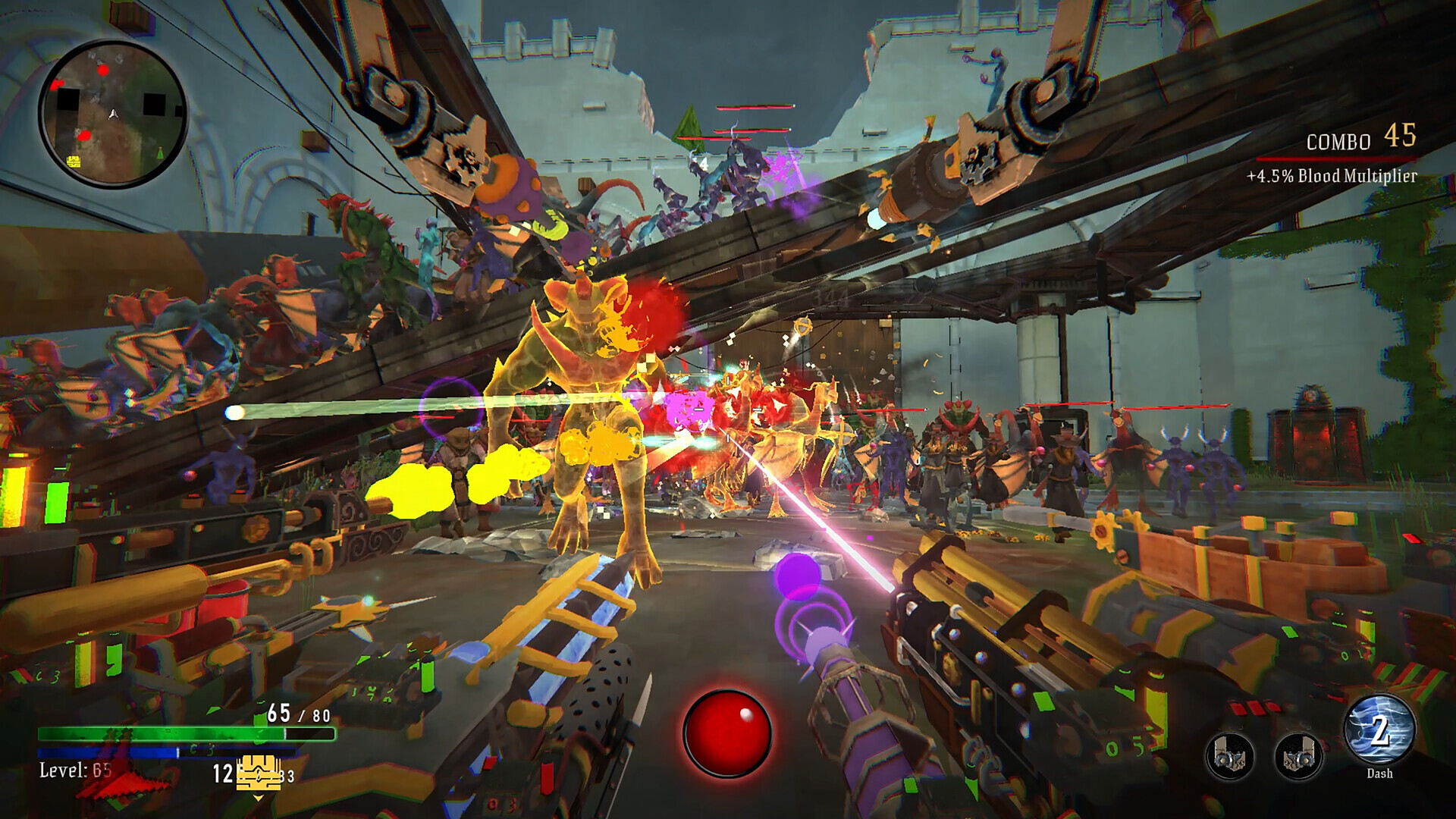
Up to 14 different guns can be carried simultaneously, letting players pile revolvers, miniguns, holy water hoses, and shoulder-mounted oddities into ridiculous loadouts. Each run collects new weapons and upgrades to craft wildly different builds rather than committing to a single archetype.
First-Person Survivors Combat
Unlike top-down Survivors games, aiming and dodging are handled manually, so the screen-filling hordes feel like classic FPS chaos layered on auto-spawning waves. Movement and positioning matter because enemies can flank from any angle, not just walk up from the bottom of the screen.
Roguelite Progression Loop
Runs feed a longer meta-progression, with characters, stages, achievements, and unlocks gated behind repeated clears. The "just one more try" framing rewards experimentation, and each hunter has distinct abilities that change how a run feels from the opening minute.
Steampunk Disco Atmosphere
The vibe leans into retro FPS level design with electronic disco soundtracking, cartoonish blood, and absurd enemy variety across vampires, demons, and stranger undead. It is intentionally lighthearted and cheesy, which sets it apart from grimdark shooters in the same genre.
Controller-Friendly Setup
Full controller support, Steam Cloud saves, achievements, and trading cards are all included, making it easy to drop in with a pad on the couch. Single-player focus means the experience is built around personal runs rather than coordinating a squad.
What players are saying
What keeps coming up positively
- Players repeatedly praise the sheer volume of weapons and how fun it is to stack absurd arsenals like fourteen miniguns at once.
- The soundtrack and campy, cheesy tone are frequently highlighted as catchy and memorable across long sessions.
- Many enjoy the long-term grind toward unlocks, achievements, and new levels, calling it a worthy purchase even before a sale.
- Fans of Vampire Survivors and classic shooters consistently say the mashup hits a niche that nothing else quite fills.
Where the friction shows
- A long, repetitive unlock grind gates new content, and several returning players say it has gotten worse with updates that diluted mechanical uniqueness.
- Some runs devolve into camping a chokepoint and mowing down one-directional spawns, leaving late-game stages feeling flat rather than escalating.
- Performance issues including Unity engine stutters on capable hardware frustrate players who cap framerates or use external frame-gen tools.
- Enemy AI and boss design are called shallow, with most foes and bosses walking in for contact damage and few weapons feeling meaningfully distinct from each other.
Is it worth buying?
At $4.49 against a $14.99 regular price (70% off in USD), the cost of entry is low and the content volume is substantial if you enjoy long unlock grinds. The discount lines up well with a genre curiosity buy, though anyone sensitive to performance stutters or shallow enemy variety should temper expectations before paying full price later.
Price checked 2026-08-15:$4.49,down from $14.99(70% off)。Player-fit tags
Good fit
- Players who like Vampire Survivors but want to aim the chaos themselves in first person.
- Roguelite grinders who enjoy unlocking characters, weapons, and achievements over dozens of hours.
- Controller players looking for a pad-friendly single-player shooter they can run on the couch.
- Fans of campy, cheesy shooters and Serious Sam-style horde mowing who want a modern twist.
- Players who embrace failure as part of mastery and enjoy iterating on absurd weapon builds run after run.
Probably not for you
- Anyone who wants a relaxing, cozy wind-down experience rather than high-pressure bullet hell aiming.
- Players who dislike long unlock and achievement grinds gating new content.
- Players sensitive to Unity engine stutters who want flawless performance on high-end hardware.
- Anyone expecting deep tactical enemy AI or distinct weapon feel beyond firerate differences.
- Short-session players frustrated by runs that demand sustained focus and can stretch well past half an hour per stage.
06Deck of Haunts review: a gothic deckbuilder where you mastermind a haunted house and learn from harsh repeated defeats
STEAM DEAL · 55% OFF
Deck of Haunts
If you enjoy roguelike deckbuilders and don't mind working out systems yourself, Deck of Haunts delivers a clever haunted-house twist, but expect the mid-game spike and a thin tutorial to push back hard on careless play.
Game highlights
You play the haunted house
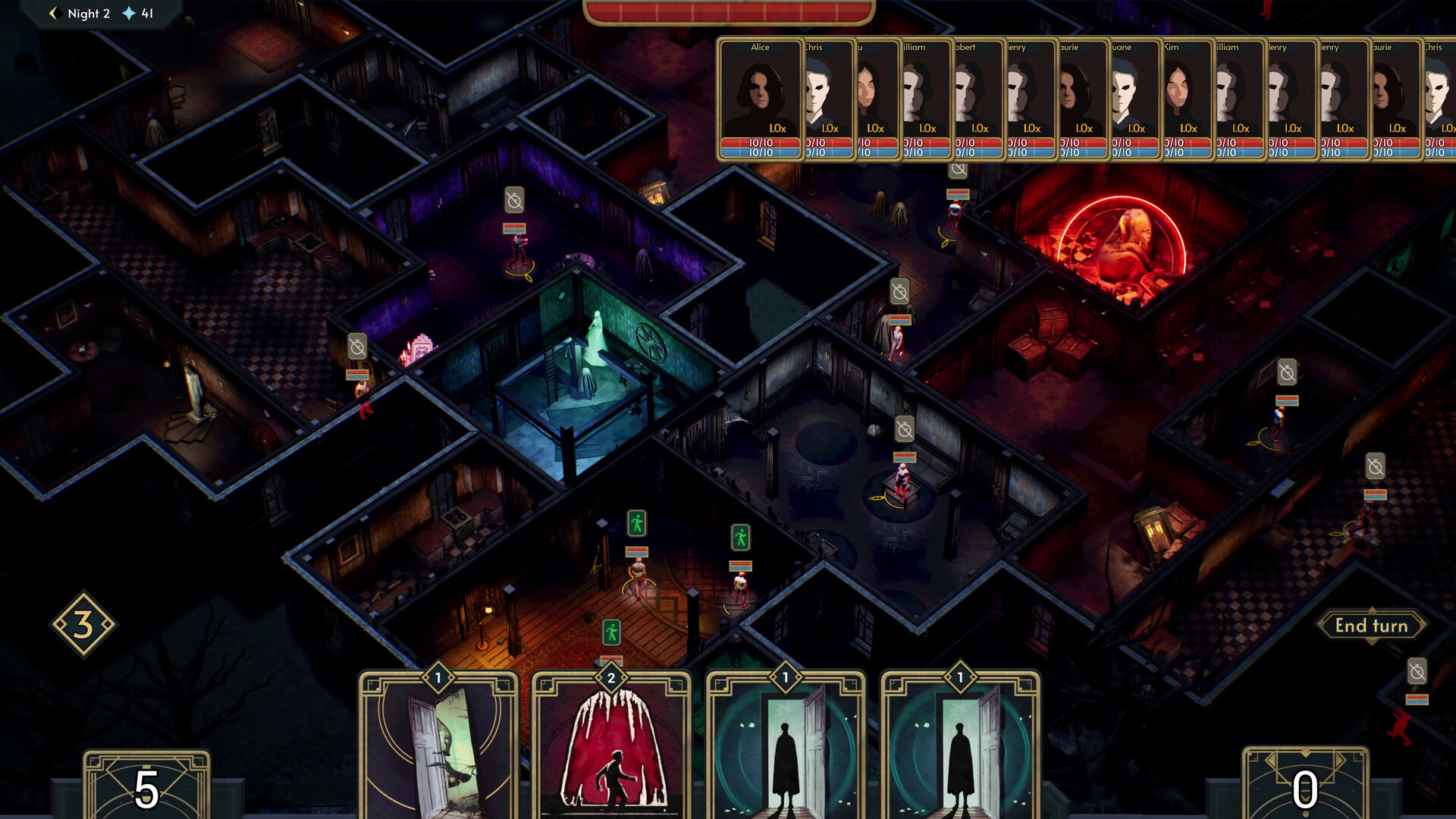
Deck of Haunts puts you in the role of a cursed mansion with a central Heart room to defend. By day you lay out rooms and routes; by night you draw cards to scare, relocate, or kill the humans exploring your halls, then harvest their essence to grow the building. It's a clear inversion of the usual dungeon-crawl setup, and the short session loop makes it easy to keep firing runs back to back.
Day build, night haunt loop
Each run alternates between a build phase and a combat-style night phase. You spend essence earned from driving visitors mad or killing them to unlock new room types and expand the deck, which feeds back into tougher nights. The structure rewards planning ahead but also tolerates quick experiments when a layout isn't working.
A deck of scares, not spells
Your hand leans into haunted-house flavor: screams, phantoms, shifting walls, and creaking floors that interact with specific rooms. Card synergies and room adjacency matter, so two players can end up with very different haunted domains. The Steam Workshop support also implies community maps and modifiers once you want to test new layouts.
Accessibility and comfort options
The category list is unusually thorough: full controller support, DualShock and DualSense support, mouse-only play, adjustable difficulty, adjustable text size, custom volume controls, and 'playable without timed input.' That makes the rougher mid-game spikes easier to approach for players who want to take the pressure down a notch or play from the couch.
Escalating pressure is real
Reviewers consistently describe a sharp difficulty ramp: nights that start manageable quickly become overwhelming, with a dozen or more humans piling in even on the easier settings. Defending the Heart becomes the make-or-break moment of every run, and learning which cards and room shapes actually stall that rush is the core skill the game pushes you to develop.
What players are saying
What keeps coming up positively
- Players love the haunted-house concept and the gothic atmosphere, especially the music and Halloween-flavored art direction.
- Many reviewers call out the satisfaction of punishing intruders and the fun of optimizing a funnel-shaped mansion layout.
- The deck-plus-tower-defense mashup is widely praised as a fresh angle on the roguelike deckbuilder formula.
- Several helpful reviews highlight deep card synergies and special rooms that reward thoughtful play.
Where the friction shows
- Reviewers repeatedly warn that the optimal house layout collapses into a mandatory funnel of small rooms, killing creative building.
- Many players report unlocking most cards within a couple of hours, after which the run-to-run loop feels solved and repetitive.
- Multiple negative reviews describe a steep mid-game difficulty spike and Pathfinding enemies that ignore careful maze design, making losses feel random rather than earned.
- Several players flag a thin tutorial and clunky UI bits, so key mechanics like move cards only click through trial and error.
Is it worth buying?
At $8.99 against a $19.99 regular price (55% off in the supplied snapshot), the price is friendly for a budget curious buy, but the thin tutorial and rapid card unlocks mean the value lives in those first dozen runs rather than long-tail grinding. If you bounce off once the house layout becomes a solved funnel, refunds are reasonable through Steam's normal policy. Worth picking up at this discount if the concept clicks for you; otherwise a deeper sale would be safer.
Price checked 2026-08-15:$8.99,down from $19.99(55% off)。Player-fit tags
Good fit
- Roguelike deckbuilder fans who specifically want a fresh theme twist on the genre.
- Players who enjoy learning harsh lessons from repeated runs and rebuilding after losing the Heart room.
- Tinkerers who like optimizing maze layouts and experimenting with card-room combos on their own.
- Couch or controller players thanks to the broad accessibility and comfort options.
Probably not for you
- Anyone looking for a long, content-heavy progression grind, since most cards unlock within a couple of hours.
- Players who want a guided tutorial, because several core mechanics only click through trial and error.
- Creative builders hoping for varied mansion designs, since optimal play pushes you into repetitive funnel layouts.
07Legacy of Defense combines side-scrolling monster defense with strategic deck-building for players who enjoy demanding, replayable runs
STEAM DEAL · 40% OFF
Legacy of Defense
Legacy of Defense is worth considering at $4.79 for players who want a compact, single-player defense roguelite and are comfortable with steep repetition, limited character differentiation, and opaque upgrades. Its basic action-deck loop can be absorbing, but the same build patterns, costly progression, and occasional unexplained balance issues make the $7.99 regular price a harder sell.
Game highlights
Action and deck-building meet
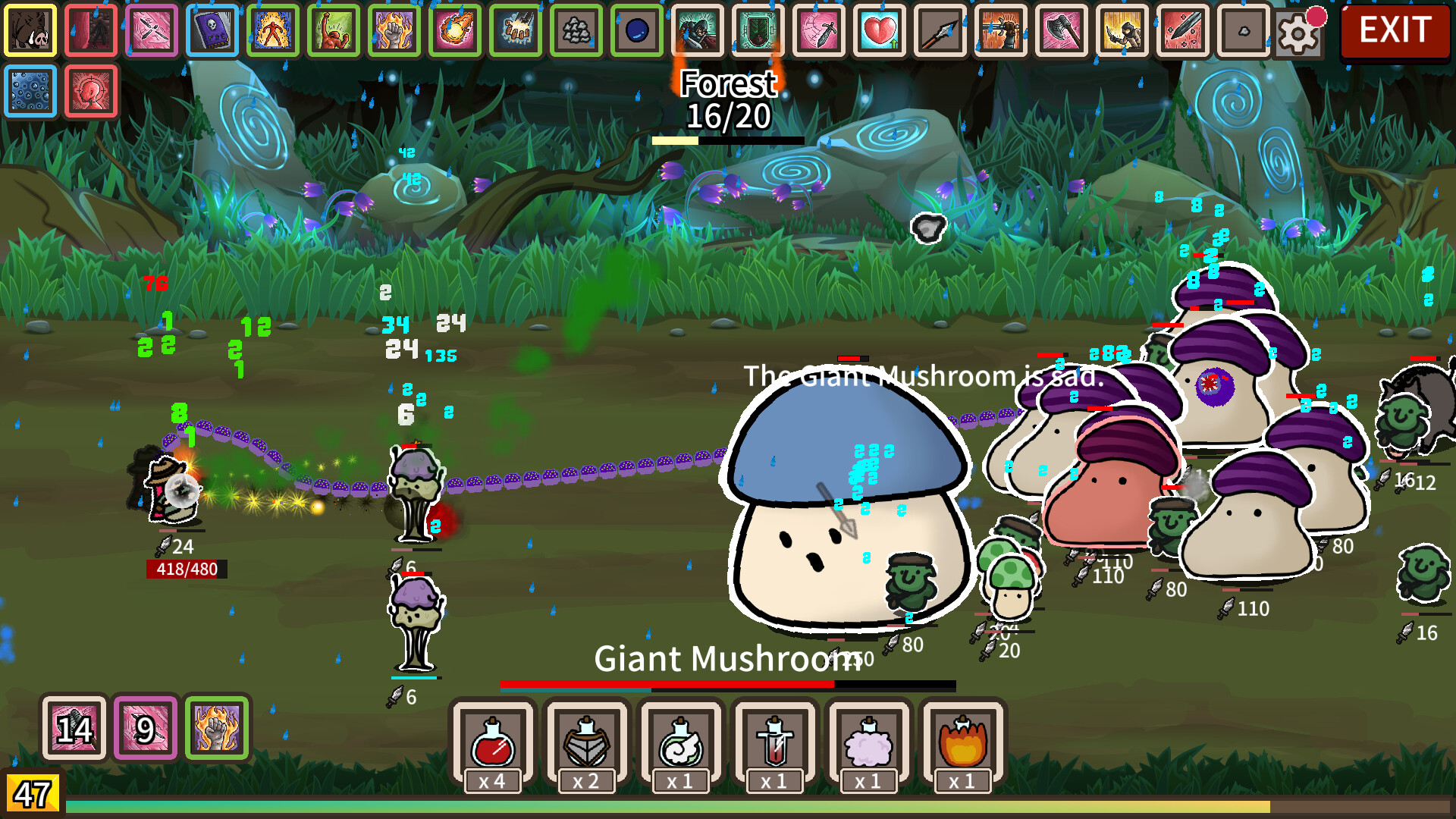
The official description combines side-scrolling battles with deck-building: players defend against incoming monsters by choosing cards that activate skills. It is a single-player game with a mouse-only option, touch-only option, adjustable difficulty, and no required timed input, so the core loop is designed to be accessible while still asking for strategic choices.
Short stage structure with a final boss
Players build a deck, gain experience, upgrade skills, clear stages, and ultimately face a final boss. The official material also mentions recruiting allies, while the categories list save-anywhere and Steam Cloud support, making it reasonable to approach in shorter sessions rather than as a long campaign.
Mastery is built through failed runs
The game presents increasing monster pressure and a strategy-and-luck challenge, and the supplied reviews repeatedly describe failure as part of learning. Several reports say a good setup is needed to survive later areas, and one reviewer describes repeated attempts as a harsh but recognizable mastery loop rather than a straightforward difficulty curve.
Replay value comes with strong repetition
The official feature set supports collecting cards and upgrading a hero through combat, creating a roguelite-style reason to rerun stages. Player reports also show the downside: one recurring setup is favored across characters, while higher-difficulty content can demand particular upgrades, making successful runs feel less varied than the card collection suggests.
Content and value are contested
The store page describes multiple fantasy monsters, abilities, and skill upgrades, but the review evidence is divided on how much variety the full game offers. Some players value the low price and relaxing, repeatable action, while others point to limited content, similar character kits, and a progression path that becomes expensive or unnecessary after the first clear.
What players are saying
What keeps coming up positively
- Players praise the tower-defense-like, roguelite structure and the way active side-scrolling defense differs from static tower placement.
- Several reviews describe the game as fun, relaxing, and easy to return to when passing time, with one positive report calling it addictive.
- The short stage-and-boss structure and save-anywhere support make it workable in short sessions for players who prefer compact runs.
Where the friction shows
- Recurring reports say different characters end up using similar skills and builds, reducing the value of switching characters.
- Several reviews criticize expensive upgrades, limited rerolls, and progression that can feel like a grind rather than meaningful customization.
- Some players report unclear build guidance, unexplained stat changes, and late-stage enemies that feel over-tuned, making deaths hard to diagnose.
- A progression-loss report after a crash and a complaint about pay-to-win DLC add practical concerns beyond the core gameplay.
Is it worth buying?
At the observed $4.79 price, reduced from $7.99 by 40%, the game is a reasonable low-cost experiment for fans of defense roguelites who tolerate repetition. The supplied reviews do not justify paying the regular price without a strong preference for this exact blend of side-scrolling action and card-driven skill selection.
Price checked 2026-08-15:$4.79,down from $7.99(40% off)。Player-fit tags
Good fit
- Players who enjoy tower-defense or defense-roguelite runs and like testing card-based skill combinations.
- Solo players who want a game playable in short sessions, with save-anywhere and adjustable difficulty options.
- Players motivated by mastering a punishing loop and learning from repeated failures.
- Budget-minded buyers who are comfortable with a short, repetitive game at a discounted price.
Probably not for you
- Players who want deep character-specific builds, broad skill variety, or extensive post-campaign content.
- Anyone who expects transparent upgrade choices and a clear explanation of why a run failed.
- Players who dislike grinding, limited rerolls, or repeating the same effective setup across characters.
- Multiplayer-focused players, because the supplied store categories identify it as a single-player game.
08Katanaut: A Dead Cells-style roguelite that rewards patient players who push past the early game

STEAM DEAL · 69% OFF
Katanaut
If you tolerate a slow opening and a punishing restart loop, Katanaut delivers razor-sharp katana combat and a moody space-station setting. Skip it if you want immediate mechanical depth or quick boss retries without long re-runs.
Game highlights
Combat built around katana, dodge, and parry
The core loop is slashing, dodging, and parrying through corridors aboard a deteriorating space station. Stamina timing matters, and mastering parry windows against elites and bosses is the real skill check. Weapons include ranged guns as a complement, which lets you mix melee rush-downs with safer chip damage. Several players specifically called out how the dodge and parry feel once they click.
Roguelite progression that opens up after the first win
Each run leaves behind memory fragments that unlock skills, passives, and meta-progression options. The first clear is a hard gate, but post-win content adds density, tougher encounters, and build experimentation. Multiple reviewers said the game doesn't show you what it actually is until that first victory. New gameplay changes reportedly trigger after beating it once, extending replay value.
Cosmic horror atmosphere with Dead Space DNA
The pitch is a space station full of twisted, once-human horrors, with pixel art that leans into sci-fi dread and a synthwave-leaning soundtrack. Enemy designs borrow from Dead Space influences, and deeper floors get more haunting as you descend. The visual identity is one of the strongest recurring praise points.
Build variety and replay-friendly systems
Memory fragments, color-coded upgrade paths, secondary skills, and weapon variety give each run meaningful identity. Layouts and events shift as well, so you aren't replaying identical routes. Players with deep runtimes describe the systems as deep enough to keep returning to.
Accessibility and quality-of-life options
Full controller support, Steam Cloud, save-anytime, adjustable difficulty, color alternatives, and subtitle options are all present. A keyboard-only mode and adjustable text size also show up in the feature list. The settings menu is unusually generous for a solo-developed roguelite.
What players are saying
What keeps coming up positively
- First-time wins unlock real depth, with enemy density and build options expanding noticeably afterward
- Katana, parry, and dodge feedback become genuinely satisfying once mechanics are mastered
- Atmosphere, synthwave soundtrack, and horror-inspired enemy designs consistently land
- Run-to-run variety in layouts, events, and fragment upgrades keeps repeat sessions feeling different
Where the friction shows
- Early hours feel shallow because basic enemies die in one or two hits, which sends some players away before the game opens up
- Boss fights can feel like spongey damage races with cluttered hitboxes, and dying sends you back through whole floors
- Some animations read as missing frames, giving combat a soft or slippery sense of impact
- Repetition and grind on failed runs is a recurring friction point, especially for players who can't push past the restart loop
Is it worth buying?
At roughly $5.57 USD with a 69 percent discount off the $17.99 USD base price, the cost is low enough that patient roguelite fans can justify it. The opening hours are misleading by design, so budget several failed runs before judging it. If you bounced off Dead Cells or want a friendlier entry point with horror flavor, this is a fair pickup at this price.
Price checked 2026-08-15:$5.57,down from $17.99(69% off)。Player-fit tags
Good fit
- Players willing to push through a slow tutorial phase and earn their first clear
- Fans of Dead Cells, Dead Space, or Iron Meat who want a similar mood and combat cadence
- Roguelite players who enjoy parry timing, stamina management, and build experimentation
- Solo players looking for a controller-friendly action game with adjustable difficulty and accessibility options
Probably not for you
- Anyone who quits games after one or two frustrating runs, since death resets you to the station hub
- Players who need quick boss retries or short level resets between attempts
- Those who dislike pixel-art roguelites or cosmic horror presentation
- Anyone sensitive to grind-heavy progression loops or repeated full-level backtracking after deaths
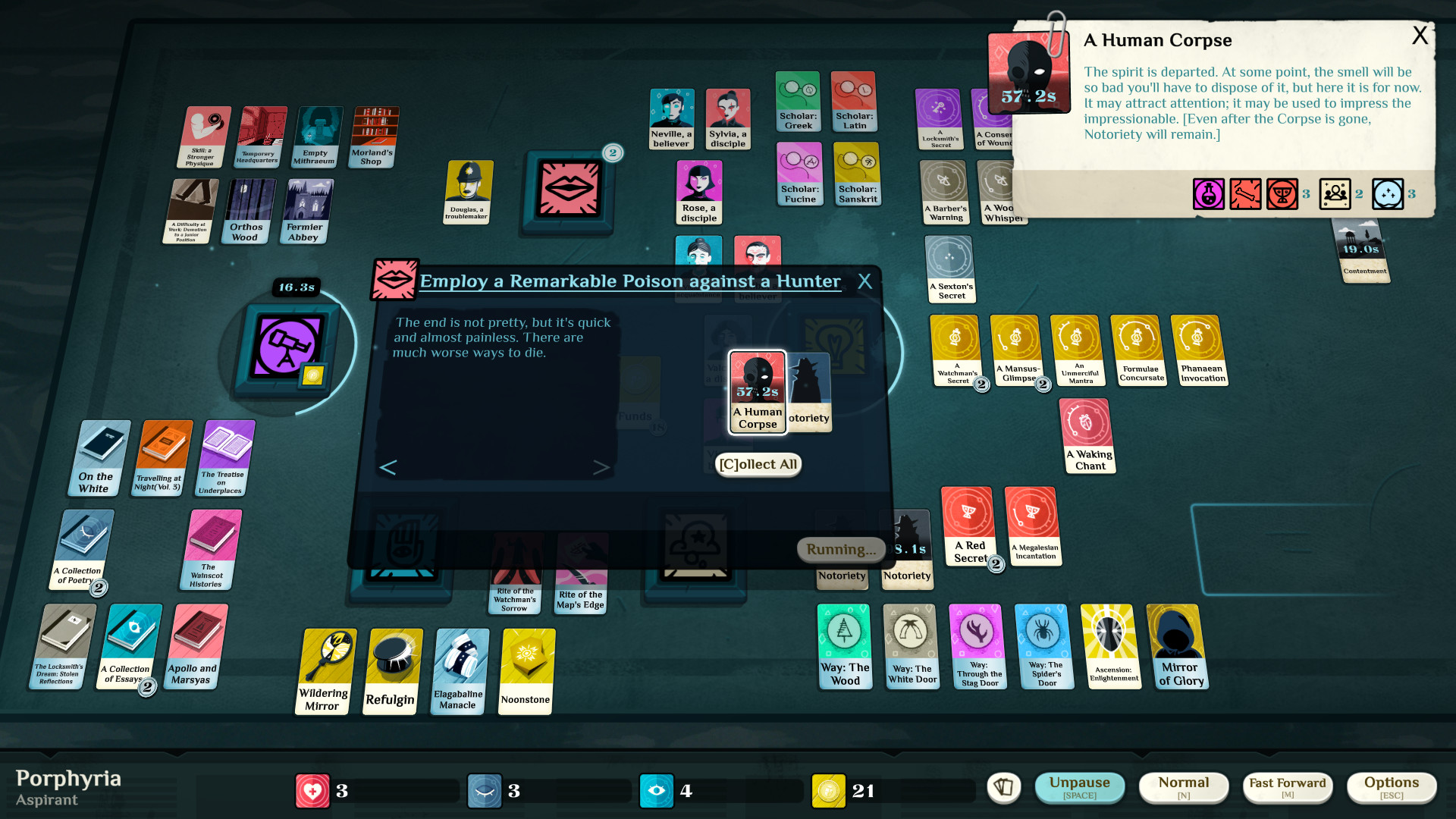
09Cultist Simulator: a Lovecraftian card game for players who embrace punishing mastery and cryptic discovery
STEAM DEAL · 75% OFF
Cultist Simulator
Buy now if you enjoy opaque systems and don't mind losing hours of progress; players who want guided tutorials or save scumming should pass.
Game highlights
Card-driven occult management
Players stack and combine cards representing mortals, lore, and rituals to build a cult, with each card placement influencing both the narrative and your Appetites. The system turns resource juggling into a slow-burning puzzle where a single mistake can cascade into cult collapse.
Branching legacy runs
Each playthrough carries over an heir who inherits your notes, status, and partially unlocked lore, so failed seekers pass fragments of progress forward. Expect 20–40 hours per major run as the official description states, with true endings requiring multiple generations.
World of hidden Hours and rival cults
The setting spans the Mansus, the Watchful Authorities, and competing factions like the Red Grail or the Forge of Days, each demanding different card economies. Translating grimoires and evading suspicion becomes its own tactical layer beyond simple timer management.
Accessibility features for a text-heavy experience
The build includes adjustable text size, color alternatives, custom volume controls, and playable-without-timed-input settings, plus Steam Cloud and Remote Play on Tablet. Mouse-only play is supported, though the interface forces constant zooming and panning across the tabletop of cards.
What players are saying
What keeps coming up positively
- The writing, lore, and art direction are repeatedly praised as atmospheric and addictive enough to pull players back after 30+ hours.
- The legacy inheritance system gives failed runs a sense of forward momentum, so death feels like progress rather than punishment.
- Players who push past the obtuse early hours describe a remarkable sense of discovery piecing together rituals from scattered grimoires.
- Forgiving players highlight how the game authentically simulates the frustration and obsession of an occultist digging into mysteries.
Where the friction shows
- Multiple reviews describe long stretches of tedious grinding and repetitive clicking through one-minute timers with no save system to protect a multi-hour run.
- Newcomers report that experimentation is punished hard early on, forcing them to consult external wikis just to avoid instant death.
- Players criticize the busywork loop of constantly re-sending followers to work, rest, or paint to manage Afflictions like Restlessness and Illness.
- The mouse-only tabletop interface draws complaints for forcing constant zooming, panning, and card re-sorting that strains the player's neck and patience.
Is it worth buying?
At $4.99 against a $19.99 regular price (75% off), the discount is steep, but the game's punishing, opaque design means only players comfortable with wiki lookups and losing hours of progress will get full value from even one run.
Price checked 2026-08-15:$4.99,down from $19.99(75% off)。Player-fit tags
Good fit
- Players who enjoy opaque systems they must decode through trial and error
- Single-session players with patience for 20–40 hour runs and slow-burning legacy progression
- Readers who want atmospheric Lovecraftian lore delivered through scattered grimoires and dreams
- Players who treat failure as a learning step and keep a notebook of in-game discoveries
- Mouse-and-keyboard solo players who like card-based resource management without co-op pressure
Probably not for you
- Players who want guided tutorials, mid-run saves, or the ability to undo a bad click
- Anyone sensitive to grinding, since repeating short timers to feed, rest, and repair followers is unavoidable
- Casual players looking for a cozy wind-down, since constant Affliction pressure creates tension rather than relaxation
- Buyers expecting true roguelike combat or turn-based tactics, since the actual loop is closer to an incremental expansion game
- Players who refuse to consult external wikis, because the game provides almost no hand-holding on how to actually found a cult
Share this article