US and Iran hold fire to open space for talks

Oil futures retreated sharply after the United States and Iran refrained from launching strikes over the weekend, ending 13 consecutive nights of US attacks on Iranian military targets. US Ambassador to the United Nations Mike Waltz said the pause was intended to give diplomacy "space," telling NBC's Meet the Press that talks were "ongoing" but acknowledging "internal fighting" on the Iranian side. President Donald Trump told reporters aboard Air Force One that the US was speaking with Iran "right now" and said he was "not in a rush" to reach a deal. The halt follows a 60-day ceasefire agreed last month that unravelled after Iran attacked oil tankers in the Strait of Hormuz, killing a sailor, which Washington deemed a breach of the memorandum of understanding between the two sides.
Brent and WTI post their sharpest drops in weeks
Brent crude, the international benchmark, fell as much as 9.13% to $87.94 a barrel in late trading, according to The National, while West Texas Intermediate dropped 7.94% to $82.22. NBC News reported Brent closing down 8.7% at $88.36 and WTI down 7.5% at $82.61. Earlier intraday quotes from Euronews and the Times of India showed Brent around $92.27–$92.41 and WTI between $84.83 and $85.01, illustrating how steep the slide was through the session. The declines reversed three consecutive weeks of gains and pulled prices back from last week's two-month high near $102, when Brent had surged roughly 30% during July on fears of an all-out regional war.
Houthi attacks reshape Saudi export routes
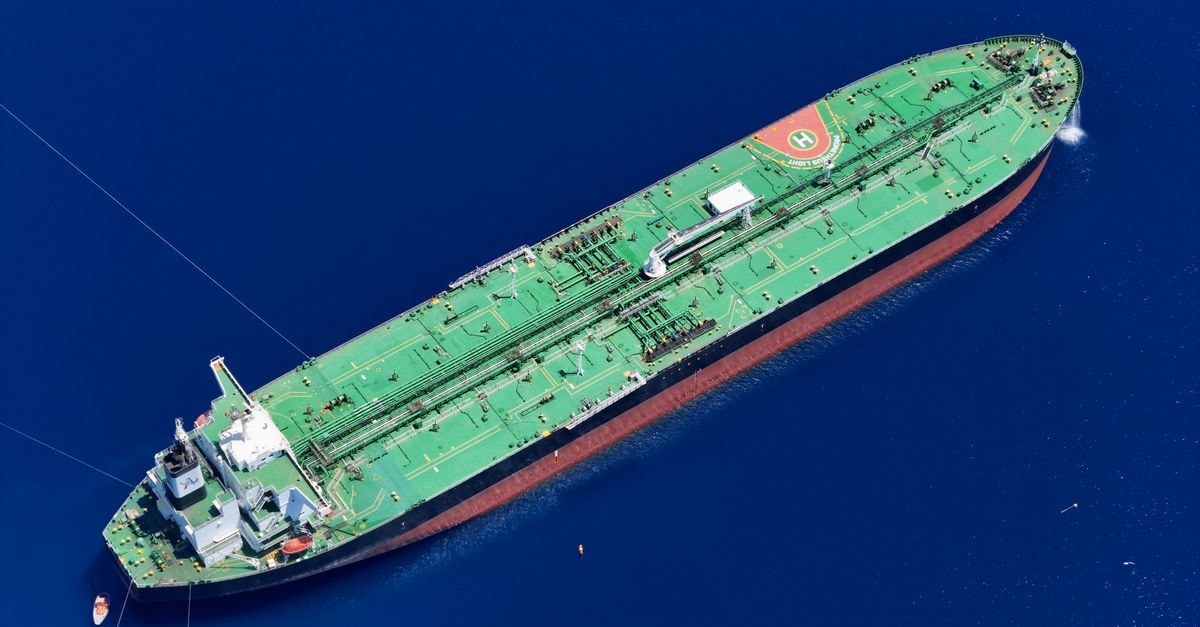
Even as US-Iran tensions eased, Iran-backed Houthis pressed attacks on shipping in the Red Sea and announced a maritime embargo on Saudi ports. The Greek-flagged supertanker Olympic Luck, partially laden with Saudi crude at Yanbu, transited the Suez Canal into the Mediterranean late on Sunday rather than risk the Bab el-Mandeb strait, Bloomberg shipping data showed. Maritime intelligence firm Windward said "Yanbu port has transitioned to entirely AIS-dark tanker operations at berth as vessels shield against a Houthi hit list," while Saudi Arabia activated an alternative export route via the SUMED pipeline in Egypt and around the Cape of Good Hope. Saudi crude shipments to Asian buyers via the Suez Canal more than doubled to 1.06 million barrels per day following the embargo, The National reported. Traffic through Bab el-Mandeb has fallen to its lowest level in months, though Chinese-linked cargo continues to transit under a Houthis carve-out.
Hormuz traffic thins despite the diplomatic thaw
Shipping through the Strait of Hormuz, the chokepoint through which about a fifth of global oil typically passes, remained subdued. Kpler data cited by the Times of India showed fewer than 10 commodity vessels transited the strait each day over the weekend. NBC News' analysis of MarineTraffic data found crossings fell from 12 on Friday to 6 on Saturday before rising to 11 on Sunday. The semiofficial Iranian Tasnim news agency reported that six vessels attempted to pass through Hormuz by switching off navigation and position systems, with one suffering "an incident" and the others returned to the Persian Gulf "under Iran's decisive management." Iran also accused Ukraine over the weekend of attacking an Iranian commercial vessel in the Caspian Sea, killing one sailor; Ukrainian President Volodymyr Zelenskyy said Kyiv had noted Russia was sharing satellite observations with Iran to direct strikes in the region.
European fuel markets and inflation expectations
The European Union had enjoyed a brief reprieve in June after the earlier ceasefire, with Eurostat data showing diesel prices down 6.4% and petrol down 4.2% month on month across the bloc. Italy and Cyprus were the only EU countries where petrol prices kept rising between May and June, while Hungary, Poland and Spain recorded the smallest year-on-year fuel spikes. The renewed Middle East tension has pushed traders to price in a roughly 36% chance that the US Federal Reserve will hike its main interest rate at an upcoming meeting, according to CME Group data cited by Euronews, complicating the inflation outlook. Analysts cautioned that a "stay of military strikes" does not guarantee restored flows, with one telling NBC News prices "will only continue lower if high prices once again dent demand, not questionable mini-ceasefires."
Share this article