India steel sector sees price recovery and renewed broker conviction

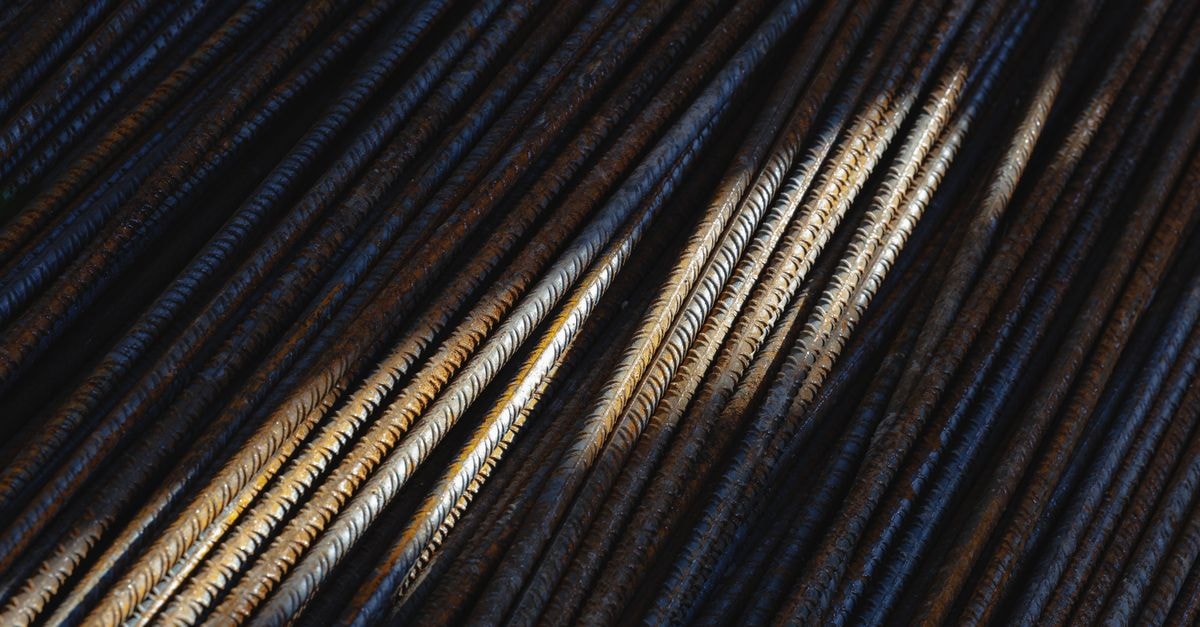
Nomura has retained "Buy" ratings on Tata Steel, JSW Steel, Jindal Steel, and Lloyds Metals & Energy, saying domestic producers remain well positioned despite global headwinds and higher input costs. The brokerage said hot-rolled coil (HRC) prices dipped Rs 50 per tonne week-on-week to Rs 57,800 per tonne in the week ended July 24, while rebar prices rebounded Rs 350 to Rs 48,300 per tonne—the first weekly gain after a three-month correction. India's HRC spot margin stood at Rs 34,609 per tonne in July, up Rs 324 month-on-month, with the flat-long spread holding above Rs 9,500 per tonne. BigMint's separate weekly report pegged BF-route rebar at INR 48,700 per tonne ex-Mumbai on July 24, up Rs 800 week-on-week, and described the India steel composite index as flat, with longs gaining 0.7 percent and flats easing 0.6 percent.
June production data showed Indian crude steel output at 14.06 million tonnes (up 3.9 percent year-on-year), finished steel at 13.76 million tonnes (up 6 percent) and consumption at 14.19 million tonnes (up 7.2 percent); India remained a net finished-steel importer, with imports of 0.70 million tonnes exceeding exports of 0.62 million tonnes. On raw materials, imported coking coal fell USD 6 per tonne to USD 224, global iron ore held near USD 93, and NMDC cut lump and fines prices by Rs 250 and Rs 150 per tonne respectively.
Chinese steel inventories contract as mill losses curb output
The China Iron and Steel Association reported that inventories of the five main finished steel products across 21 major cities totaled 9.62 million tonnes on July 20, down 0.7 percent from July 10 and reversing a 3.6 percent rise recorded in early July. The decline came as Chinese steelmakers, operating at a loss, cut production. By product, HRC stocks edged up 0.4 percent, while cold-rolled coil dropped 2.8 percent, medium plate 1.8 percent, wire rod 1.2 percent and rebar 0.2 percent.
In global price benchmarks cited by Nomura, Chinese export HRC slipped USD 5 per tonne to USD 495 and domestic HRC fell USD 4 to USD 485, even as China's June crude steel output rose 0.4 percent year-on-year to 83.7 million tonnes and finished steel exports stayed robust at 10.3 million tonnes, underscoring continued reliance on overseas demand amid weak domestic consumption.
US pushes Mexico toward Section 232 alignment and opens stainless-pipe probe
The United States is pressing Mexico to impose Section 232-style duties on steel and aluminum imported from outside North America, seeking a common regional tariff wall under the USMCA framework. According to four people familiar with the negotiations cited by Bloomberg, Washington is targeting a framework agreement by year-end. The U.S. currently imposes a 50 percent Section 232 tariff on basic steel and aluminum from China and most other economies, alongside a 25 percent duty on derivative products, while Mexico applies product-by-product duties of up to 25 percent on steel from countries without Mexican trade deals. Mexico has already raised tariffs on roughly 1,500 products in a measure aimed primarily at China and earlier offered to sharply reduce Chinese steel purchases. U.S. steelmakers are separately pushing for stricter regional rules, including a melt-and-pour-in-North America requirement and lifting the North American steel content threshold for vehicles from 70 percent to 85 percent.
Separately, the U.S. International Trade Commission has opened preliminary antidumping (AD) probes into welded stainless steel line and pressure pipe from Turkey, the UAE and India, with parallel countervailing duty (CVD) investigations against Turkey and India. The probes follow petitions filed on July 15 by Bristol Pipe and Tube, Felker Brothers Corporation and Primus Pipe and Tube. The USITC is expected to issue its preliminary injury determination by August 31, with findings due to the Commerce Department by September 8, though Commerce may extend the schedule.
Europe: Tata Steel UK warns of Asian import surge while Ukraine flags EU quota squeeze
Tata Steel UK has warned the British government that recent increases to tariff-free steel import quotas could leave the UK exposed to cheap Asian steel and risk making domestic production unsustainable. India's quota for metallic-coated galvanised steel has risen from 98,000 tonnes to 125,000 tonnes annually, while Vietnam's allowance has more than tripled from 51,000 tonnes to 174,000 tonnes; Firstpost's account also reports that China's quota was raised, while an EasternEye version focuses on India and Vietnam, with the higher Indian allowance tied to the wider UK-India trade negotiations. Imports above the quotas remain subject to a 50 percent tariff. Tata noted its Llanwern plant in South Wales produces about 600,000 tonnes of galvanised steel a year, meaning the combined Indian and Vietnamese duty-free allowances now equal roughly half that output, and contrasted the UK expansion with the EU's reduction of tariff-free access for British steel.
In Ukraine, pipe and railway product maker Interpipe has urged Kyiv to defend exporters' market access after the EU's new steel import tariff quota system, in force since July 1, created fresh headwinds. Government relations director Nataliya Sydoruk said Interpipe had already used a significant share of its quarterly duty-free seamless-pipe quota to the EU in the first 22 days of July and expects the quota to be exhausted in August, after which exports would face an extra 50 percent duty. Interpipe is also asking the European Commission to correct a calculation error it says left Ukraine's allocation at least 30 percent below warranted levels, and noted that Chinese seamless-pipe producers who have already exhausted their EU quotas are now diverting output to other markets, raising competition. Continued attacks on Ukrainian seaports add logistical strain.
New capacity: Hyundai-POSCO Louisiana mill and Nigeria Ajaokuta revival
Hyundai Steel and POSCO will break ground on September 4 on their $5.8 billion, 2.8 million-tonne electric arc furnace integrated mill at RiverPlex MegaPark in Ascension Parish, Louisiana, with commissioning scheduled for 2029. Senior U.S. and South Korean government officials, Louisiana representatives and executives from Hyundai Motor Group and POSCO Group are expected to attend. Danieli and Tenova will supply the direct reduction and steelmaking units, SMS Group the rolling mills and Fives Group the coil finishing lines, while Hyundai Steel has signed a research agreement with Louisiana State University covering technology and workforce training. The plant is intended to supply low-carbon automotive steel to Hyundai Motor Group's U.S. operations and other North American automakers.
In Nigeria, a 20-year Gas Sale and Aggregation Agreement signed at the 2026 NOG Energy Week in Abuja, involving NNPC Ltd, NNPC Exploration and Production, the Gas Aggregation Company of Nigeria and Ajaokuta Steel Company, has been described by a Federal Ministry of Steel Development official as the strongest commercial foundation the long-dormant Ajaokuta complex has had in decades. The agreement guarantees three million standard cubic feet of firm gas daily plus an additional 47 million scf/d of interruptible gas, alongside collaboration on manufacturing steel pipe for the African Atlantic Gas Pipeline and the Escravos-Lagos Pipeline System Phase III. Officials said local production could reduce imports, conserve foreign exchange and revive the linked National Iron Ore Mining Company at Itakpe.
Share this article