August 18, 684 CE · Syria · Umayyad horsemen crash through the Qays line at Marj Rahit.

In Syria, Battle of Marj Rahit (684) is unfolding. Battle of Marj Rahit: Umayyad partisans defeat the supporters of Ibn al-Zubayr and cement Umayyad control of Syria.
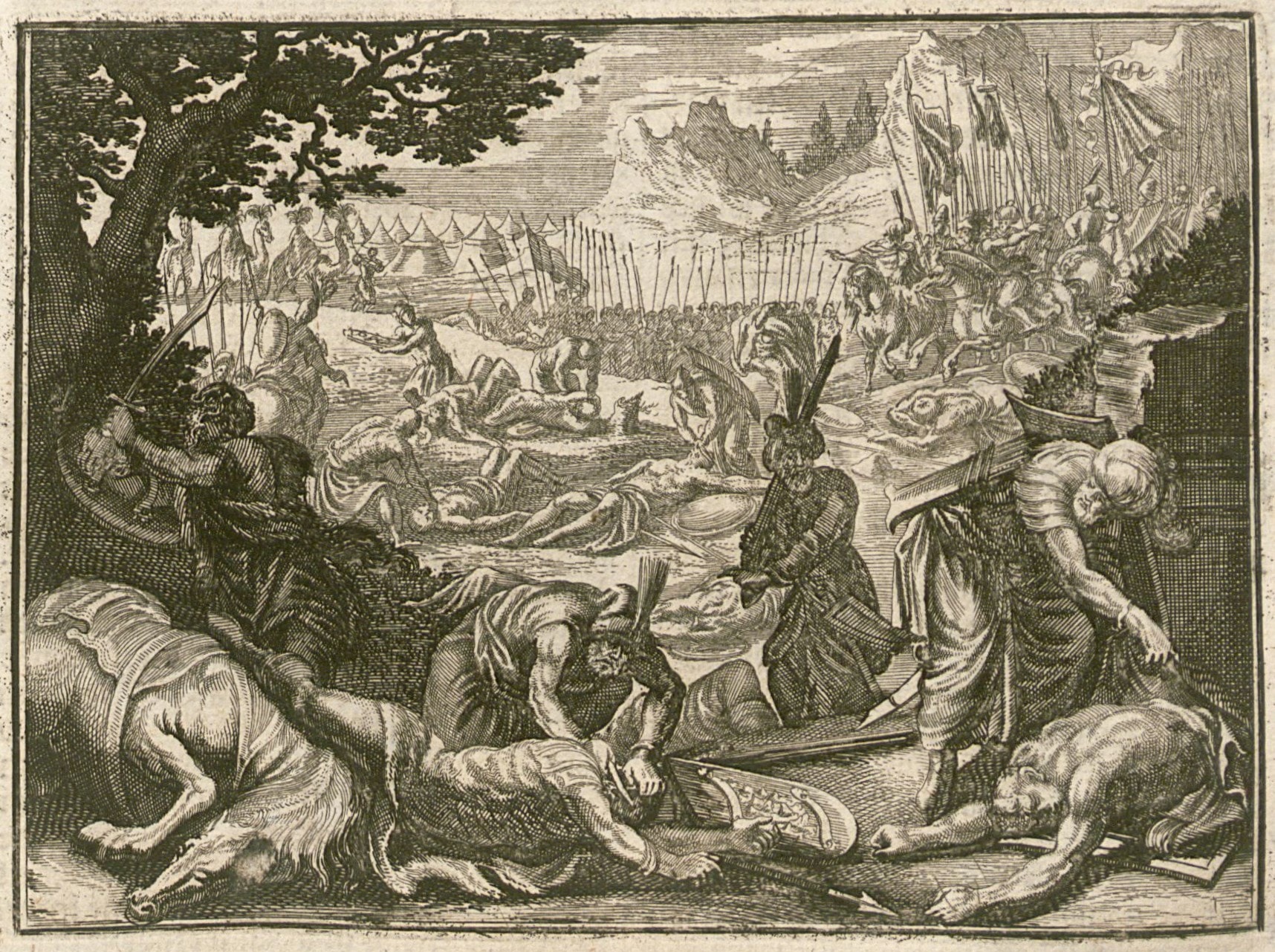
At the Battle of Marj Rahit (684) in Syria, Kalb-dominated Yamani cavalry under Caliph Marwan I slam into the Qays army of Al-Dahhak ibn Qays al-Fihri, fighting for the Mecca-based claimant Abd Allah ibn al-Zubayr. The Umayyad victory shatters the Qays formation and cements Marwanid rule over Bilad al-Sham.
I press my face into the thorn scrub at the edge of Marj Rahit. Down on the green, the Yamani line is breaking the Qays center for the second time this hour. Dust rises in a pale column where our horses have wheeled. From the banners drifting above the field, the Kalb colors hold, and ours scatter. A riderless mare gallops past my hiding place, foam dark on her neck. My brother rode into that column at dawn. I have not seen his cloak since the first charge. The plain hums with the sound of men gathering to flee or to surrender. I do not know which the commander will choose. I do not know if my brother is among the dead in the trampled grass, or if he has already turned his horse from the field. I stay low, breathing dust, waiting for someone to tell me what we have lost.
August 18, 707 CE · Japan · Princess Abe ascends the throne as Empress Genmei.
At the palace in Japan, Princess Abe is proclaimed Empress Genmei, the forty-third monarch in the traditional line and the fourth woman to rule as empress regnant. Courtiers bow before the regalia as the new sovereign's reign begins, the first of the years that span to 715.
I kneel on the polished cedar floor, my sleeve pressed flat against the wood. Beyond the partition, sandals whisper across the boards as the procession forms. Princess Abe is to receive the regalia today and become Empress Genmei, the fourth woman to sit upon this seat. I keep my eyes low, but I smell the fresh cypress boughs laid at the threshold. From somewhere near the dais a small bell rings once. The attendant beside me passes me the silk cord I must hold across her path. My hands are trembling slightly. She will walk past me in a few breaths. I have served in this hall for many seasons and never seen a woman crowned. I have heard the older women murmur that the line of sovereigns will be unsettled by this, that provinces and priests will watch every decision. The cord grows warm in my grip. I do not yet know what her face will look like when she passes.
August 18, 1136 CE · Iraq · Baghdad opens its gates to the Seljuk sultan.
The Siege of Baghdad (1136) in Iraq ends its fifty-day blockade of the Abbasid capital this August day. The city now yields to Seljuk Sultan Mas'ud, who deposes caliph Al-Rashid Billah and raises his uncle Al-Muqtafi to the seat in his place.
I lean against my shuttered stall beside the river dock, watching the Seljuk horse-lines that have ringed the walls for fifty days. The grain barges from the south stopped coming before the first week was out, and I have had no bread to sell. Today, near dusk, the south gate swings wider than it has in fifty days. I push through the crowd to the water and spot the sultan's banner being raised over the caliphal palace. A palace runner is already tearing down the name of Al-Rashid Billah from the public roll and pinning up the name of his uncle, Al-Muqtafi. I do not know whether the change will bring cheaper bread by morning, or simply new men demanding new fees. My neighbor beside me is weeping quietly. Another is laughing. I crouch by the water, watching the gate, waiting to see what the new caliph's first command will be.
August 18, 1304 CE · France · French and Flemish militias lock at Mons-en-Pévèle.
At the Battle of Mons-en-Pévèle in France, the royal army of Philip IV meets the Flemish militia in bloody summer combat. Through the day the two sides maul each other to a costly draw, the Flemish lines bent but unbroken and the French unable to claim the field.
I crouch behind a broken Flemish shield on the ridge of Mons-en-Pévèle, having lost count of the charges. We came up the slope at sunrise with our pikes lowered, and the French men-at-arms met us in a row of steel. My sleeve is stiff with someone else's blood, and the hauberk has a dent above the elbow that may be mine. Behind me the Flemish line is still holding, though gaps show where brothers have fallen. The king's banners have not advanced. Ours have not retreated. Somewhere a horn is sounding, but I cannot tell if it is the recall or a call to another push. A brother beside me is binding a wound with a strip torn from his own shirt. I tighten the leather of my grip and wait, breathing through my teeth, to see which way the next wave will break.
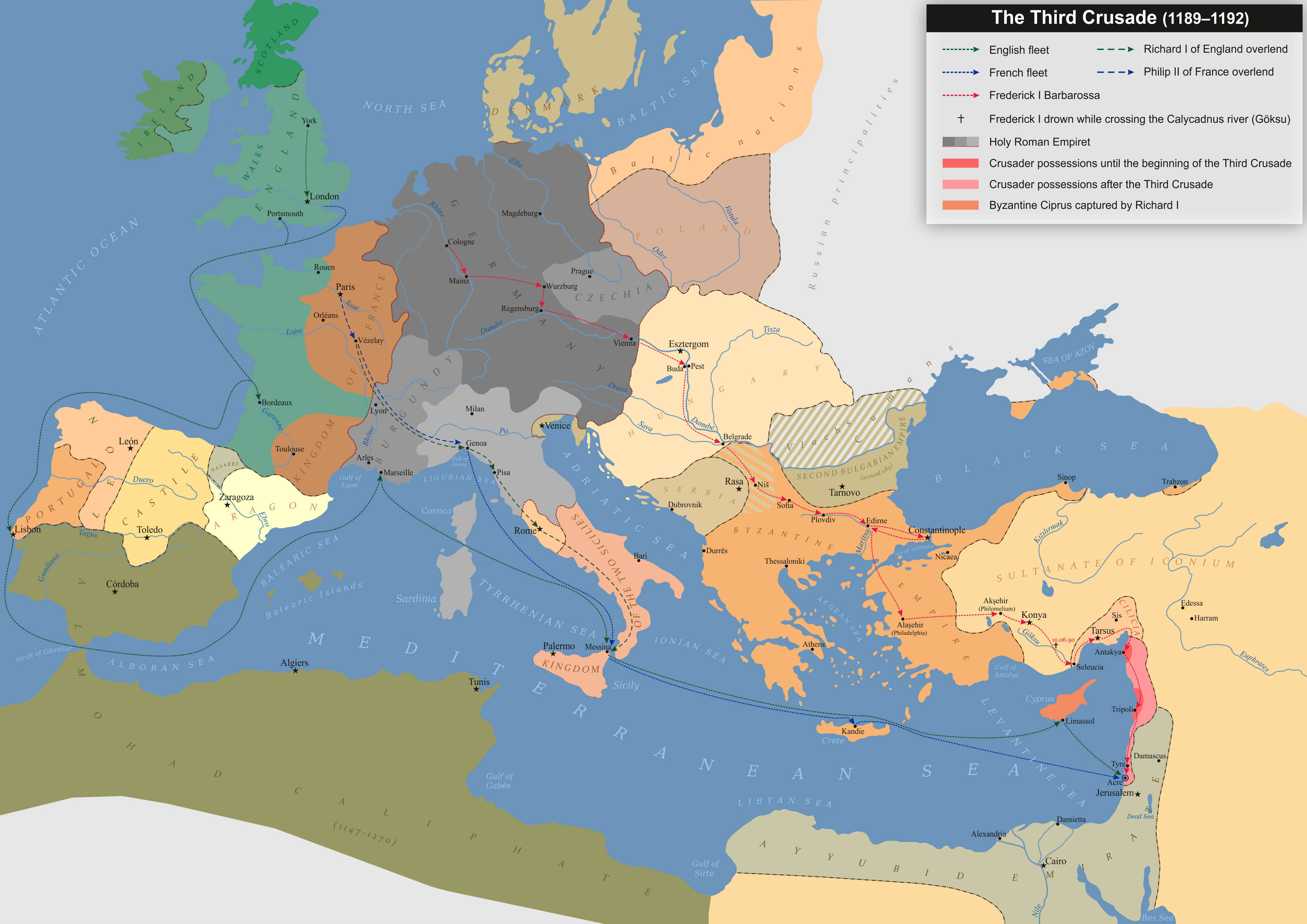
August 18, 1487 CE · Spain · Castilian and Aragonese troops pour through Málaga's broken walls.
At the Siege of Málaga (1487) in Spain, after about four months, the Catholic Monarchs' combined Castilian and Aragonese forces take the second-largest city of the Emirate of Granada. Ambulance carts carry the wounded from the breach for the first time, stripping Granada of its chief port.
I climb over the hewn stones where the wall has fallen and the dust is still settling in our eyes. My captain has told me that Málaga is taken this morning, that the banners of Castile and Aragon are already crossing the inner gate. Down the slope, a wooden cart with a cloth cover is being drawn by two mules, and wounded men are being lifted into it — I have heard it called an ambulance, though the word is strange on the tongue. The narrow lanes beyond the breach smell of smoke and of cisterns opened to the street. A woman is calling from a window. I do not yet know what orders will come next — whether we will hold the square or push toward the citadel. I stand at the breach with my sword half-drawn, watching the cart ease forward over the rubble.
August 18, 1590 CE · United Kingdom · John White steps ashore to a silent Roanoke.
John White (colonist and artist) of the United Kingdom returns from a supply voyage to find his Roanoke colony, left in 1587, vanished. No clear sign explains the disappearance of the men, women and children, including his granddaughter Virginia Dare.
I am one of the men who rowed Governor White ashore this morning, and the beach at Roanoke is the quietest place I have ever stood. The palisade we raised before we sailed has grass growing through its gate. No smoke rises from the house plots. No dogs run to the water. We fan out into the trees with our swords drawn, calling names from the old roll. Nothing answers. White stands for a long minute by the carved post, his hand on the wood, not speaking. I think of his granddaughter, Virginia Dare, born in this colony, who should now be running somewhere among these oaks. I cannot tell him what I have not yet found. I walk a slow circle around the empty garden beds, listening for any small sound that might explain where they have gone.
PLACES IN THIS STORY
Explore the destinations behind this report
Spain
Granada
Browse travel guides, places to stay, attractions and local food in Granada.
Explore Granada →A Slow-Travel Guide to Granada, SpainShare this article