September 1, 396 BCE · Italy · Temple doors swing wide on the Aventine for Juno's statue.

In Italy, Temple of Juno Regina (Aventine) is unfolding. The Temple of Juno Regina (Aventine) is dedicated in Rome by Marcus Furius Camillus.
I stand among the flute players on the upper stretch of the clivus Publicius, reed in hand, waiting for the word to begin. Below me the new walls of the Aventine catch the slanting sun, white against the green slope, and the crowd hushes as Marcus Furius Camillus comes forward in his toga. He has come straight from the road out of Veii, and the dust still clings to the hem. Priests pass the doorway with their bronze vessels, and incense begins to bite the air. At the magistrate's nod my brother players lift our pipes, and I push the first clear note out across the threshold. Inside, attendants carry the statue of Juno Regina, the queen taken from Veii, into the dark cella. The note carries, and smoke from the altar curls out toward the open doors and the first cool evening of the new month.
September 1, 1145 CE · Sweden · A young carver sets the chisel to the last capital.
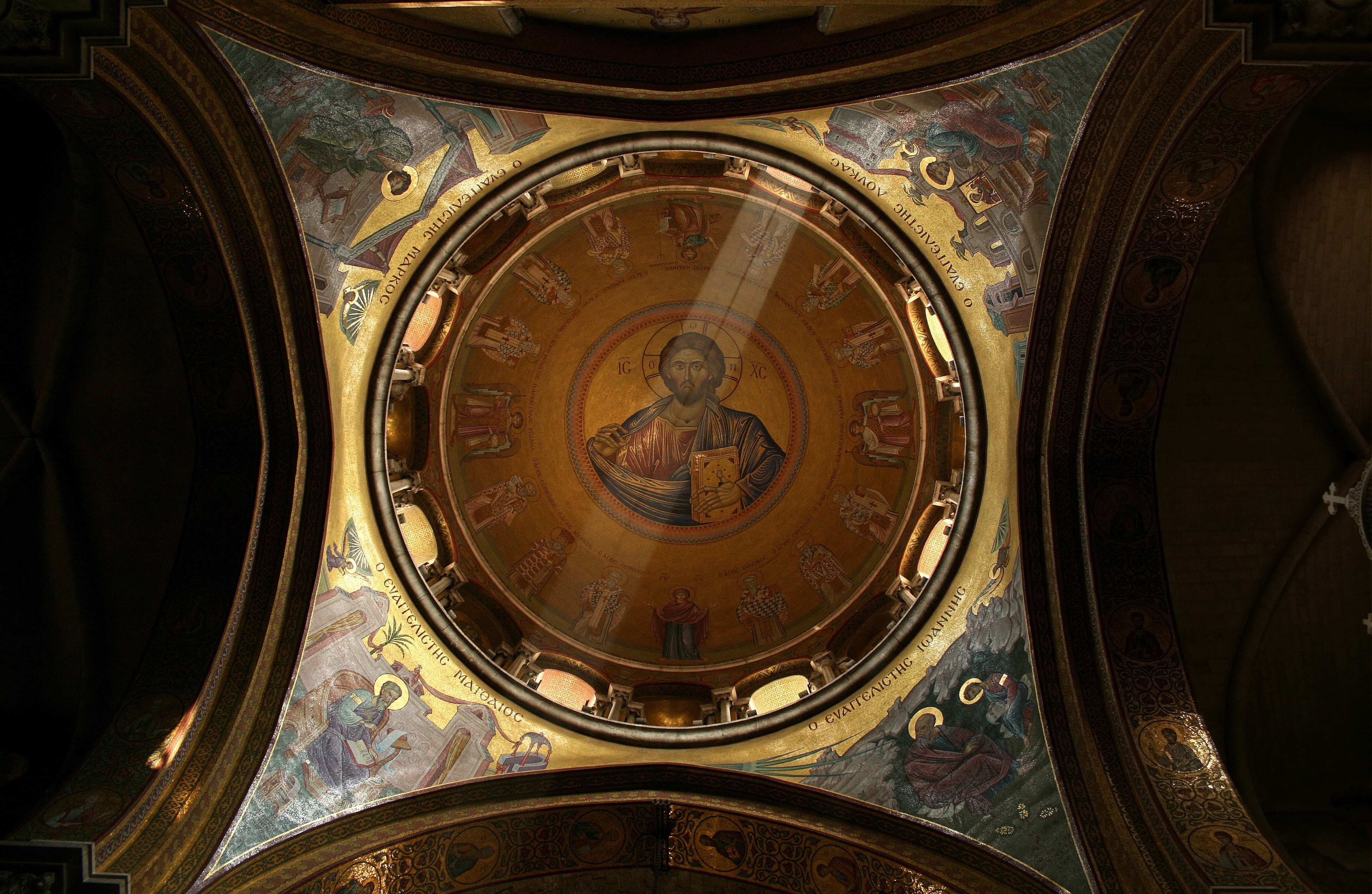
In Sweden, Lund Cathedral is unfolding. The main altar of Lund Cathedral, at the time the seat of the archiepiscopal see of all the Nordic countries, is consecrated.
I am bent over the last unfinished capital in the nave, my chisel resting against pale limestone as the bishop's procession moves up the central aisle. The new altar of our patron saint Lawrence gleams under its hangings at the east end, and Donatus, our master, stands back to watch the carving take the light, his hands still dusted from this morning's work. The walls rise cold and weighty around us, Romanesque arches stacked one above another, and through the western door the towers stand unfinished against the pale autumn sky. We are still building for Denmark, though they say this house of prayer belongs to every Nordic church. The bishop's crozier taps the altar step three times, and the chant rises into the ribbed vaults overhead. I lift my chisel, blow the dust from the leafwork, and listen for the bell that marks the first day of the new month before I strike the final groove.
September 1, 1449 CE · China · The grass plains echo with hooves as the Ming army scatters.
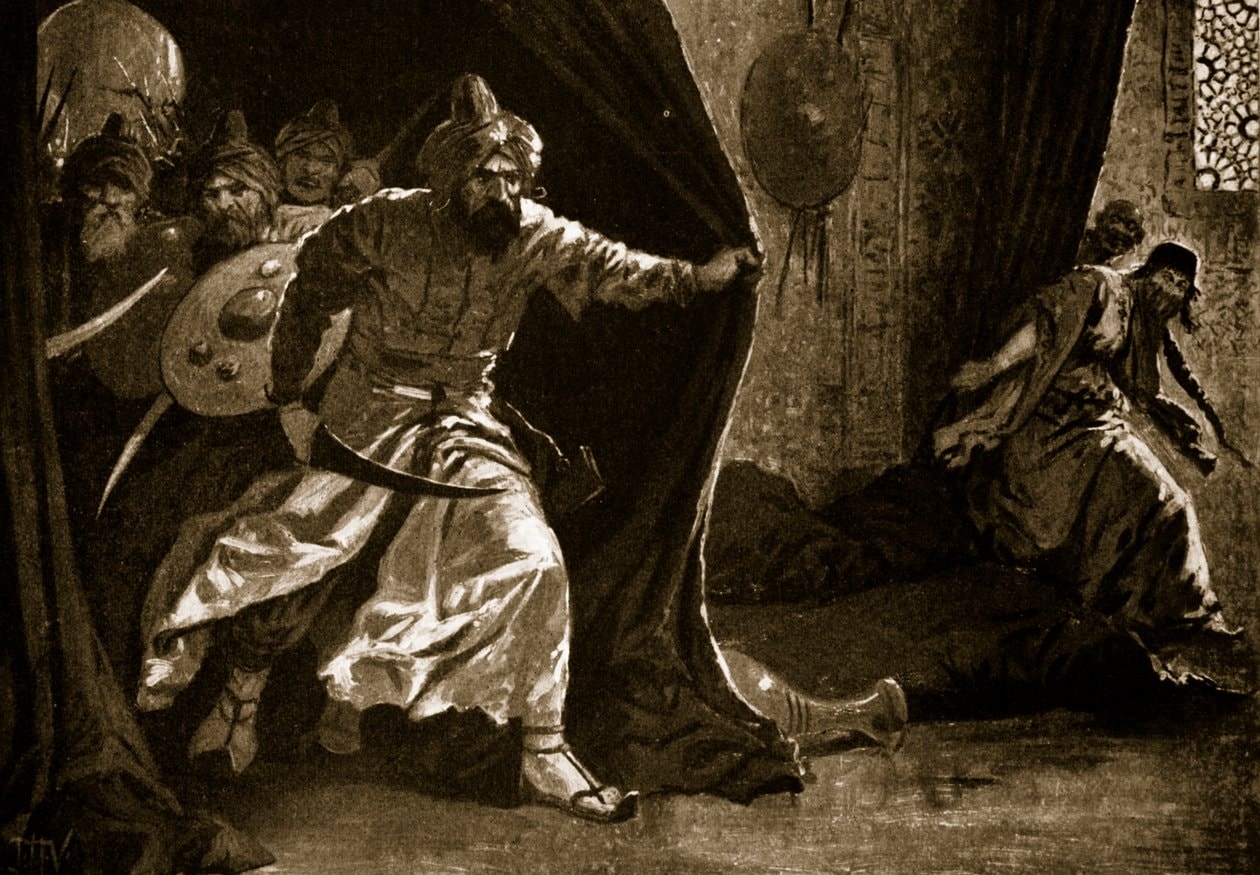
In China, 瓦剌 is unfolding. 瓦剌太師也先率領蒙古軍隊擊敗太監王振統領的明朝軍隊,在土木堡之變擒獲御駕親征的明英宗。
I ride at the edge of our line, the leather wrappings of my bow creaking against my hip, and I watch the dust rise in great brown sheets across the plain. The Ming soldiers are broken, their banners trampled into the dirt by their own retreat, and the captives are being driven past me in a long, unsteady column. At the front of that column sits a yellow-robed figure on a stumbling horse, and even from the saddle the yellow is clearly imperial. Our taishi Yesen has held the field since dawn, and the eunuch Wang Zhen's regiments never reached us at all. The wind shifts and carries smoke from the burning Ming wagons across my face. I turn my pony aside, lift my whip, and wait for the signal that the emperor himself has been taken from his own saddle.
September 1, 1529 CE · Spain · Smoke curls up from the river palisade before dawn.
In Spain, Sancti Spiritu (Argentina) is unfolding. The Spanish fort of Sancti Spiritu, the first one built in modern Argentina, is destroyed by indigenous people.
I am crouched behind a half-burnt barrel near the water gate, my sleeves still damp from the bucket line, and the war cries move between the trees along the Paraná. Two summers ago Sebastian Cabot set this stockade into the mud and called it Sancti Spiritu, the first Spanish fort in this wide southern country, and now the thatch is going up in sheets. The Amerindians are coming through the broken eastern paling in waves, their bows bent low, and the garrison is splitting between those who run for the boats and those who drop their pikes. A captain shouts from the chapel platform, but his voice is swallowed by the crackle. I drag the last cask toward the shallows, wade until the water takes my belt, and turn once to the smoking roofs behind me.
September 1, 1644 CE · United Kingdom · The Royalist line crests the ridge above Tippermuir.
In United Kingdom, Battle of Tippermuir is unfolding. Battle of Tippermuir: James Graham, 1st Marquess of Montrose defeats the Earl of Wemyss's Covenanters, reviving the Royalist cause.
I am kneeling behind a row of longbows on the slope above the bog, my fingers white around the stave, and the Royalist line stretches ahead of me in faded plaids and steel caps. Lord Elcho's Covenanters are forming up below, their pikes a dark forest along the marshy ground, and somewhere in the centre a standard bearer is already shouting the field prayer. Our Marquess of Montrose rides past at a hard trot, his sword catching the autumn light, and his outriders wheel out to take the flanks. A sergeant slaps my shoulder, and I rise, draw, and loose in one motion, the bowstring humming past my ear like a taut harp string. The shaft rises, the Covenanter line shudders, and the rout begins before the sun has crossed the first hour of the first day of autumn.
September 1, 1715 CE · France · A small boy is led into the long gallery of the palace.
In France, Louis XV is unfolding. At the age of five, Louis XV becomes king of France in succession to his great-grandfather, King Louis XIV.
I stand at the doorway of the long gallery with my halberd across my breast, watching as the chamberlain leads the new king forward by the hand. He is five years old today, small and pale in his black mourning suit, and the great-grandfather who ruled for seventy-two years is only hours cold. His grand-uncle, the Duke of Orléans, walks behind him with folded gloves, and the whole court files past in stiff black. The child does not look up. He carries a small wooden soldier that the head valet tried to take from him at the threshold, and his fingers are white around it. A secretary opens the great register on the lectern, and the chancellor reads the proclamation into the empty painted ceiling. I press my chin against my halberd and watch the little king blink once at the late light through the high gallery windows.
September 1, 1763 CE · Russia · A clerk unrolls the Foundling Home plan across the empress's desk.
In Russia, Catherine the Great is unfolding. Catherine the Great, Empress of Russia, endorses Ivan Betskoy's plans for a Foundling Home in Moscow.
I am the clerk who carries the bound drawings into the cabinet, and I lay them flat across the writing desk so that the inked walls and dormitories catch the morning light. Ivan Betskoy stands back with his hands clasped behind his coat, and Her Majesty Catherine steps forward in her morning gown, the great seal of Russia still glinting at her girdle. She has been empress since the coup that took her husband from his throne, and now she leans over my paper with a reading glass, her finger following the lines of his design for the Foundling Home in Moscow. Betskoy opens his own folio beside mine, and the empress taps the glass against her palm. She nods once, sets down her glass, and waits for me to roll the plans and place them in her own hand.
September 1, 1804 CE · Germany · A point of light shifts against the familiar stars.
In Germany, 3 Juno is unfolding. 3 Juno, one of the largest asteroids in the Main Belt, is discovered by the German astronomer Karl Ludwig Harding.
I am bent over the brass circle of the equatorial mount, my eye pressed to the eyepiece, while Karl Harding paces behind me between the lit candles and the open star chart. We are working at a small observatory tonight, and the autumn air drifting through the open shutter is heavy with dew. For an hour the same faint spark has hung where no spark hung before, drifting so slowly that I have called Karl twice to verify. He counts off the minutes, reads the clock, and marks the position on the chart with a sharp pencil. The third asteroid, he says, and I sit back, rubbing my eye, to let him take his own look at this new Juno I have just marked down. He bends to the glass, and I lean against the shutter, listening for the first night bird of the first day of the new season.
PLACES IN THIS STORY
Explore the destinations behind this report
Russia
Moscow
Browse travel guides, places to stay, attractions and local food in Moscow.
Explore Moscow →Moscow Travel Guide: Getting Around, Sights, and FoodItaly
Rome
Browse travel guides, places to stay, attractions and local food in Rome.
Explore Rome →Things to Do in Rome in July 2026: A Heat-Smart Travel GuideShare this article