Catch up on the essentials
- The army of Cyrus the Great of Persia conquer Babylon, ending the Babylonian empire.
- An elder unrolls the gohonzon; a younger monk positions the rounded crane that will serve as our emblem.
- The king, they say, will host this foreign merchant.
Selected from this article · 2026-10-12
Read on for the full pictureOctober 12, 539 BCE · Iran · My spear butts the dust at Babylon's gate.
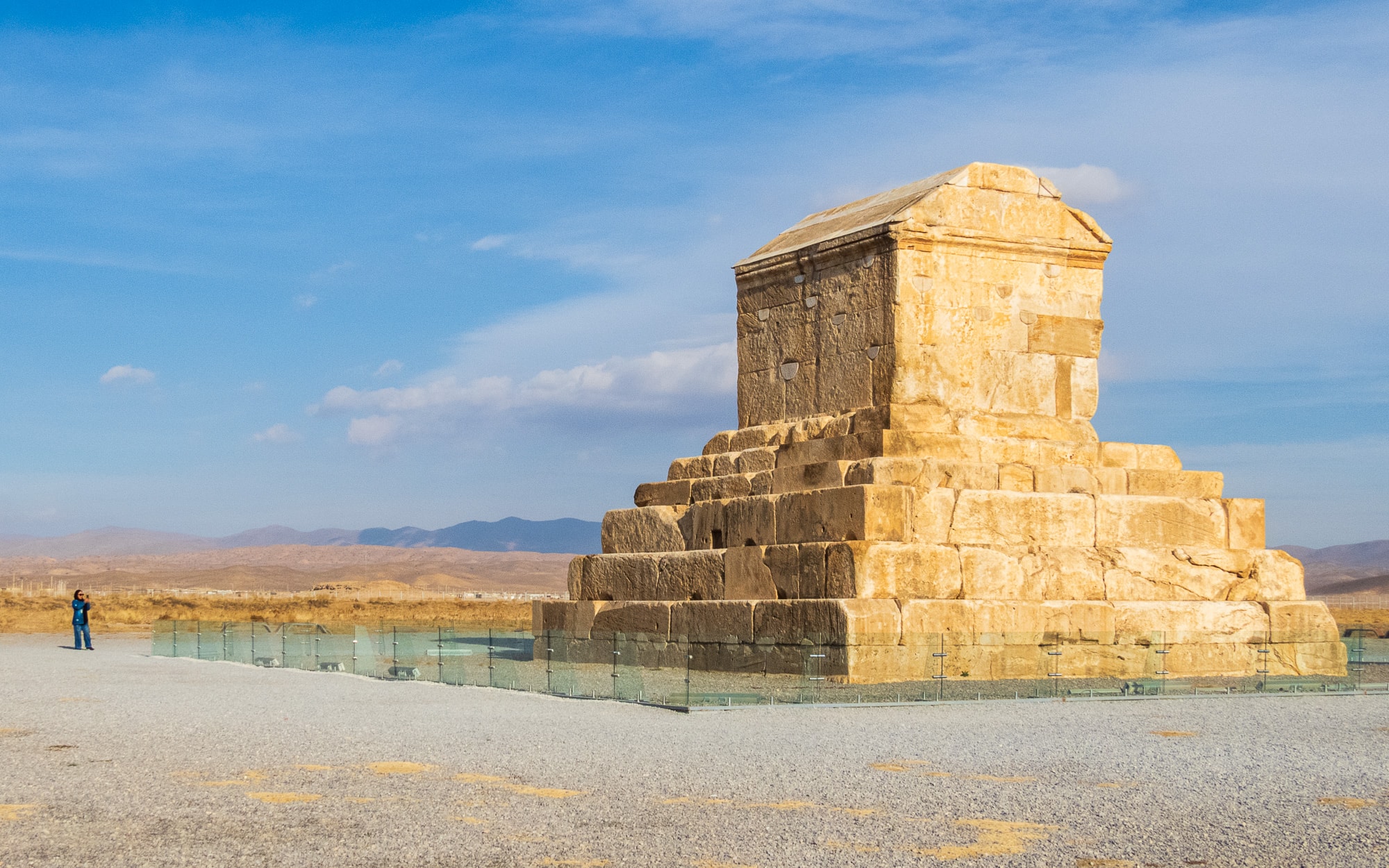
In Iran, Cyrus the Great is unfolding. The army of Cyrus the Great of Persia conquer Babylon, ending the Babylonian empire. (Julian calendar)
I grip my spear, shoulder pressed into the column of Persians funneling through the breach in Babylon's wall. The dust rises, thick with the smell of old mudbrick and the sharper tang of men's sweat pouring past me. I am one of Cyrus's infantry, following the king who has swallowed kingdoms. Above us, the wall towers, plastered smooth, and below my sandals the streets of the conquered city lie open. My comrades chant the king's name; my breath comes quick. I shoulder through the press toward the inner courtyard where scribes are taking inventory of a fallen empire. The line moves. I move with it, past reed-stitched walls, toward channels of brown water at the city's edge.
October 12, 633 CE · United Kingdom · I crouch in the reeds by the River Don.
In United Kingdom, Battle of Hatfield Chase is unfolding. Battle of Hatfield Chase: King Edwin of Northumbria is defeated and killed by an alliance under Penda of Mercia and Cadwallon of Gwynedd.
I crouch in the reeds at the marshy edge where the Don curls south of Doncaster. My ax is wet to the haft. Before dawn, the allied host of Penda of Mercia and Cadwallon of Gwynedd spreads across the boggy ground; we of the alliance wait while Edwin's Northumbrian banners catch the early light across the flat. The horse-warriors shout and the fyrd answer them. Mud pulls at my boots. The Northumbrian shield-wall advances, then wavers. An ax bites wood. A king falls. I run forward into the broken line, my ax rising, the king's banner lying down in the reeds beside his body. The chase begins, hooves pounding the wet ground, and the morning wind carries the sound eastward toward distant hills.
October 12, 1279 CE · Japan · I kneel in the new hall near Mount Fuji.
In Japan, Nichiren Shōshū is unfolding. The Nichiren Shōshū branch of Buddhism is founded in Japan.
I kneel on fresh-cut boards in the hall Nikko Shonin has raised near the slope of Mount Fuji. The morning incense curls. Around me, the disciples of Nichiren arrange the sacred objects for the new school they call the Orthodox branch of their master's teaching. An elder unrolls the gohonzon; a younger monk positions the rounded crane that will serve as our emblem. Nikko Shonin walks among us, his sleeves brushing the pillar as he moves. He instructs us in the exclusive path of Nam-Myoho-Renge-Kyo and the portions of the Lotus Sutra we are to recite. Outside, snow clings to the peak. I press my palms together. The chant rises, and beyond the temple eaves the wind bends toward the sea.
October 12, 1406 CE · Korea · I wait on the dock at Seoul's harbor.
In Korea, Chen Yanxiang is unfolding. Chen Yanxiang, the only person from Indonesia known to have visited dynastic Korea, reaches Seoul after having set out from Java four months before.
I wait on the timber dock as the battered junk slides toward the quay. A man named Chen Yanxiang steps ashore - a merchant of Chinese blood who claims, without credentials, to be an envoy from a Javanese king. Four months at sea from Java have left him lean. He carries no exotic birds now; Japanese pirates took them, and the pepper, and all his cargo, somewhere off the coast. He clutches only the tale of his loss. Officials from the Korean court approach; scribes unroll their registers. The king, they say, will host this foreign merchant. Behind Chen, the harbor wind carries salt and rope, and a fresh ledger lies open on the clerk's table.
October 12, 1871 CE · India · I ink the register in a colonial office.
In India, Criminal Tribes Act is unfolding. The British in India enact the Criminal Tribes Act, naming many local communities "Criminal Tribes".
I ink the register at the colonial desk in northern India, my pen scratching names onto a long new list. The Criminal Tribes Act has been enacted; today the local communities my officers name are entered into our ledgers as habitual criminals by law. Outside the office, villagers press forward, summoned for compulsory registration under the new pass system that will limit where they may live or travel. A constable takes a thumbprint in black ink and presses it into the book beside a row of names. I dip my pen. The next petitioner waits at the door, cap in hand, eyes lowered. I call him forward.
PLACES IN THIS STORY
Explore the destinations behind this report
Japan
Nikko
Browse travel guides, places to stay, attractions and local food in Nikko.
Explore Nikko →Nikko Travel Guide: A Calm Escape Into Japan's Historic MountainsShare this article