South Korea and US tech giants unveil $950 billion in chip deals

South Korean and US technology companies agreed to pursue roughly $950 billion in semiconductor supply and manufacturing partnerships over the next five years at the San Francisco AI Summit hosted by South Korean President Lee Jae Myung. Presidential policy chief Kim Yong-beom described the agreements as advance contracts and purchase commitments rather than investments, saying they would allow Korean producers to plan output with greater stability. The total combines $750 billion in SK Group memoranda with US tech firms and up to $200 billion in a memorandum of understanding between Samsung Electronics and Broadcom spanning memory chips, foundry services and advanced packaging.
SK Group signs $750 billion in memory supply agreements
SK Group reached deals worth $750 billion covering long-term advanced memory-chip supply partnerships with Nvidia, Microsoft, Anthropic and Amazon Web Services. The largest component is a strategic relationship with Nvidia valued at more than $500 billion, built around a multi-year memory supply and co-development agreement with SK Hynix and joint work on next-generation high-bandwidth memory for AI training, agentic AI and physical AI applications. SK Hynix separately agreed to pursue long-term memory supply cooperation with Microsoft, jointly identifying AI-server memory solutions and validating them in real server environments. SK Group chairman Chey Tae-won said AI customers including Nvidia, Anthropic, OpenAI and Broadcom were seeking far more memory than previously anticipated and that Nvidia's projected five-year memory requirement could soon prove higher.
Samsung Electronics signs $200 billion MOU with Broadcom
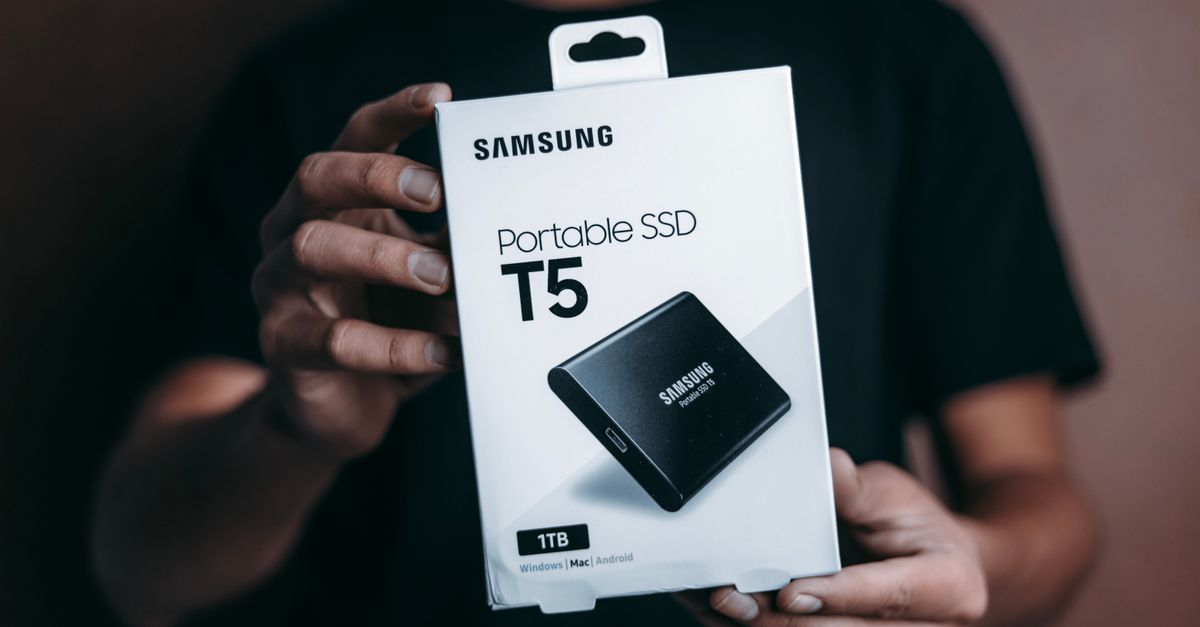
Samsung Electronics announced a strategic memorandum of understanding with Broadcom valued at $200 billion through 2030 covering memory chips, foundry and packaging. The agreement covers collaboration on Broadcom's next-generation AI accelerators using Samsung's HBM technology, including HBM4, which Samsung began mass producing in February, and HBM4E samples that Samsung started supplying to customers in May. Samsung will apply its sub-2-nanometer foundry process to key Broadcom product lines and provide advanced packaging built on its 2-nanometer process. Samsung foundry president Han Jin-man and Broadcom chief executive Hock Tan attended the signing alongside government officials.
SK Telecom plans 2-gigawatt AI data center powered by Vera Rubin and HBM4
SK Telecom plans to build a 2-gigawatt AI data center in South Korea using Nvidia's DSX AI factory platform and Vera Rubin accelerated computing systems equipped with SK Hynix's sixth-generation HBM4 memory. The facility, scheduled to enter service in 2027, is intended to support sovereign AI, enterprise AI, physical AI and agentic AI deployments across South Korea and the Asia-Pacific region. SK Telecom also signed a memorandum of understanding with Anthropic to cooperate on the gigawatt-scale project, extending a relationship that began with SK Telecom's strategic investment in Anthropic in 2023. With AWS, SK Telecom plans to expand the Ulsan AI data center partnership across additional South Korean sites.
Apple and Micron clash over Chinese memory chip sourcing
Apple and Micron have taken opposing positions before the Trump administration over Apple's push to use memory chips from Chinese suppliers ChangXin Memory Technologies and Yangtze Memory Technologies in products sold outside the US, according to The Wall Street Journal. Apple chief executive Tim Cook and senior executives have pitched Commerce Secretary Howard Lutnick and Treasury Secretary Scott Bessent on the plan. Micron executives, including chief executive Sanjay Mehrotra, have urged officials to block the proposal, arguing that sourcing from heavily state-subsidized Chinese suppliers could undercut US producers the way China contributed to the decline of US steel and manufacturing. Micron has offered to help ease the shortage by accelerating construction of domestic plants and increasing US investment, with its shares up 191% year-to-date despite recent volatility.
Share this article