China regulator inspects XPeng and Aion factories

China's Ministry of Industry and Information Technology (MIIT) said it conducted on-site safety inspections at the factories of electric vehicle makers GAC Aion and XPeng Inc. following a series of reports about product defects. According to the regulator, the inspections evaluated the companies' intelligent connected vehicle safety, design and development capabilities, and production consistency. Sample vehicles and batteries were randomly selected for testing to determine compliance with national standards.
Indian EV exports surge 14-fold as global ambitions grow
India-made electric car exports rose to 15,641 units in the three months ended June, up from 1,122 units a year earlier, a 14-fold increase that accounted for more than half of the 28,652 units exported in the last fiscal year. Maruti Suzuki's e-Vitara emerged as India's third-most exported car last quarter, with the Suzuki Motor Corp unit shipping 15,210 electric vehicles to 47 countries; the United Kingdom was the largest export destination, followed by South Africa. Rahul Bharti, senior executive officer at Maruti Suzuki, said the company exported close to 125,000 cars in the first quarter to about 120 markets, with more than 40,000 units of the e-Vitara shipped in less than a year.
Tata Motors Passenger Vehicles is preparing to scale up shipments to right-hand-drive markets, with plans to expand into additional markets across Asia, Africa, Europe, and the Pacific over the next few years. The company has announced plans to invest up to ₹40,000 crore over five years to lift annual capacity to 1.3 million vehicles by FY31, from about 900,000 units, and to grow its EV portfolio to 10 nameplates from six. Tata is working with its Jaguar Land Rover unit on engineering and software for premium Avinya-platform electric cars intended for Europe in the next two to three years, with the UK expected to be among its first new export markets.
India commits $25.6 billion to localize core EV technology
India is backing a shift from import dependence to indigenous innovation with nearly Rs 2.2 lakh crore (approximately US$25.6 billion) in policy support for domestic EV manufacturing. The package includes the Rs 10,900 crore PM E-Drive Scheme, the Rs 25,938 crore Production Linked Incentive (PLI) Scheme for Automobile and Auto Components, and the Rs 18,100 crore PLI Scheme for Advanced Chemistry Cells (ACC). Industry estimates cited in reporting suggest EV sales in India crossed 2 million units in FY25.
Piyush Verma, co-founder and CTO of Naxatra Labs, said the next phase of growth will be determined by local capabilities in motors, power electronics, battery systems, and embedded software, adding that Indian companies are designing core powertrain technology for Indian duty cycles rather than adapting Chinese designs for different markets. Sanyam Gandhi, whole-time director at Chartered Speed, said the next phase of growth will depend on how successfully India localises the EV value chain, including electric motors and motor controllers.
Kia and Hero MotoCorp expand EV lineup in South Asia
Kia India added the Syros EV compact electric SUV to its lineup at a base price of ₹13.49 lakh (ex-showroom), with deliveries scheduled to begin on July 30, 2026. The vehicle offers an ARAI-certified range of up to 526 km from a 51.4-kWh battery pack, with two battery options available. Kia said the Syros EV can be charged from 10 percent to 80 percent in approximately 39 minutes using a 100-kW DC fast charger, positioning the model against Tata Motors and Mahindra in the Indian subcompact electric SUV market.
Separately, Hero MotoCorp's electric mobility brand Vida made its global debut in Nepal, its first market outside India. The launch includes the VX2 Go (₹2,99,900) and VX2 Plus (₹3,99,900) scooters plus the Dirt.E K3 children's e-bike (₹1,99,900), distributed through a partnership with CG Motors, part of the Chaudhary Group. The VX2 Plus offers a claimed real-world range of 140 km and can climb an 18-degree gradient, while the Dirt.E K3, targeting riders aged 4 to 10, has won the Red Dot Design Award 2025 and the CES Innovation Award 2026. Vida will compete against TVS iQube, Bajaj Chetak Electric, and Ather Rizta in Nepal.
Rivian sues over tariffs as US opens door-handle rulemaking
Rivian filed a nine-page lawsuit in the U.S. Court of International Trade seeking refunds of tariffs imposed under the International Emergency Economic Powers Act (IEEPA) that courts found unlawful. The defendants include the United States, U.S. Customs & Border Protection, and the agency's commissioner, Rodney S. Scott. Chief financial officer Claire McDonough said during the company's April 30 first-quarter earnings call that recovery of IEEPA tariffs could represent tens of millions of dollars of future benefit. Rivian is represented by Chicago-based international trade firm Page Fura, P.C.
In a separate regulatory move, the U.S. National Highway Traffic Safety Administration (NHTSA) announced on July 24 that it had opened a rulemaking process that could require an emergency door release system in every new car, citing risks that hidden or unlabeled handles can leave occupants trapped after crashes. The action follows investigations into Tesla's Model Y and Model 3, though NHTSA cleared Tesla in the underlying probe. Rivian has already changed the door-handle design for its R2 to make the manual release more visible from inside, and the regulator said the next step is gathering public comments to determine whether a new safety standard is warranted.
Vehicle-to-grid technology gains traction in Europe
Vehicle-to-grid (V2G) technology, which allows EV batteries to store surplus renewable energy and feed it back to the grid, could save up to €22 billion a year in European energy-system costs by 2040 and as much as €175 billion cumulatively between 2030 and 2040, according to research from the Fraunhofer Society commissioned by Transport & Environment. Germany alone curtailed roughly 9,374 GWh of renewable electricity in 2024, enough to power about three million EVs for a year.
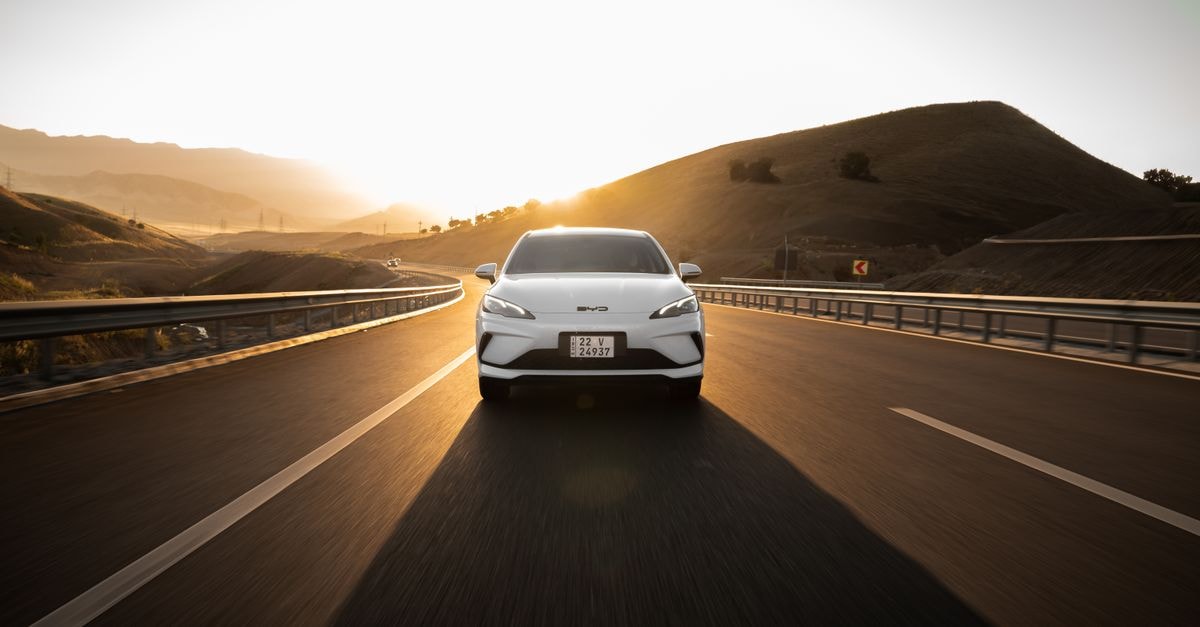
Automakers are racing to commercialize bidirectional charging. Volkswagen, working with its energy brand Elli, plans a fully integrated V2G package for German customers in the fourth quarter of 2026 with pre-registration already open, projecting owner earnings of €700 to €900 a year. Nissan has announced plans to roll out affordable bidirectional charging in 2026 starting in the UK, while Kia and Hyundai have launched V2G services in the Netherlands for select models. Mercedes-Benz has announced bidirectional charging for its electric GLC through a partnership with The Mobility House, BYD has paired a model with an Octopus Energy tariff in the UK, and Wallbox, founded in Barcelona, supplies the bidirectional chargers used in several pilots.
Share this article