Zoox secures first federal robotaxi exemption

Amazon-owned Zoox received approval from the National Highway Traffic Safety Administration to begin limited commercial deployment of its purpose-built, steering-wheel-free robotaxi, the first such authorization granted to a U.S. autonomous ride-hailing company for a vehicle designed without traditional driving controls. The decision, announced in NHTSA's July 30 action, permits Zoox to deploy up to 2,500 robotaxis annually over the next two years and to charge passengers once state and local permits are secured. The company has indicated commercial service will launch first in Las Vegas, with San Francisco to follow, both areas where it already runs free passenger tests.
Zoox's electric vehicle features two rows of inward-facing passenger seats, no steering wheel, no pedals, and no driver's seat, and is capable of speeds up to 75 mph (120 km/h). It is intended exclusively for autonomous ride-hailing rather than private sale. Amazon acquired Zoox in 2020 for approximately $1.2 billion, and the company says more than 500,000 passengers have already ridden in its autonomous vehicles during the testing phase. Amazon has stated a longer-term goal of manufacturing up to 10,000 robotaxis annually at a California facility near Silicon Valley.
NHTSA attaches enhanced oversight conditions
The exemption came with additional reporting requirements. Zoox must submit reports on crashes, unexpected roadway stops, and other safety-related incidents, must keep remote vehicle operators based in the United States, and must publish maps showing where its robotaxis operate. NHTSA Administrator Jonathan Morrison said the agency determined that Zoox's automated driving system meets or exceeds the equivalent safety performance of conventional vehicles, while emphasizing that continued monitoring remains essential as deployment expands. NHTSA has indicated that the reporting requirements could be revised as more operational data is collected.
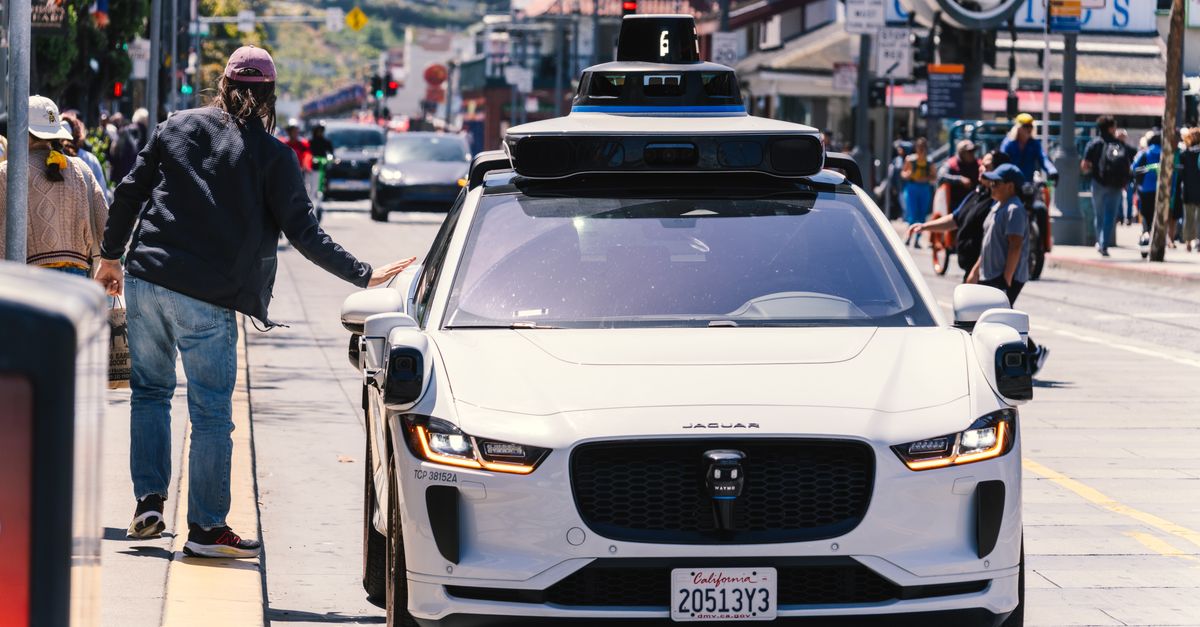
The approval arrived while regulators were separately directing autonomous vehicle developers to address rising reports of driverless vehicles interfering with police officers, firefighters, and emergency responders. Other industry-wide incidents have included robotaxis entering construction zones, stopping unexpectedly in traffic, driving around stopped school buses, and becoming stranded on flooded streets.
Tesla scales back paid robotaxi operations
Tesla's paid robotaxi miles fell roughly 36 percent in the second quarter of 2026, from about 1.1 million in Q1 to about 700,000, according to a Tesla shareholder update cited in coverage of the company's second-quarter earnings. Tesla shares dropped around 30 percent in 2026 heading into the call and plunged more than 13 percent in a single July session after the figures were disclosed. During the earnings call, Elon Musk attributed the slowdown to the need to accumulate driving data specific to the purpose-built two-seater before scaling deployment, noting that Model 3 and Model Y vehicles benefit from millions of miles already logged by customer cars.
Tesla has retrofitted early Cybercabs with steering wheels and pedals to gather calibration data, and Musk said the number of Cybercabs in cities will rise dramatically once confidence in the system improves. Production of the Cybercab began at Giga Texas in February, and early units now incorporate Starlink connectivity; Tesla has also filed for permits to operate up to 5,000 robotaxis in Clark County, Nevada, including Las Vegas, with Dallas, Houston, Phoenix, Miami, Orlando, and Tampa named on internal road maps.
Cybercab volume production slips toward late 2026
Musk's latest guidance pushes Cybercab volume production to late 2026 at the earliest, a further delay from prior targets. The CEO has confirmed plans to sell a consumer version of the Cybercab for under $30,000 by 2027, and the vehicle's design eliminates traditional controls entirely, with no steering wheel, no pedals, and bench-style seating that closely mirrors Zoox's carriage layout. The consumer vehicle would compete in price with conventional compact cars rather than only with ride-hailing fleets.
Investor response and competitive dynamic
Ark Invest's Cathie Wood has continued to buy Tesla shares through the drawdown, a signal of conviction that the long-term robotaxi prize remains large even as near-term execution disappoints. The competitive picture is sharpening: Zoox holds the only current U.S. federal exemption for a purpose-built, control-free robotaxi, while Tesla is using retrofitted Cybercabs and existing Model Y SUVs to keep paid miles on the road while it works toward unsupervised operations.
What to watch next
Key near-term checkpoints include the grant of state and local permits that would allow Zoox to convert from free testing to paid rides in Las Vegas and San Francisco, the pace of Tesla's Cybercab volume ramp in the second half of 2026, and any further NHTSA guidance on the broader driverless-vehicle incidents involving emergency responders.
PLACES IN THIS STORY
Explore the destinations behind this report
United States
Las Vegas
Browse travel guides, places to stay, attractions and local food in Las Vegas.
Explore Las Vegas →Las Vegas Travel Guide: Getting Around, Eating Well, and Seeing the StripShare this article