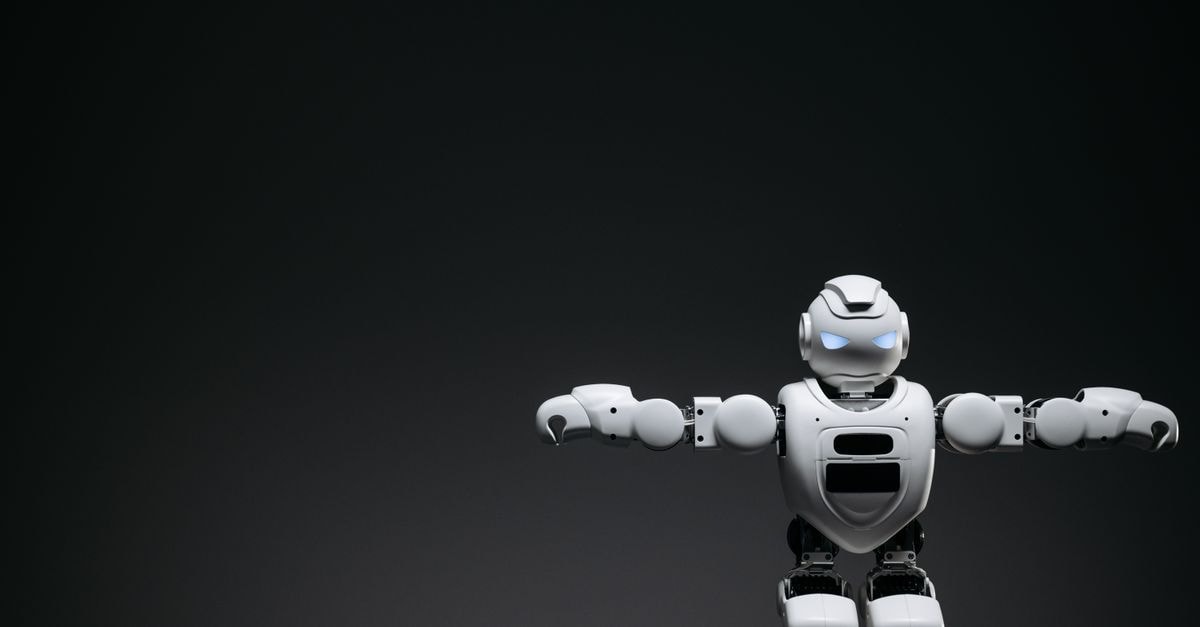
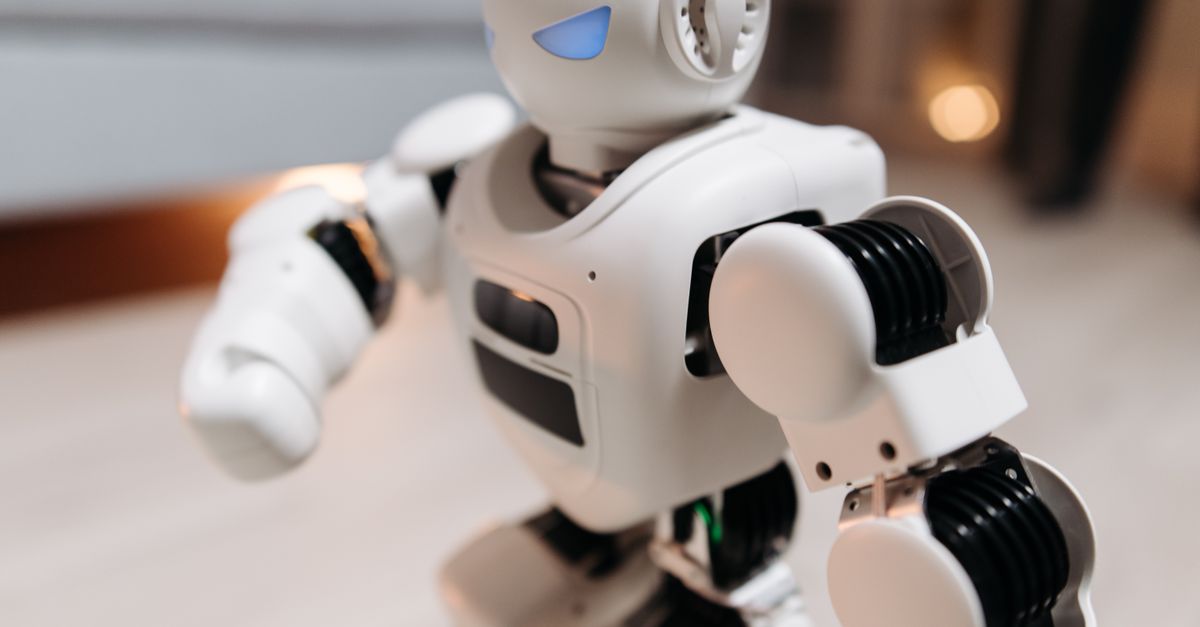
Chinese garment factories deploy humanoid sewing robots

Robots developed by Aitu, an intelligent sewing technology company based in Zhejiang Province, are being tested in Chinese garment factories to separate fabric pieces, lift them, lay them flat and align them for sewing. Aitu says its robots have achieved a 97% success rate in separating fabric pieces for a single product category and fabric type, with more than 98% of the resulting sewing work meeting quality standards. The company estimates the system could pay for itself in about 18 months at current efficiency levels. Aitu robots are running production trials at Sunrise Group, Eifini and Chenfeng Group, where their assignments remain narrow: loading and unloading fabric at template sewing machines, positioning material for pocket setters, and picking up and placing cut pieces at fusing press machines. Aitu general manager Lou Lingtong said humanoid robots can perform individual processes but remain unable to run an entire production end to end.
Electronics and automotive production trials
PIABOT Robotics' G2, an industrial embodied-AI robot, has been deployed in electronics assembly, logistics sorting, component inspection and production-line loading. In one trial at a major Chinese electronics manufacturer, the company says the robot completed 2,283 tasks over eight hours without an error. On an automotive safety-equipment line, a G2 robot tapped holes in aluminum seat-belt components, a task that previously took a worker about 18 seconds per cycle; the robot cut that to as little as 12.9 seconds, improving efficiency by roughly one-third. The deployments illustrate how manufacturers struggling to recruit and retain workers are adopting limited automation one station and one repetitive task at a time.
Training infrastructure expands in Zhejiang
A humanoid robot training facility in Cixi, a manufacturing hub in Zhejiang, was launched in mid-May with 40 embodied AI robots deployed. Designed around simulated real-world scenarios drawn from nine local industries including home appliances, automobiles and textiles, the facility is expected to provide an average of more than 90 hours of effective robot training a day once fully operational. Similar efforts are taking shape in Hangzhou, where a national pilot base is linking robot hardware, AI models and industrial applications. Operators say access to real-world factory data is becoming critical as walking, visual navigation and route planning mature and the harder problem shifts to manipulation.
South Korea completes first humanoid helmsman trial
On July 24 at a naval training facility in Changwon, approximately 300 km southeast of Seoul, the Republic of Korea Navy and KAIST completed what both institutions describe as the world's first operational experiment of a humanoid robot performing naval helmsman duties. The robot, Pibot, was developed by KAIST Professor Shim Hyun-chul under a ₩5.7 billion (approximately $3.9 million USD) defense technology project funded by South Korea's Agency for Defense Development. Operating under orders from a bridge watch officer assigned to the destroyer Seoae Ryu Seong-ryong, Pibot parsed spoken helm orders through its large language model, repeated the command back to the watch officer for confirmation and then physically manipulated the ship's wheel. The simulated run included frequent close-quarters navigation and steady-course holds in rough seas where high waves repeatedly pushed the virtual vessel off its ordered heading.
Deployment roadmaps and policy frameworks
China's Ministry of Industry and Information Technology and its state assets regulator have launched a program to train humanoid robots and embodied AI systems in real-world settings, aiming to move them from testing into actual operation and build deployment capacity at the 10,000-unit scale by the end of 2026, an industry-wide milestone that 2026 is widely regarded as the year humanoid robots begin moving into mass production. In South Korea, three more stages remain for the Pibot program: Stage 2 on an actual vessel moored in port, Stage 3 during daytime navigation at sea, and Stage 4 involving extended day-and-night operations under real maritime conditions. The naval work sits within the ROK Navy's Sea GHOST hybrid manned-unmanned fleet doctrine launched in November 2022 and the broader Defense Innovation 4.0 push to use AI, autonomous systems and robotics to compensate for shrinking personnel numbers.
Share this article