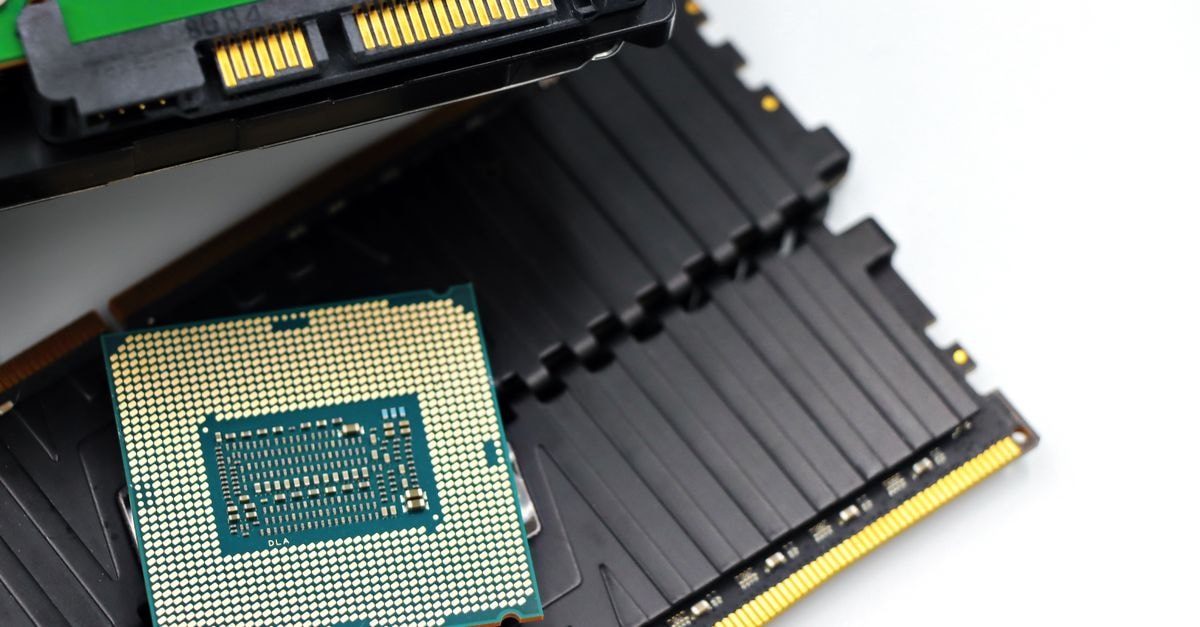
South Korean exports hit near-record as chip demand accelerates

South Korea's monthly exports climbed 62.8% year on year to $98.89 billion in July, the second-highest total on record and only slightly below the all-time high of $102.2 billion set in June, according to Ministry of Trade, Industry and Resources data released on Saturday. Semiconductor exports surged 179% to $41 billion, topping $40 billion for a second consecutive month, as global DRAM and NAND prices kept climbing on demand from AI data centers. Industry Minister Kim Jung-kwan said 19 of the country's 20 major export categories posted gains.
By destination, exports to China nearly doubled to $21.68 billion on chip, nonferrous metal and petroleum shipments, while exports to the United States rose 68.7% to $17.4 billion, supported by AI data-center investment by major U.S. technology companies. Shipments to Southeast Asia gained 73.7% to $18.8 billion and exports to the European Union rose 55.7% to $9.38 billion. Imports rose 26.5% to $68.56 billion, leaving a trade surplus of $30.32 billion.
Top memory makers post record cash flow as AI capex flows downstream
The five largest memory semiconductor makers — Samsung Electronics, SK hynix, Micron, KIOXIA and SanDisk — posted a combined free cash flow surplus of 135.65 trillion won in the second quarter, a 92-fold year-on-year increase, according to a Nikkei analysis cited by Maeil Business. Their combined net profit reached 226.38 trillion won, up roughly 16-fold from a year earlier.
KIOXIA, the only listed Japanese memory maker in the group, generated 6.68 trillion won in free cash flow during the quarter, up 28-fold year on year but still a small fraction of the figures posted by Samsung Electronics and SK hynix, each reporting tens of trillions of won. The Nikkei noted that Alphabet, Microsoft, Amazon and Meta Platforms all posted negative free cash flow over the same period, characterizing the pattern as money flowing from hyperscale AI builders into the memory industry. The outlook is reinforced by recent company guidance: Samsung Electronics earlier reported a more than 250-fold jump in chip profit and announced multi-year supply deals with major data-center operators, projecting that global chip shortages will become more acute and extend into 2028.
Smartphone SoC shipments fall 15% as memory costs climb 300%
Global smartphone system-on-chip shipments dropped 15% year on year in the first half of 2026, according to a Counterpoint Research report dated August 1, as smartphone memory prices surged more than 300% in the second quarter from a year earlier. MediaTek (32% share) and Qualcomm (22%) each saw shipments fall more than 25% as handset makers prioritized locking in long-term memory supply contracts. Apple (19%), Samsung (8%) and UniSOC (13%) recorded shipment growth and expanded share, with Apple's share rising four percentage points on iPhone 17 performance.
Counterpoint analyst Shivani Parashar said Qualcomm's premium growth was limited because the Samsung Galaxy S26 adopted both the Snapdragon 8 Elite Gen 5 and Samsung's own Exynos 2600. Counterpoint expects global smartphone SoC shipments in 2026 to decline 14% year on year and warned that memory supply is not expected to normalize before the second half of 2027, framing a difficult 2027 for handset makers as well.
AMD aligns with Nvidia on GPU price hikes as GDDR6 supply tightens
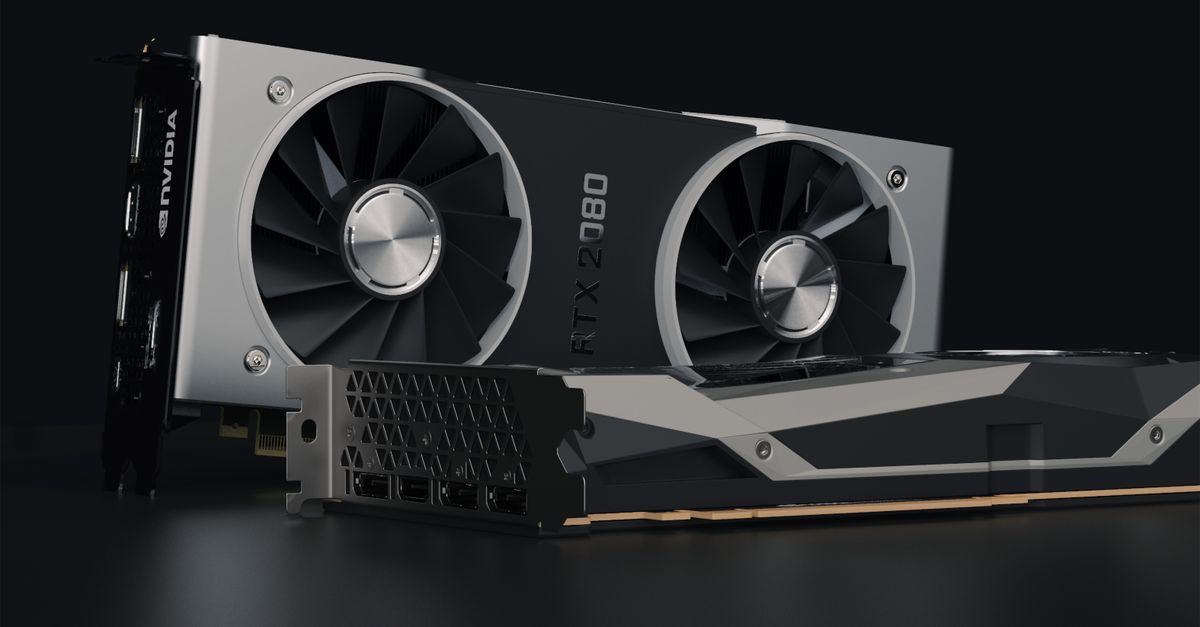
AMD formally notified add-in board partners on July 31 that Radeon GPU and GDDR6 memory kit prices would rise by at least 10% starting in August, aligning the company with Nvidia's earlier July move, according to Channel Gate supply-chain reporting cited by VideoCardz and reported by TechTimes. The August increase follows an initial roughly 10% AMD hike in July and is part of a planned 10–15% increase for the second half of 2026, intended to be deployed after Nvidia's move to secure a brief window of relative Radeon affordability.
Spot GDDR6 prices have climbed from roughly $2.50 per gigabyte to about $7.50 per gigabyte since late 2025, and on some high-VRAM Radeon models memory now accounts for more than 80% of the total bill of materials. The pressure traces back to Samsung, SK hynix and Micron, who together control an estimated 90–95% of global DRAM output, shifting wafer capacity toward high-bandwidth memory for AI accelerators such as Nvidia's H100 and AMD's Instinct MI300X, where a single HBM die consumes roughly twice the wafer area of an equivalent standard DRAM module, amplifying supply loss in the standard DRAM market.
CXMT nears LPDDR6 mass production as new suppliers position for share
Chinese memory chipmaker ChangXin Memory Technologies (CXMT) has completed the R&D verification stage for LPDDR6 memory at a design speed of 12,800 Mbps and a base speed of 10,667 Mbps, with 16Gb density and a 1295 Ball POP package, according to Chinese-language reporting cited by Wccftech. R&D verification sits between single-chip verification and the small-batch import verification that precedes mass production.
The progress comes as South Korean rival SK hynix plans to begin LPDDR6 mass production in the second half of 2026 on a 10-nanometer-class (1c) process, with base speeds above 10.7 Gbps and 16Gb density. The Wccftech-cited analysis suggested CXMT is positioning for segments where Samsung and Micron are less dominant because of their focus on HBM and server DRAM. Multiple reports have also said Apple is exploring sourcing memory from CXMT to ease supply-chain pressure.
Consumer prices rise as RAM shortage reshapes household electronics
The same memory squeeze is flowing into retail. A memory kit that retailed for about $150 in July 2025 now costs around $850, according to Ben Maxwell of Compulsion Tech in Tauranga, New Zealand. Technology Users Association chief executive Craig Young said high-end smartphone prices have climbed up to 30% and entry-level laptops up to 10–20%, warning consumers are likely to live with the shortage for roughly two more years.
Refurbishers say suppliers have warned of further price increases this year, and donor-device volumes have tightened as households hold onto electronics longer. Apple is also preparing for higher bills of materials: IDC has predicted the iPhone 18 Pro and iPhone 18 Pro Max could rise by up to $200 from current models, potentially pushing the Pro Max above 2 million won in Korea for the first time.
Next milestones include CXMT's LPDDR6 entry into small-batch import verification, SK hynix's targeted second-half 2026 LPDDR6 mass production start, and South Korea's August export data due in early September — all set against Counterpoint's expectation that memory supply will not normalize before the second half of 2027.
Share this article