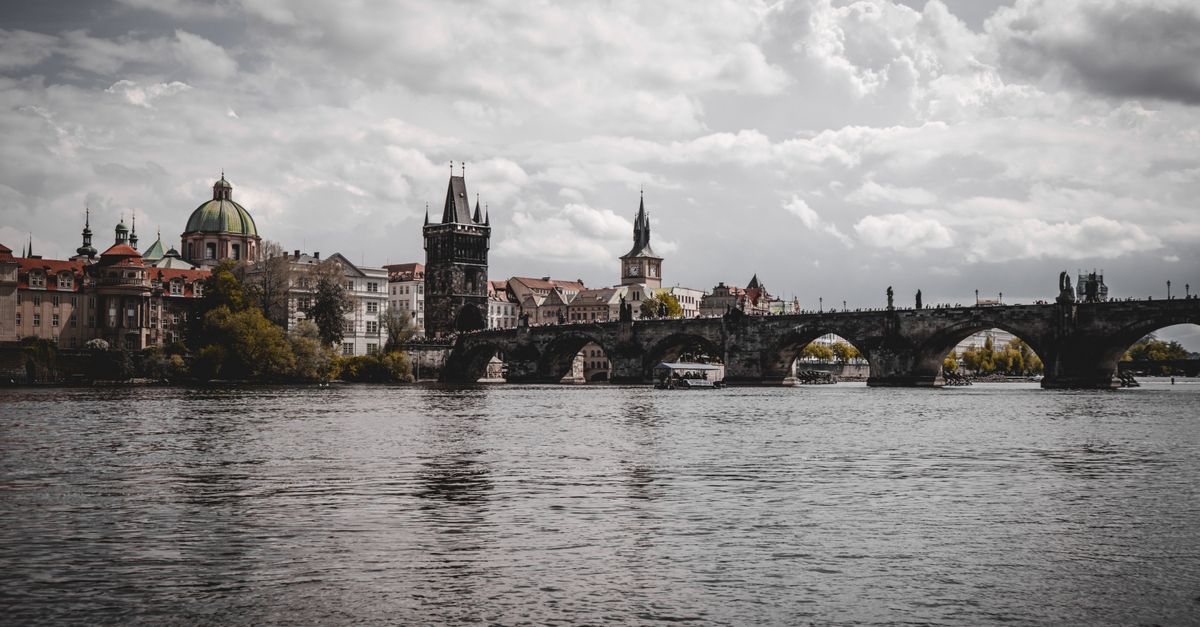
Brussels at a glance

Brussels in July is a study in contrasts: medieval guild houses and EU glass, slow bistros and fast trains, French street signs and Dutch neighborhoods just around the corner. The capital is compact enough to walk from the medieval core out into Art Nouveau Saint-Gilles in an hour, but layered enough that most first-time visitors spend a few days just scratching the surface. Brussels is officially bilingual French and Dutch; the city center and Ixelles lean French, while parts of the east are Dutch-dominant. English is widely spoken, particularly in the European Quarter.
This guide focuses on July 2026 specifically: what the weather actually does, which festivals are scheduled, how the Belgian National Day parade changes the transport map, and how to plan tickets and hotels in peak season. Evergreen city facts (food specialties, neighborhoods, transit system) work year-round.
July weather and what to pack
July is Brussels's warmest month and one of its drier ones. Daily highs average 23°C (73°F) with overnight lows around 14°C (57°F), with roughly 12 days of measurable rain through the month totaling about 75 mm of rainfall. A separate forecast-style summary lists the average high at 23.5°C (74°F) and low at 13.4°C (56°F) with about 10 rainy days and 80 mm; both ranges reflect normal July variation rather than a contradiction.
The practical upshot: bring layers and rain gear. Mornings can feel genuinely cool, especially along the canal, and summer showers are common. Daylight runs about 16 hours, with sunrise around 5:45 AM and sunset close to 9:50 PM mid-month, leaving long evenings for outdoor cafés and canal-side events. UV is very high around midday (a clear-sky index of about 10.8), so sunscreen matters even on partly cloudy days.
Getting around by metro, tram, and bus
Brussels is served by STIB-MIVB (metro, tram, and bus) and De Lijn/SNCB for regional travel. The STIB-MIVB app sells digital Brupass tickets valid across all Brussels public transport. A single journey costs €2.70 and a 10-journey bundle costs €18.90 (about 30% cheaper than buying singles), according to the operator's own pricing. Each digital ticket is valid for 60 minutes, and the QR code rotates for inspection.
July 2026 has one important transport disruption to plan around: Belgian National Day on 21 July. STIB-MIVB runs significantly more metros, trams, and buses on 20 and 21 July. On the 21st, the four metro lines run every 7 minutes 30 seconds throughout the day. Parc metro station is closed all day for the parade and only reopens at 19:00. Rue Royale remains accessible via Gare Centrale and Arts-Loi. Maelbeek closes at 21:00; the recommended route to the Belgian Party in Cinquantenaire Park is via Schuman. Several tram lines (4, 7, 10, 25, 81) run later than usual to bring people home from the fireworks, and lines 39, 44, and 93 run more frequently. Noctis night buses, which normally only run on Friday and Saturday nights, run exceptionally on Monday 20 July for the Bal National at Place du Jeu de Balle, departing Central Station every 20 minutes until 03:00.
Tap-to-pay with contactless bank cards or phones works across metro, tram, and bus readers. For a July visit with multiple day trips planned, the Brussels Card with the public transport option is usually cheaper than buying individual tickets.
Festivals and events in July 2026
July is one of the busiest festival months in Brussels, with major events timed to specific dates.
**Ommegang (1 and 3 July 2026).** This historical pageant recreates the Joyous Entry of Charles V and Philip II into Brussels in 1549, turning the Grand-Place into an open-air 16th-century theater with processions, horses, stilt walkers, and banners. Tickets are required for the main evening shows; Renaissance festivities continue beyond the two pageant evenings with a Renaissance market, equestrian jousting, and a period village around the Grand-Place.
**Brosella Folk & Jazz (3–5 July 2026).** Held in the open-air theater in Osseghem Park at the foot of the Atomium in Laeken, Brosella blends contemporary jazz with world music. The 2026 program includes artists such as Dhafer Youssef, Nneka, Cheikh Lô, and Adrian Younge. Entry is pay-what-you-can.
**Vaux Hall Summer (through 20 July 2026).** A free cultural program in the heritage Vaux Hall corner of Brussels Park, with concerts, screenings, dance, DJ sets, and workshops. Useful as an early-evening stop.
**Summer Quay / Zomerkai (running through July 2026).** A free urban setup on Quai des Péniches in the Kanal District, with mini-golf, pétanque, mölkky, deckchairs, food vendors, and DJ sets Wednesday through Saturday. The Boat, a barge running musical canal cruises, costs €15 per person with reservations required.
**Belgian National Day (21 July 2026).** Belgium's national holiday features a military and civilian parade, free public activities around Brussels Park, a free fêting in Cinquantenaire Park, and fireworks. Plan around the public holiday because some museums, government offices, and shops change hours.
If your dates fall anywhere between 18 and 21 July, build a buffer for closure announcements and transport diversions.
Tickets, the Brussels Card, and skipping queues
The Brussels Card (24, 48, or 72 hours) starts at €41 and includes free admission to 47 museums, plus discounts at attractions, tours, shops, and restaurants. An optional add-on includes unlimited STIB public transport, a hop-on hop-off bus, and the Atomium. The pass is most worthwhile in peak season when you want to skip ticket queues at heavily visited sights such as the Magritte Museum, the Royal Museums of Fine Arts, or Autoworld.
One way the card works in practice: pick a 48-hour or 72-hour card covering your heaviest sightseeing days, then plan a logical loop (Grand Place area museums one day, European Quarter and Cinquantenaire the next, Atomium and Heysel the third). The included free app has maps and walking routes that line up with the museums on the card.
If you only want one or two museums, individual tickets at €10–15 are usually cheaper than a 24-hour card. The Atomium is a separate add-on if you want to go up inside it.
Safety, scams, and neighborhood sense
Brussels is broadly safe for visitors, but the realistic risks are concentrated. Pickpocketing is the dominant issue, particularly at Gare du Midi (Brussels's high-speed rail terminal), on Metro Line 1, and around the Grand Place. Common scams include the clipboard "petition" approach near the Grand Place, the free Belgian chocolate sample pitch, and surprise cover charges added to restaurant bills. Violent crime against tourists is rare. Armed police patrols are visible at major monuments and metro hubs as part of an elevated baseline since 2016; this is normal and not a sign of an active incident.
Safer, walkable neighborhoods include the Grand Place and Centre, Sablon, Ixelles, and Saint-Gilles. The immediate area around Gare du Midi is rougher at night and during station renovations; a separate renovation project is underway through 2026–2027, so expect some disruption.
A practical tip: greet people with "Bonjour" or "Goedendag" depending on context. The city is officially bilingual; locals will switch to English fluently if you struggle.
Drivers should know that Brussels's Low Emission Zone (LEZ) has tightened in 2026: older diesel rental cars face €350 fines unless registered in advance at lez.brussels.
Where to stay and booking pressure
July is peak season, with hotel rates near their annual high and central locations selling out first. Book accommodations 3–5 months ahead; for stays during the Belgian National Day week, book further out.
As a rough 2026 benchmark, mid-range hotels in Brussels run €100–180 per night, budget accommodations €50–80, and luxury options €200–300+. These ranges are most useful for first-time visitors sizing up whether to splurge on a Sablon or Grand Place location versus saving with a hotel near a metro station slightly outside the core (Schuman, Arts-Loi, or Rogier areas are well-connected).
For longer stays, apartments in Ixelles, Saint-Gilles, or the lower Marolles put you within walking distance of several main sights while avoiding the densest tourist zone.
Belgian food and where to eat it
Belgian food is fry-shop, café, seafood, and chocolate driven. A few essentials worth ordering by name:
- **Moules-frites.** Mussels steamed in white wine or beer, served with Belgian fries. The national dish of Brussels brasseries. - **Carbonnade flamande.** Beef braised for hours in dark Belgian ale, often with gingerbread and mustard. The beer is integral to the flavor; pairing it with a Trappist or a local dark ale is standard. - **Stoemp.** Smashed potatoes mixed with carrots, leeks, Brussels sprouts, or onions, served with sausage, black pudding, thick-cut bacon, or a fried egg. - **Waterzooi.** A creamy fish (or chicken) stew with leeks, carrots, and potatoes, finished with egg yolk. - **Belgian fries.** Double-fried, served in a paper cone with mayonnaise or andalouse sauce. Standing at a friterie counter is a legitimate meal, not a downgrade. - **Brussels and Liège waffles.** Brussels waffles are light and rectangular, eaten with toppings; Liège waffles are denser, sweetened with pearl sugar. - **Pralines, speculoos, and chocolate.** Brussels is the birthplace of the filled chocolate praline, invented by Jean Neuhaus at the Galerie de la Reine. - **Belgian beer.** Gueuze, lambic, saison, Trappist. A trip is a good excuse to learn the difference.
For traditional Belgian classics, the area around Place Sainte-Catherine and the lower town concentrates seafood and brasseries. For neighborhood bistro cooking without the tourist pressure of the center, Saint-Gilles and Ixelles (particularly around Matongé and Rue des Chartreux) are a strong call, with locals eating at counters and small rooms rather than at laminated-menu places.
A few final planning notes
July 2026 will be busy, particularly the National Day week. Book hotels and high-demand restaurants at least 3 months ahead, get the Brussels Card if you plan three or more museums, and plan your transport around the National Day diversions if your trip includes 21 July. Factual travel conditions can change, so cross-check the STIB-MIVB app and the visit.brussels site before departure.
Prices, opening hours, schedules, reservation rules, and local conditions can change; verify them through official channels before departure.
Share this article
TOOLS FOR THIS PLAN
Make the Brussels plan measurable
Choose a tool only when it answers the next question in your trip. Your values stay in the browser, and each tool offers a route back to this planning context.