First impressions of Gaozhou
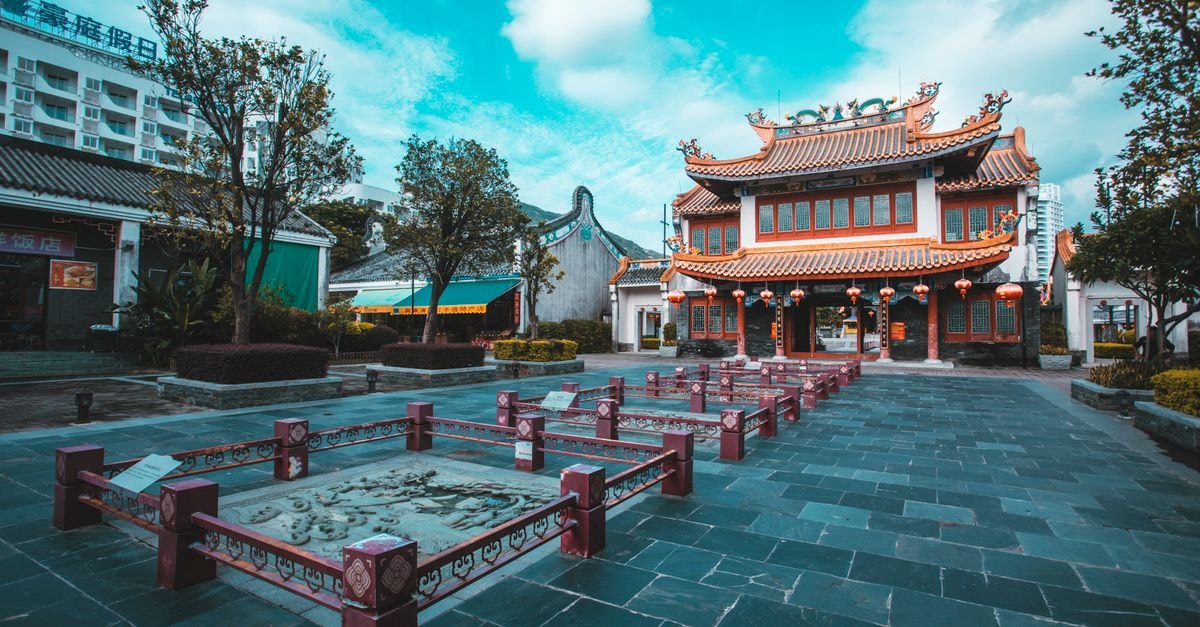
Gaozhou sits in the southwest of Guangdong province as a smaller, more lived-in counterpoint to the better-known cities along the Pearl River Delta. Travelers who find the most pleasure in arcaded streets, green civic spaces, and unhurried evenings tend to settle in here quickly. The city center can be read as a sequence of walkable moments: a pedestrian street for slow browsing, a hilltop park for an elevated view, and a square where the night gathers around shared plates and conversation. There is no single headline attraction that defines the trip; instead, the pleasure is in letting the city breathe at its own pace.
A walk through the older streets
For an afternoon spent on foot, the natural starting point is Zhongshan Road Pedestrian Street, where century-old arcades shade the storefronts and give the avenue a sense of continuity with the past. The same source notes that the street is especially atmospheric when its lights are on, which helps explain why the route is described as a place to linger rather than to rush. From the arcades, the walk can extend toward Guanshan Park and the Wenbi Tower, with a stop at the Gaozhou Revolutionary History Museum along the way.
These stops are close together in the central district, so the afternoon reads more like a gentle uphill stroll through a green civic space than a structured museum visit. Travelers who enjoy a layered afternoon of open-air sightseeing may appreciate that the same corridor covers shopping, gardens, and a museum, allowing the day to flow without formal transitions.
Evenings around Panzhou Square
As the arcades cool and the lights come up, attention naturally shifts toward Panzhou Square, where a night market sets the rhythm of the evening. This is the city at its most social, with benches, foot traffic, and the steady turnover of small stalls. The same source highlights three dishes worth watching for while you choose a stall: bean sprout noodles, potato dumplings known locally as shu bao shi, and Huaqing beef offal. Each one is the kind of plate that rewards patience and a sense of curiosity rather than a checklist.
Travelers who like their evenings built around a standing table and a shared pot may find this square especially appealing. Consider arriving hungry and moving between vendors, since the appeal is in sampling rather than committing to a single meal.
Weather and seasonal context
As a city in southern Guangdong, Gaozhou has the warm, often humid conditions typical of the region, and the published travel discussion does not commit to a specific weather scenario. That vagueness is worth respecting: rather than offering exact temperatures, the most honest framing is to assume the day can swing between warm afternoons and cooler evenings, and to pace yourself around shade and water rather than around a calendar. Light, breathable layers are the kind of practical choice that travel writers tend to recommend for this latitude, and they handle both the arcaded streets and an open square after dark.
Travelers who overheat easily may want to plan outdoor legs of the day around the late afternoon, so the evening winds down in Panzhou Square when the air has cooled a touch. If you are particularly sensitive to humidity, scheduling the Wenbi Tower segment earlier in the day can keep the uphill portion more comfortable.
Food and local context
Gaozhou sits inside one of the world's most deeply developed food cultures, and the surrounding Chinese context helps explain why eating here tends to be a central activity rather than an afterthought. Across China, dining is treated as a meaningful social ritual rather than a quick refuel, with etiquette observed around the shared table, the host-guest relationship, and the careful pacing of dishes. These are not Gaozhou-specific rules, and they are not unique to this city, but they are part of what visitors tend to encounter when they sit down at a local stall.
Within that wider tradition, the dishes called out in the city guide read as honest, working-class plates: noodles built around bean sprouts, sturdy potato dumplings, and slow-simmered beef offal. There is nothing delicate here, and that is part of the appeal for travelers who find more pleasure in a packed counter than in a quiet restaurant. Standing-room-only stalls and big shared tables are common in this kind of setting, which suits visitors who are comfortable with the gentle bustle of a Chinese night market.
Choosing what fits your trip
For a short visit, the most efficient shape of the day is a single north-to-south axis, beginning on Zhongshan Road for the arcade architecture, drifting up to Guanshan Park and the Wenbi Tower, and ending at Panzhou Square once the stalls have opened. Travelers who prefer a slower morning and a busier evening may reverse part of that flow, saving the pedestrian street for the lit-up hours and starting instead at the museum. The route described above is well suited to those who enjoy mixing light history and greenery with a market-led dinner. If you would rather build the day around food entirely, the night-market dishes are a strong enough anchor on their own to justify a short visit on their own terms.
A quick note before you go
Conditions on the ground, including opening hours, stall availability, and the specific vendors operating on a given evening, can shift over time, and the discussion sources used here do not confirm any of these in real time. Before you travel, it is worth verifying the current state of the pedestrian street, the museum hours, and the night market schedule through an up-to-date channel, so that the route above reflects the city as you will actually find it.
Prices, opening hours, schedules, reservation rules, and local conditions can change; verify them through official channels before departure.
Share this article
TOOLS FOR THIS PLAN
Make the Gaozhou plan measurable
Choose a tool only when it answers the next question in your trip. Your values stay in the browser, and each tool offers a route back to this planning context.