A Quiet Crossing Point in the Libyan Desert

Ghat sits deep in southwestern Libya, an ancient settlement wrapped in sandstone geology and shaped by centuries of trans-Saharan movement. Travelers who reach it tend to come for the raw landscapes rather than urban sightseeing, and the city itself feels more like a gateway than a destination with a long checklist. The mood here is hushed, sun-baked, and storied — a place where the geography itself is the headline.
This guide is built for the curious traveler who wants context before stepping into such a remote corner: what the climate feels like across the year, what the surrounding terrain looks like, and how Ghat's role as a former caravan terminal still echoes in its identity.
Climate and Seasonal Context
Ghat's weather swings on a wide arc over the year, and that range is worth understanding before planning any time outdoors. Temperatures typically vary from around 42°F to 104°F, and only rarely dip below 34°F or climb above 109°F, so the thermometer is rarely extreme in either direction (F1-2). The same source flags that winters are relatively mild compared with the scorching summers, while another overview describes winter daytime temperatures ranging from about 15°C to 25°C (59°F to 77°F) (F2-1, F2-2). Together those notes sketch a useful pattern: cooler months feel gentle and pleasant by desert standards, while summer heat is the season to take seriously rather than push through.
For pacing your day, this means early mornings and late afternoons are typically the kindest windows, and a slow midday break is worth building into any outdoor plan when the thermometer climbs. Travelers sensitive to intense heat may want to weight their visit toward the cooler end of the yearly range, while those who simply enjoy warm, dry desert evenings may find Ghat rewarding in shoulder seasons when the days are still bright but the air has lost its sharpest edge.
The Sandstone Surroundings
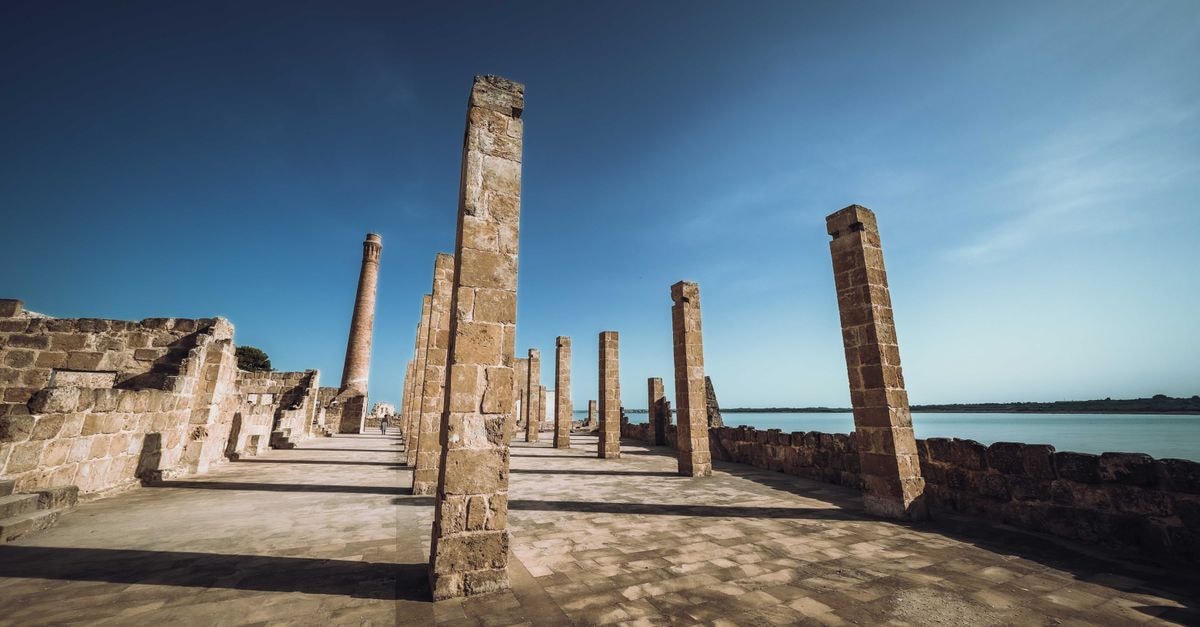
The terrain around Ghat is one of the defining reasons to visit. The nearby sandstone range is known for bizarre rock towers, massive natural arches, and deep canyons carved by millennia of erosion — a landscape that reads almost like architecture sculpted by time (F3-1). Photographers, hikers who favor dramatic geology, and anyone drawn to stark natural scenery will find the visual texture here unusually rich.
Beyond the geology, the region holds immense cultural significance: it contains thousands of prehistoric rock paintings and engravings that have been designated a UNESCO World Heritage site (F3-2). That combination — sweeping sandstone forms and a deep archive of early human expression on rock — gives the area a layered appeal for travelers interested in either natural beauty or the very long human story of the Sahara. If your interest leans toward ancient art and archaeology, the painted and engraved surfaces around Ghat are the headline; if your interest leans toward landscapes and light, the arches and canyons are.
Travelers who prefer a slower visual pace — watching shadows move across rock towers rather than ticking off a long list of stops — may find this terrain especially rewarding.
A Crossroads on the Trans-Saharan Trade Route
Ghat's identity is inseparable from its role as an ancient settlement and, in historical times, a major terminal point on the Trans-Saharan trade route (F4-1, F4-2). That single historical fact reframes the city: it was never just a remote outpost but a named endpoint in a vast network that moved goods, people, and ideas across the Sahara. Understanding this context changes how the surrounding emptiness reads — it becomes a place where caravans once converged, not simply where the desert happens to be.
For travelers, this means Ghat rewards visitors who are interested in history and route cultures as much as scenery. The city's significance is older than its modern footprint suggests, and even a brief appreciation of its caravan-era role adds depth to a visit. Anyone drawn to old trade routes, oasis towns, and the human geography of desert crossings will find a natural anchor here.
Getting Around and What to Expect
Ghat is an ancient settlement in a remote corner of southwestern Libya, and the logistics of reaching and moving through it are part of the experience (F4-1). That reality shapes every practical decision: travel light, allow extra time between points, and treat ground transport as something to arrange in advance rather than improvise on arrival.
Because the city sits at the edge of an extraordinary sandstone landscape, getting around typically means combining time in the settlement itself with excursions into the surrounding terrain. Travelers who enjoy self-paced walking through unusual geology may want to set aside unhurried hours for simply being on foot among the rock formations.
A short verification note worth raising before you go: confirm the current status of overland access, local permissions, and any required documentation with official Libyan channels before departure, as conditions for foreign visitors in remote southwestern regions can change.
Choosing What Fits Your Trip
Given how remote Ghat is, the way you shape your visit matters as much as how long you stay. Travelers drawn to landscapes and ancient rock art may want to center the trip on the sandstone surroundings, treating the settlement itself as a base rather than a destination. Travelers more interested in caravan-era history and the idea of a trans-Saharan crossroads may find their reward in slow time within Ghat, using the mountains as a scenic backdrop. Those sensitive to extreme heat should weigh timing and daily pacing carefully, leaning into cooler parts of the yearly range and protecting the middle of the day.
Before You Go
Factual travel conditions in remote regions can change without notice. Check current official guidance, entry requirements, and local security advice through Libyan government channels before departure, and reconfirm any logistical arrangements close to your travel date.
---
**Disclaimer:** Travel conditions, entry rules, security advice, and on-the-ground services in southwestern Libya can shift. Verify the latest information with official Libyan government channels and your country's foreign travel advisories before booking or departure.
Prices, opening hours, schedules, reservation rules, and local conditions can change; verify them through official channels before departure.
Share this article
TOOLS FOR THIS PLAN
Make the Ghat plan measurable
Choose a tool only when it answers the next question in your trip. Your values stay in the browser, and each tool offers a route back to this planning context.