A Concise Look at Piran

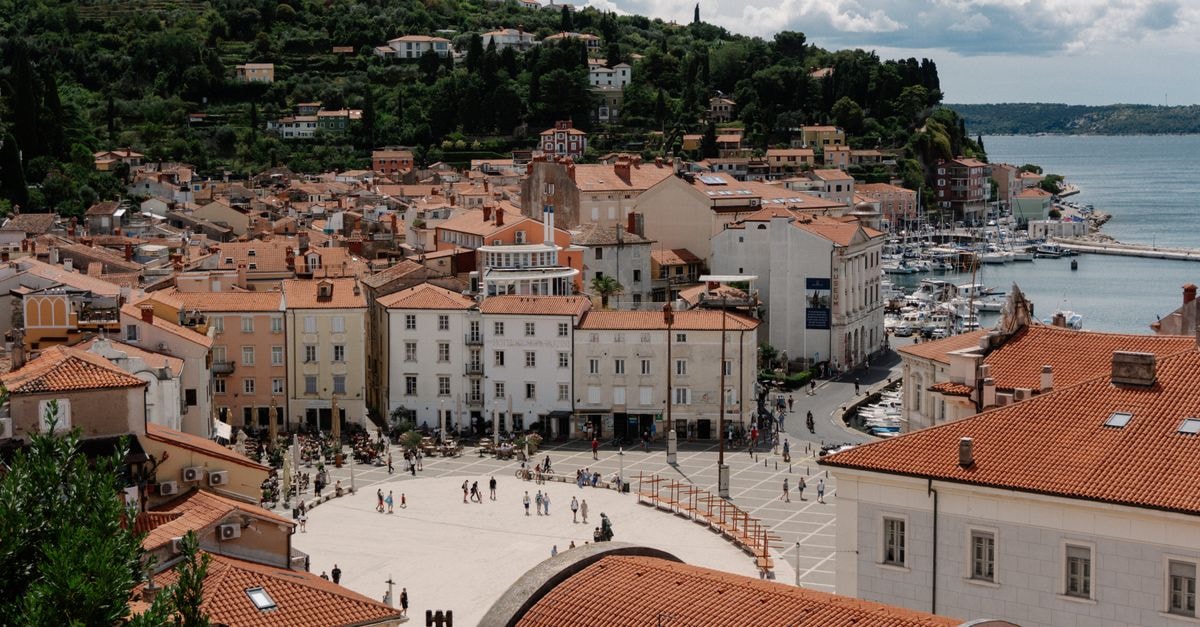
Piran sits on a narrow peninsula at the tip of Slovenia's 47-kilometer Adriatic coastline, looking out over the Gulf of Trieste. The compact old town, home to roughly 4,000 residents, is layered with Venetian Gothic architecture from the centuries when Piran was part of the Venetian Republic (late 13th to late 18th century). Narrow stone alleys, a white-stoned oval piazza (Tartini Square), and a 16th-century Church of St. George perched on the headland give the town its unmistakable silhouette. Slovenia is in the Eurozone, so transactions are in euros; Italian and English are widely understood in tourist areas. Piran's old town is car-free, which shapes nearly every logistics decision on a visit.
July Weather and What to Expect
For July 2026, AccuWeather projects Piran's daily highs ranging from about 25°C to 37°C, with overnight lows between roughly 19°C and 24°C. The monthly average high sits near 30°C with an average low around 22°C, and a handful of forecast days show highs above 35°C, so plan siestas, hydration, and shade around the midday window. July is high season: the warmest, sunniest stretch for swimming off Piran's concrete platforms or at nearby Portorož, and the busiest in terms of crowds and prices. According to seasonal climate guidance, July–August is also Piran's peak festival window, with concerts and public events concentrated on Tartini Square. The bora wind can strike in any season but is most disruptive in winter and spring, so July travelers are unlikely to encounter it — although ferry and catamaran schedules remain worth checking the day before.
Getting to Piran and Moving Around
There is no train station in Piran; the nearest rail stop is in Koper. From Ljubljana, the most common independent route is the bus: departures run roughly hourly, journey time is 2–2½ hours, and tickets cost around €12–15. By car, the highway run from Ljubljana takes about 1.5 hours, and you will need a Slovenian e-vignette (toll sticker) for the motorway. From Trieste in Italy, Piran is around 40 minutes by car, and cross-border buses also run. The closest airport is Portorož (POW), about 7 km away, but it has limited international service; most long-haul travelers arrive via Ljubljana (LJU), 130 km to the north. A catamaran connects Piran to Venice twice weekly via Venezia Lines (around €55, 2.5 hours from San Basilio).
Inside the town, walking is the only practical option. Piran is small enough to cross end-to-end in around 30 minutes, and the old town is closed to non-resident traffic. A free local bus shuttles along the coast between Piran, Bernardin, and Portorož, and a free shuttle links the Fornače parking area to Tartini Square roughly every 15 minutes. For day trips, Koper is about 30 minutes away by bus (around €3–4), Izola 20 minutes, and Portorož roughly 10 minutes.
Top Sights and Summer Events
The town's anchor is Tartini Square, an oval piazza paved in white stone with a statue of the violinist Giuseppe Tartini at its center. It is open 24/7 and free to enter. Above the square, the Venetian House — a red Gothic building with a famously cheeky "Lassa pur dir" ("let them talk") inscription — is the oldest building on the piazza. The Church of St. George, a 16th-century Renaissance church on the headland, is free to enter and open 07:00–22:00 daily. Climb its bell tower for around €1 to see rooftops and sea; a separate €2 ticket admits you to the medieval town walls and €2 to the adjacent reliquary.
Maritime heritage fans can visit the Sergej Mašera Maritime Museum just south of Tartini Square; in July–August it is open Tuesday–Sunday 09:00–12:00 and 18:00–21:00, with an entry fee of €3. The Aquarium Piran (around 140 Adriatic marine species in a 19th-century harbor building) and a small Shell Museum on Tartini Square round out the indoor options. Piran itself has no proper sand beach — swimming is from concrete platforms and rocks — so a quick bus ride to Portorož gives you Slovenia's main Blue Flag sandy-pebble beach. A half-day at the Sečovlje Salt Pans nature park is a worthy add-on: traditional salt harvesting still happens there, and the area produces Piran's prized fleur de sel. Because July–August is festival season, expect concerts and public events in Tartini Square evenings — worth checking the local calendar closer to your dates.
Where to Stay and Booking Pressure
Accommodation prices in Piran range widely. Visitor guidance cites a spread from around €40 per night at the budget end to €150–200 for upscale stays, with Old Town options commonly around €100–150 in summer. Specific named properties mentioned in the evidence include Hotel Piran (waterfront, around $175/night), Hotel Zala Piran (old town, around $150), Art Hotel Tartini (boutique, around $150), and Barbara Piran Beach Hotel (on the town edge, around $125). Three neighborhoods dominate:
- **Old Town around Tartini Square** — walkable to everything but pricier, more crowded in daytime, and quieter at night once day-trippers leave. - **Fornače** — quieter, more residential, about 15 minutes on foot from the old town and closer to the sea. - **Marina district near Bernardin** — geared toward boating and waterfront views, slightly removed from the historic core.
July is the busiest month of the year, so book accommodation and any popular restaurants well in advance. Multiple sources specifically warn that the Fornače parking garage fills by noon on summer days, with a recommendation to arrive before 10 AM if you are driving.
Local Dishes Worth Trying
Istrian and Piran cuisine is built around three pillars: salt, olive oil, and fish. On restaurant menus along the Piran and Portorož promenade, expect a strong Italian accent layered with local ingredients. Seafood dominates — look for brodet, a traditional stew made with a mix of fish and other seafood, and marinated anchovies known locally as in šavor: the anchovies are pan-fried until the skin is golden and crisp, then chilled under a warm oil-and-vinegar marinade with onion, garlic, bay, and rosemary. For something more decadent, fuži pasta with truffles — the Istrian signature — is served at restaurants including Gold Istra and Marina Portorož. A whole sea bass prepared with Piran salt is a classic local expression of the cuisine, and a small pot of fleur de sel is the most portable souvenir. Sweet options include fritule, small fried dough balls dusted with powdered sugar, and kroštole, a thin fried shortcrust pastry traditionally served at Carnival but just as tasty year-round. Jota — a bean, sauerkraut, potato, and bacon stew — is more a cold-weather dish and easier to find in winter.
Costs, Parking, and Tickets
Slovenia uses the euro, so visitors from the eurozone can skip currency exchange; everyone else should check the current rate from their bank or a live rate tool before travel. Piran's old-town parking is reserved for residents with permits. Visitors can drive in free for up to 15 minutes to drop off passengers or luggage; staying longer triggers the public price list. During the summer tariff (1 March–31 October), each started hour in the town center costs €6.00; in winter (1 November–28 February) it drops to €4.00. The two practical visitor options are:
- **Fornače parking garage** — on the approach to the peninsula, about €1.5–2 per hour and €12–15 per day, with a free shuttle to Tartini Square. - **Amfora parking garage** — just outside town, with a mini electric shuttle into the square.
For independent-minded travelers, daily budgets in Piran commonly land between €60 (budget) and €150 (mid-range), with luxury options above €300. Most sights are inexpensive (€1–3 each), public transport is cheap, and the cost gap with nearby Italian Adriatic destinations is real.
Safety and Practical Tips
The U.S. State Department rates Slovenia Level 1 ("Exercise normal precautions") as of its May 15, 2026 advisory, noting standard petty-crime precautions in tourist areas and transport hubs. Piran is consistently described in the evidence as extremely safe with very low crime. Two practical reminders: highways require a vignette, and Piran's stone streets and stairways are uneven — comfortable walking shoes beat sandals for sightseeing even in midsummer heat. Because Piran is small and walkable, allow one full day for the old town itself; two to three days makes room for a beach afternoon in Portorož and a half-day at the Sečovlje Salt Pans.
> Conditions change: opening hours, ticket prices, parking tariffs, ferry schedules, and visa rules can all shift between the time of writing and your trip. Check the official Portorož & Piran tourism site, your national travel advisory, and the Slovenian vignette vendor before departure.
Exchange rates shown are for reference only; check the current live exchange rate before departure. Prices, opening hours, schedules, reservation rules, and local conditions can change; verify them through official channels before departure.
Share this article
TOOLS FOR THIS PLAN
Make the Piran plan measurable
Choose a tool only when it answers the next question in your trip. Your values stay in the browser, and each tool offers a route back to this planning context.