DRC Ebola outbreak strains unpaid health workers

Health workers in eastern Democratic Republic of the Congo say they are battling a worsening Ebola outbreak without pay, as the World Health Organization (WHO) warns the crisis could become one of the world's worst. By July 21, more than 2,500 cases and 1,000 deaths had been recorded in the country, while Uganda reported 20 cases and two deaths; by July 16 authorities said the last confirmed Ugandan patient had recovered. The epicentre is Ituri province near the Ugandan border, where health authorities say the region is contending with the rare Bundibugyo strain, which has no approved treatments or vaccine. Surveillance has been weakened by global health aid cuts over the past year, and more than 100 health workers have been infected, with about 35 deaths. At Rwampara General Hospital near Bunia, which operates a major treatment centre, dozens of staff downed tools in a strike last week over unpaid salaries; in May, parts of the facility were burned by angry residents who also chased health workers fleeing in trucks.
Lancet trial supports early oral antibiotics for childhood pneumonia
A Lancet-published international trial found that children hospitalised with severe pneumonia can safely switch from injectable to oral antibiotics once they begin to recover, allowing many to return home sooner. The PediCAP study, led by researchers from City St George's, University of London, UCL's Innovative Clinical Trials Unit and partners across Africa and Europe, enrolled 1,101 children aged two months to six years across 13 hospitals in South Africa, Uganda, Zambia, Zimbabwe and Mozambique. Children who switched to oral amoxicillin or oral amoxicillin-clavulanate after clinical improvement had similar 28-day outcomes to those who stayed on injectable treatment for the WHO-recommended five days, with readmission or death rates of 6%, 7% and 6% respectively. Children who moved to oral therapy left hospital about one day earlier, and a four-to-five-day total antibiotic course was as effective as seven or eight days. The standard amoxicillin performed as well as the broader-spectrum amoxicillin-clavulanate, supporting the cheaper, more widely available option.
Google SymptomAI prototype outperforms clinicians in large real-world study
A Google Research preprint described SymptomAI, a Gemini 2.0 Flash-based conversational agent that conducts active symptom interviews and produces ranked differential diagnoses. Deployed inside the Fitbit app from June 2025 through April 2026, the system was tested on 13,917 real participants in what the company calls the largest evaluation of conversational diagnostic AI in real-world conditions to date. The paper's authors reported that SymptomAI's differential diagnoses were measurably more accurate than those generated by human clinicians across study arms. Google stressed that SymptomAI is a research prototype not for diagnostic use, has not undergone regulatory validation and is not a medical device; the company added that any clinical version would require FDA Software as a Medical Device clearance under the 510(k) or De Novo pathway.
OpenAI opens ChatGPT Health to U.S. users
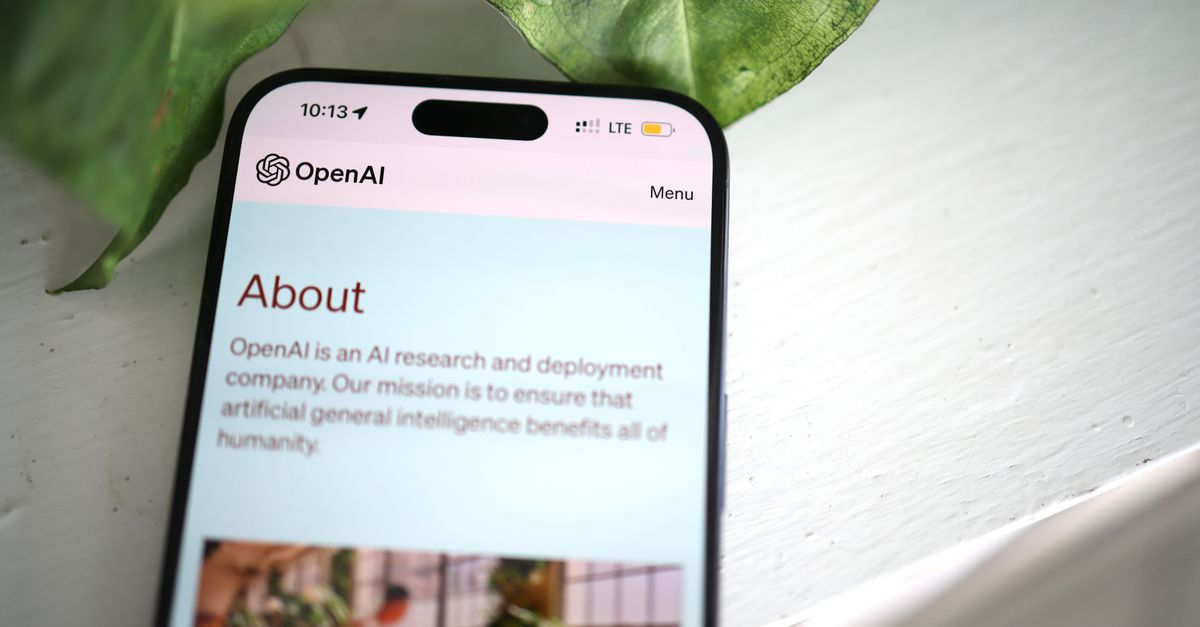
OpenAI has launched ChatGPT Health in the United States, letting adult users on web and iOS connect Apple Health and supported medical records to receive more personalised health answers. The feature asks permission before using connected health data and lets users allow access once, always or disable it. Once linked, ChatGPT can reference medications, lab results, recent visits, sleep activity and data from wearables and third-party fitness or nutrition apps that sync to Apple Health. OpenAI said ChatGPT users ask more than 300 million health-related questions weekly and positioned the tool as a way to understand personal health information rather than replace doctors. The launch follows a January acquisition of healthtech startup Torch, which OpenAI plans to integrate with ChatGPT Health.
TidalSense raises $19 million to scale AI lung disease test
UK healthtech startup TidalSense has raised $19 million to expand its AI-powered respiratory diagnostic, which the company says cuts test time for chronic obstructive pulmonary disease (COPD) from an hour to under five minutes. The round included new investor Cross-Border Impact Ventures and returning investors BGF, Airstream Capital and Foresight Group, bringing total funding to $40 million including $11 million in grants. TidalSense's N-Tidal Diagnose test captures a CO₂ capnogram through 75 seconds of normal breathing, with AI models trained on more than 2.5 million patient breaths. The Cambridge-based startup, founded in 2013 and led by CEO Ameera Patel, said it will use the proceeds to expand within the NHS and across Europe and to enter the U.S. market.
Share this article