Tata Steel redirects growth toward downstream value-added products

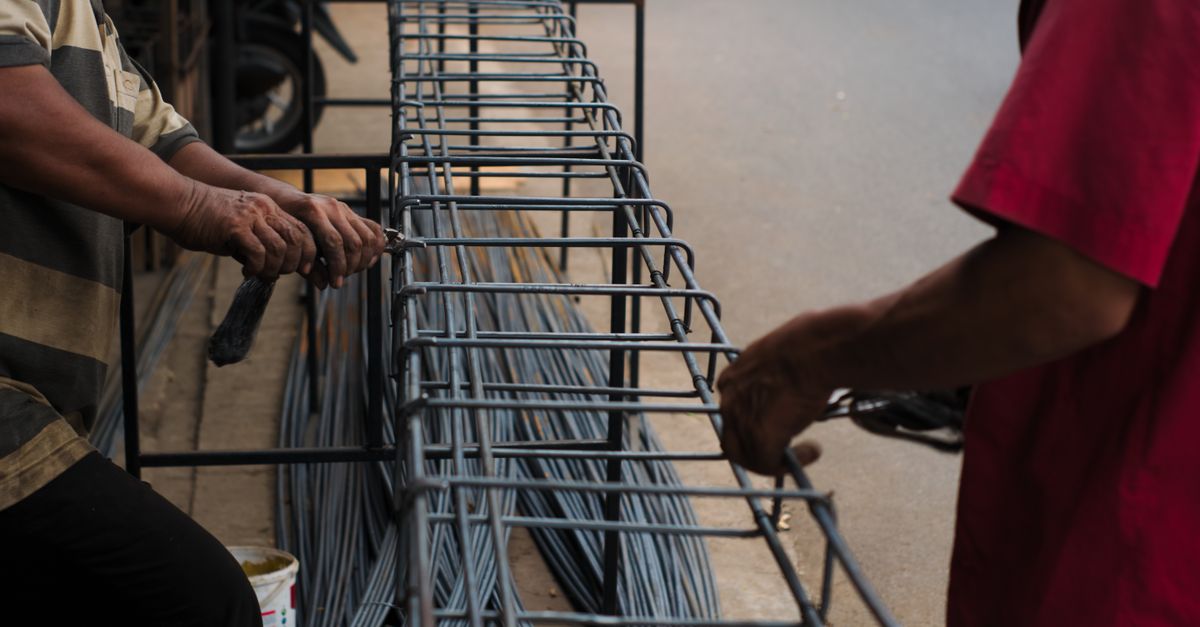
Tata Steel is pivoting its growth strategy away from aggressive capacity expansion and toward higher-margin value-added products, according to a 1 August 2026 LiveMint report. Managing director T.V. Narendran said the company's focus is now on converting primary steel into precision tubes, speciality steel wires, coated sheets, and tinplates. While Tata Steel retains the optionality to expand crude steel capacity to as much as 65 million tonnes — including projects at existing sites and a potential greenfield plant in Maharashtra — its current emphasis is on capturing more of the value chain through processing, fabrication, and distribution. Narendran framed the approach bluntly: "If everyone is building hot-rolled-coil capacity, I'd rather be a buyer of hot-rolled coil than a seller of hot-rolled coil."
Iron ore economics reshape upstream calculus
The strategic shift reflects a reweighting of upstream economics, Narendran told LiveMint. Iron ore, traditionally one of India's competitive advantages, has become substantially more expensive over the past five to six years, with "premiums, taxes, and levies" eroding the cost advantage before steelmaking even begins. Although Tata Steel is currently insulated by its captive mines in Jharkhand and Odisha, those leases expire in 2030, after which the company plans to reduce 100% captive sourcing to at least 50%. With limited upstream additions expected until the 4.8 million tonnes-per-annum Neelachal Ispat Nigam Ltd expansion comes on stream in 2031, Tata Steel is exploring additional electric arc furnace capacity — a western India plant following the commissioned Ludhiana unit, with a third in the South.
Contrasting Indian rivals and differing capacity roadmaps
Tata Steel's approach contrasts with that of JSW Steel Ltd, the country's largest producer, which is targeting 80 million tonnes-per-annum capacity by 2031. Narendran acknowledged that building downstream businesses takes longer than constructing steelmaking capacity because markets, brands, and customer relationships must be developed. The next verifiable milestone will be the end of fiscal year 2026-27, when Tata Steel expects an operational turnaround; its UK business is targeted to reach positive EBITDA by the end of FY 2027.
Netherlands regulatory uncertainty holds investments in abeyance
In the Netherlands, Tata Steel has "no definite timeline" for fresh investment until it resolves regulatory issues with the Dutch government, executive director and CFO Koushik Chatterjee told LiveMint. Dutch authorities have proposed revoking operating permits and accelerating the closure of coke operations; Chatterjee said the company is seeking a regulatory framework or legal certainty before committing further capital. The UK and Netherlands situations remain the principal unresolved execution risks to Tata Steel's broader margin recovery plan.
Global steel production map reshuffles, with Indonesia gaining ground
The company-level developments sit against a shifting global production backdrop. World Steel Association data summarized by AsiaToday.id on 1 August 2026 placed Indonesia at 19 million metric tons of crude steel in 2025 — up from 18.6 million in 2024 and the country's 13th-place ranking globally. China remained the dominant producer at 960.8 million tons, down from 1.005 billion in 2024, while India consolidated its second-place position at 164.9 million tons versus 149.4 million the prior year. Vietnam led Southeast Asian output at 24.7 million tons. The Indonesia report frames the country's advance as part of its industrial-hub ambitions in automotive, infrastructure, energy transition, and electric vehicle supply chains, though AsiaToday.id notes the challenge is converting capacity into a competitive, technology-driven ecosystem.
Share this article