USGS assessment of federal coal reserves

The US Geological Survey released a new assessment estimating that coal beneath federally managed public lands could supply the United States for at least 600 years at current consumption rates. The report identifies 4.2 billion short tons of reported coal reserves tied to active mines and an additional 356 billion short tons of available coal resources on those lands, reinforcing the Trump administration's push to revive the domestic coal industry.
Production footprint on federal lands
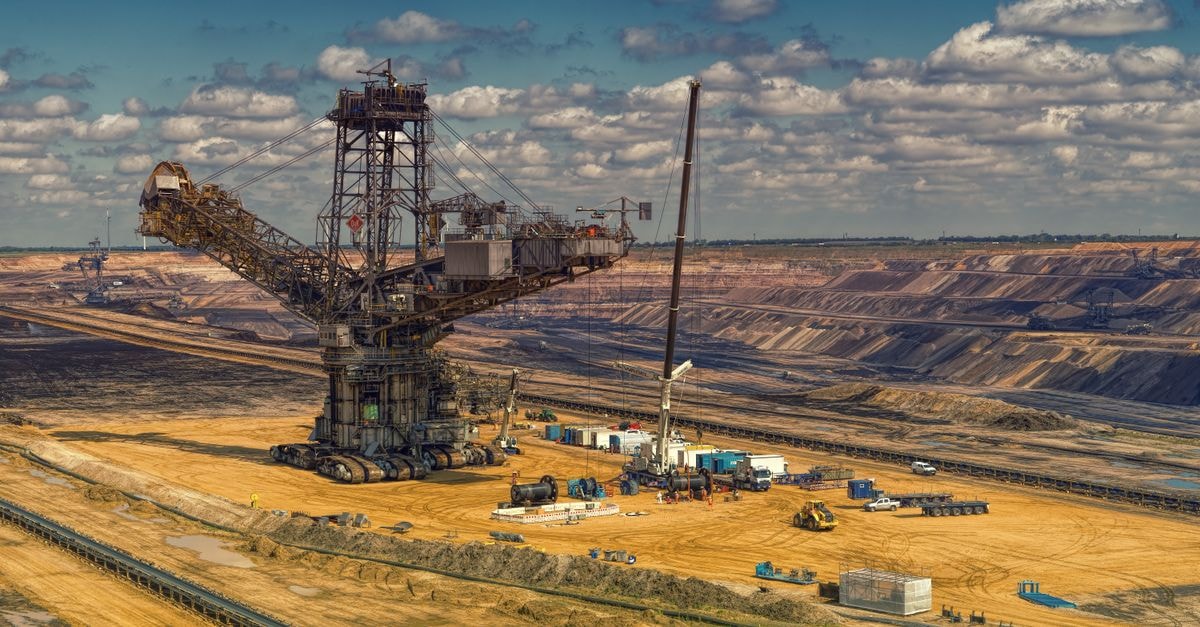
According to the USGS, 34 coal mines on federal lands produced more than 261 million short tons in 2024. Wyoming accounts for 14 of those mines and holds 87% of reported reserves at active federal operations, with the North Antelope Rochelle mine in the Powder River Basin identified as the world's largest coal mine by reported reserves. Twenty-nine of the active federal mines produce thermal coal for electricity generation, three Alabama operations produce metallurgical coal for steelmaking, one Colorado mine supplies the cement industry, and one Utah mine remains idled.
Policy backdrop and administration response
Interior Secretary Doug Burgum framed the assessment as supporting "American Energy Dominance," citing the role of "beautiful clean coal" in electricity production. The report dovetails with Executive Order 14261, signed by President Donald Trump, which directed a review of coal resources beneath federal lands, and with Burgum's addition of metallurgical coal to the 2025 List of Critical Minerals. The USGS also recommends additional geological mapping in Alaska, where it estimates at least 140 billion short tons of coal resources and as much as 5.5 trillion short tons. The Trump administration has committed more than $1 billion to bolster the US coal industry, including funding to extend coal-fired power plant operations and expand production capacity.
Vulcan's $160 million electrification of Moatize
India's Jindal Group, through its subsidiary Vulcan, has committed $160 million to install a 300-megawatt power plant at the Moatize coal mine in Mozambique's Tete province, billed as Africa's first fully electric coal mine. Speaking at the inauguration, Vulcan CEO Mukesh Kumar said roughly 90 MW will power mining operations, 30 MW will be dedicated to coal processing, and about 100 MW will electrify the rail corridor, allowing the company to achieve energy self-sufficiency and feed surplus electricity into Mozambique's national grid. Kumar added that Vulcan currently spends roughly $150 million annually on diesel imports.
Project history and Mozambique government backing
Vulcan acquired the Moatize operation from Brazil's Vale in April 2022 for more than $270 million, also taking control of the 912-kilometre Nacala Logistics Corridor used to export coal. The company operates a 250-square-kilometre concession in Moatize and has produced more than 35 million metric tonnes of coal annually over the past three years. Mozambique's Minister of Mineral Resources and Energy, Estevão Pale, said the electrification project would lower diesel consumption, reduce operating costs, and increase productivity while supporting more environmentally responsible mining. The company also plans to use ash from its thermal power plant to produce green cement.
Follow-up signals
The USGS report calls for additional geological mapping in Alaska that could reshape the long-term federal coal resource estimate, while Vulcan's 300 MW plant at Moatize is expected to come online as the company shifts from diesel-generated power and begins supplying surplus electricity to Mozambique's grid.
Share this article