September 27, 1066 CE · United Kingdom · The fleet strains at its moorings.

In United Kingdom, William the Conqueror is unfolding. William the Conqueror and his army set sail from the mouth of the Somme river, beginning the Norman conquest of England.
I crouch on the gunwale as the crew below drives the oars backward, testing the river current one last time. The mouth of the Somme is choked with our hulls — longships and broader transports, masts swaying against a pale September sky. Men haul water barrels up the plankways, slap resin onto leaking seams, shout at one another across the chop. William rides past along the bank, his cloak snapping in the salt wind, his eyes aimed at the grey line of the northern sea. No one names the crossing aloud. A clerk clutches a list of names and provisions; a boy grips a leather pouch against his chest. A chaplain lifts his hand. Oars bite the water together. Our prow swings north, and the white French coast begins to drop away behind us, swallowed by the morning haze.
September 27, 1331 CE · Poland · The lances level across the ridge.
In Poland, Battle of Płowce is unfolding. The Battle of Płowce is fought, between the Kingdom of Poland and the Teutonic Order. The Poles are defeated but their leaders escape capture.
I lean forward in the saddle and watch the Teutonic banners brighten along the treeline — black crosses on white cloth, catching the late sun. My horse stamps, breath steaming. Around me our outriders whisper prayers and loosen their reins. The Teutonic vanguard is already on the slope, their helms and hauberks flashing, and behind them the order's main body stretches back into the cornfield where it meets the woods. Our king has ordered the line to hold; a single horn calls, low and rising. I set my lance against my hip and the wood shudders against my ribs as the first wave charges. Dust rises. Steel rings against steel. The September light slants down on banners torn and dripping, and the field becomes a sea of moving shadows.
September 27, 1529 CE · Austria · The enemy's tents darken the plain.
In Austria, Siege of Vienna (1529) is unfolding. The Siege of Vienna begins when Suleiman I attacks the city.
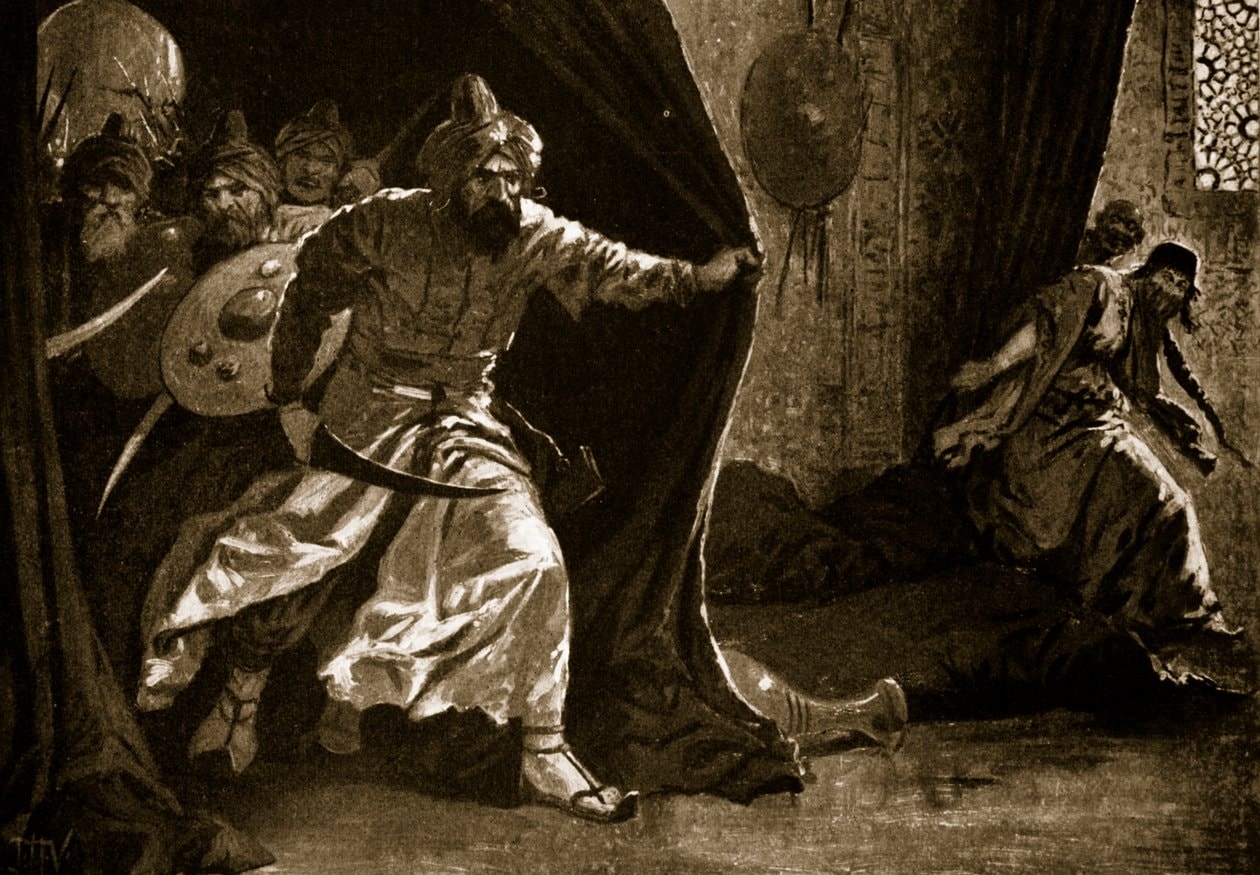
I climb the ladder with a stone in each hand and swing myself onto the rampart. The plain below is black with canvas. Suleiman's army has swallowed the vineyards and the orchards, and now their banners ripple across the fields toward our gates. Beside me Count Salm moves along the parapet, his face drawn, his voice steady as he calls the placements. Our cannon mouths gape down at the slopes. We are not many — barely enough to line a single wall — but the stones of Vienna are thick and the bells have been silenced, not rung. An Ottoman rider approaches under a white flag, calling terms we have already refused. I check the priming of my arquebus and watch the first puffs of smoke bloom along the enemy line, and the siege begins with a long, rolling thunder that does not stop.
September 27, 1669 CE · Turkey · The white flag climbs above the parapet.
In Turkey, Siege of Candia is unfolding. The Venetians surrender the fortress of Candia to the Ottomans, thus ending the 21-year-long Siege of Candia. Crete would remain under Ottoman occupation until 1913.
I lean the musket against the parapet and watch the parley advance across the rubble. Twenty-one years have worn us all to the bone. This is Candia. Behind me the last Venetian officers stand in their faded blue cloaks, and somewhere inside the citadel a child is crying for bread. The Ottoman drums have stopped for the first time in my memory. A white cloth rises on a broken tower and the city goes quiet — the kind of quiet that tastes of dust and salt and surrender. I have no quarrel with the men crossing the open ground; their faces are as hollow as ours. Our commander unfolds the terms in the square, and the ink is still wet when an Ottoman scribe steps forward to countersign. I set my musket down on the stones. The harbor beyond the gate is filled with oars that move in time, like soldiers rowing toward something none of us can yet name.
September 27, 1810 CE · France · The British line crowns the mountain ridge.
In France, André Masséna is unfolding. The French army under André Masséna fails to break British forces under the Arthur Wellesley in the battle of Bussaco.
I stamp my feet against the cold and squint up at the ridge. Wellesley's men have laced the crest with red coats and silver bayonets, and the Serra do Buçaco rises above us like a stone wave about to break. Our officers ride along the columns, hats in hand, calling the order to advance in silence — no drums, no cheer. The path narrows between terraced vines, and our packs brush the bushes on either side. Masséna waits at the rear, his face grey beneath the bicorne, watching the line through a small glass. I fix my bayonet and taste the iron in my mouth. The first volley cracks along the heights, and smoke pours down the slope in slow sheets. We close the distance step by step, and the ridge refuses to give, and somewhere far below us the coast glitters through the smoke.
September 27, 1851 CE · India · The lamp is lit on the lonely rock.
In India, 英國東印度公司 is unfolding. 英國東印度公司在新加坡白礁的岩礁上啟用霍士堡燈塔,該燈塔後來成為的對象。
I climb the iron rungs one-handed, the oil-can bumping against my hip. The lantern room rocks a little in the sea wind, and far below the waves lace themselves white around the base of Pedra Branca. The Company's men have finished their work — the brass lamp is fixed, the great lens is polished, the wicks trimmed — and now all that is left is the match. I look east toward the dark line of the mainland, then south toward the open channel where the clippers run. A clerk below me reads the hour from his pocket watch and calls up the count. I strike the match. The flame catches, the lens begins to throw its first long beam across the black water, and somewhere out beyond the rocks a sail, unseen, is already turning toward the light. Below me the bell waits to be rung.
PLACES IN THIS STORY
Explore the destinations behind this report
Austria
Vienna
Browse travel guides, places to stay, attractions and local food in Vienna.
Explore Vienna →A Slow Vienna Travel Guide: Cafés, Palaces and Smart TransitShare this article