Lithography dependence defines Chinese memory makers' constraints

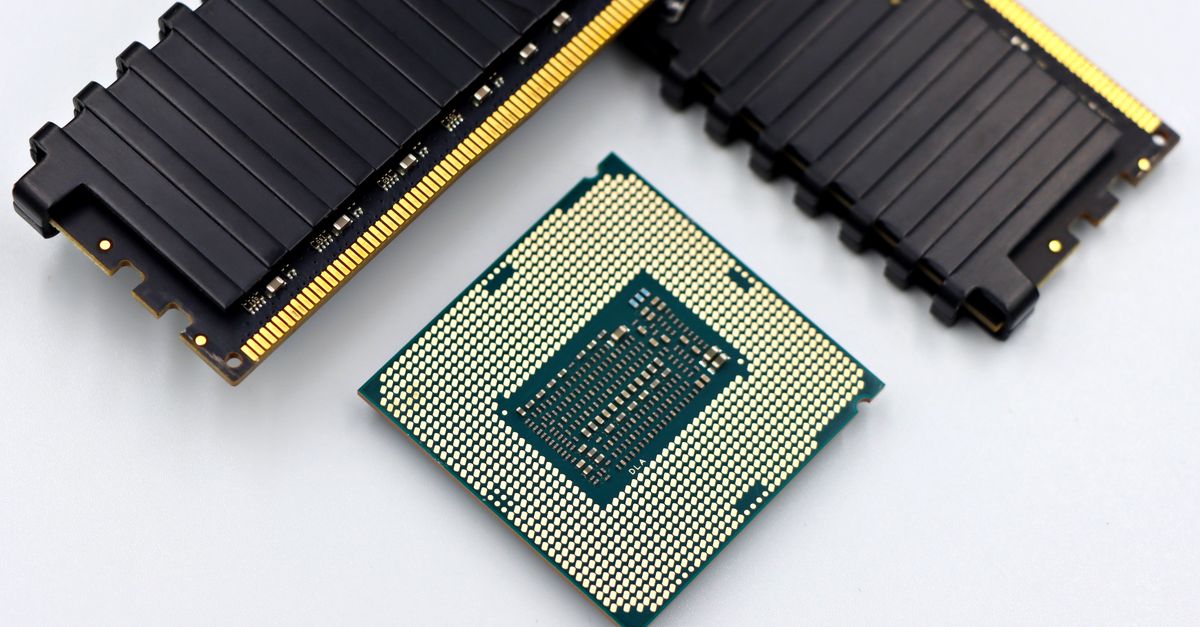
Chinese memory chipmakers ChangXin Memory Technologies (CXMT) and Yangtze Memory Technologies Corp (YMTC) both rely on deep ultraviolet lithography machines supplied by Dutch equipment giant ASML to print the tiny circuits on chips, according to Reuters reporting published July 24, 2026. Their Korean and American competitors manufacture DRAM chips using ASML's more advanced extreme ultraviolet lithography machines. China has been barred from obtaining EUV systems since the Dutch government began withholding export licenses in 2019, because the machines contain U.S. technology and are considered critical to producing cutting-edge semiconductors with potential military applications. CXMT has produced its own high-bandwidth memory, an ultrafast format crucial for AI, but five sources told Reuters the company remains two generations, or several years, behind its rivals.
AI boom lifts CXMT and YMTC into a price-setting tier
The global buildout of AI data centers has transformed memory chips into one of the world's most sought-after products, sparking battles over pricing and a scramble for supply, Reuters reported. CXMT has risen to become the world's fourth-biggest maker of memory, including the DRAM used in smartphones, laptops and servers, and the company is now powerful enough to charge prices even Huawei cannot stomach. In recent weeks, CXMT has charged more than Samsung's roughly $1,240-per-unit price for comparable 64-gigabyte DDR5 server memory modules, according to two people familiar with the matter, who would not disclose the precise CXMT price. CXMT is set to make its Shanghai market debut on the Monday following July 24, 2026, after an $8.6 billion IPO that erased a decade of losses in six months and produced year-on-year revenue growth in the first quarter.
Washington weighs tighter controls on ASML shipments
The Pentagon has designated both CXMT and YMTC as Chinese military companies for what it says is their role in aiding China's military-civil fusion strategy, a charge they deny, Reuters reported July 24, 2026. YMTC is already on the U.S. Entity List, a designation that has restricted its access to U.S.-origin suppliers, software and tools used in memory-chip production. A bipartisan bill moving through Congress would ban ASML's DUV shipments to China, adding another layer to the export-control landscape. The U.S. government is also investing in xLight, a startup developing next-generation light-source technology, while Peter Thiel has backed Substrate, a separate startup pursuing its own EUV rival technology, according to coverage published July 24, 2026. ASML chief executive Christophe Fouquet has defended the company's internal controls, arguing the technology is too complex to be reverse-engineered by China.
YMTC's domestic substitution offers partial insulation
YMTC has been more insulated than CXMT from potential further lithography restrictions. Since its addition to the U.S. Entity List in 2022, YMTC has replaced around half of its equipment with domestic machinery and developed new techniques to stack memory layers using less-advanced tools, according to two people cited by Reuters. Ray Wang, an analyst who focuses on memory and AI supply chains at research firm SemiAnalysis, told Reuters that if more restrictions are imposed on lithography equipment, that would be the biggest challenge for Chinese memory makers. "China remains quite behind in that part of the equipment supply chain compared to other tool segments," Wang said.
Next milestones
CXMT's scheduled Shanghai market debut on Monday will be watched for signals about investor appetite and valuations for Chinese memory companies. The bipartisan bill in Congress targeting ASML's DUV shipments to China remains a key item to track, alongside any further U.S. Treasury action on the Chinese military company designations and progress at domestic lithography ventures xLight and Substrate.
Share this article