ASML raises 2026 outlook a second time

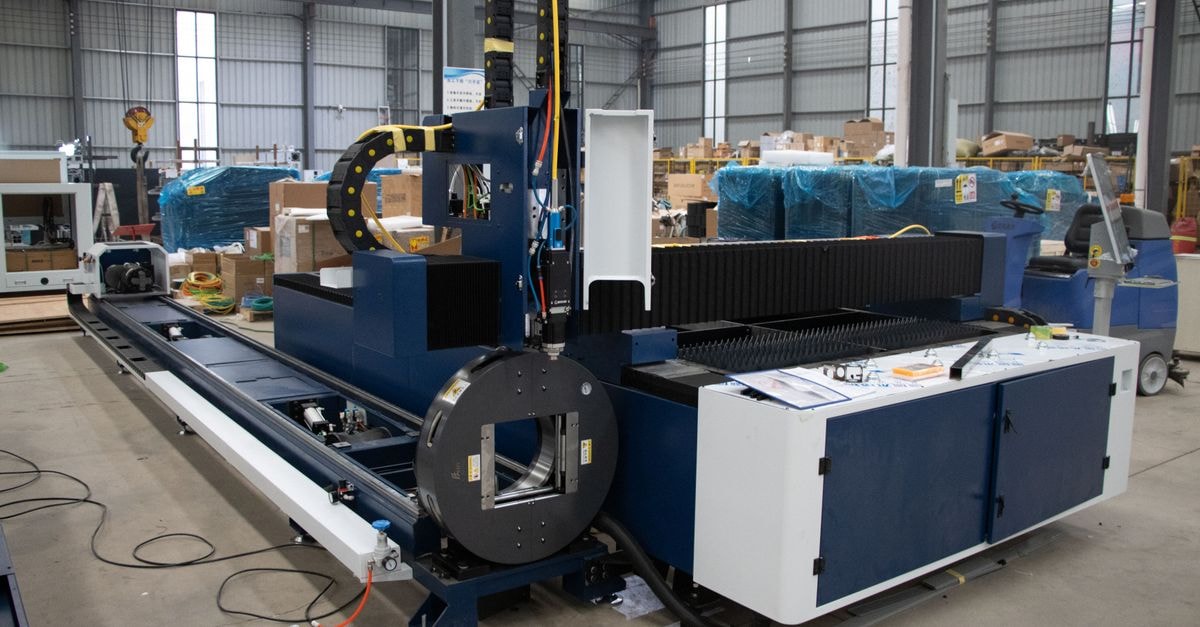
ASML, the Dutch maker of advanced lithography equipment and Europe's most valuable company, lifted its full-year 2026 sales forecast to a range of €43 billion to €45 billion, up from a previous €36 billion to €40 billion projection. The company also raised gross-margin guidance to 54%–56% from 51%–53%, marking the second forecast hike of the year after a stronger-than-expected quarterly performance. Chief Executive Christophe Fouquet said order intake remained extremely strong through the first half as customers accelerated capacity buildouts for AI chips, and ASML plans to raise its 2026 low-NA EUV capacity and its 2026 deep-ultraviolet (DUV) immersion capacity each by 30% to meet that demand.
Shares pull back despite the upgrade
The stock initially jumped more than 7% at the open before reversing to close 0.49% lower, even after the revised guidance. Year-to-date shares were still up roughly 115%. Analysts cited in the report attributed the pullback to stretched valuations — around 50 times forward earnings versus a 35–40x range seen as more appropriate — and uncertainty over the durability of AI-related semiconductor capital spending.
China's share of sales slips amid debate
China's contribution to ASML's revenue fell to 14% in the second quarter from 19% in the first, though management reiterated expectations that China would represent about 20% of full-year net sales. South Korea remained the largest single market at 43% of second-quarter sales. The report notes that U.S. lawmakers have proposed legislation to restrict sales of DUV machines to Chinese chip companies, adding to existing constraints on advanced lithography gear.
Chinese memory makers scale up under scrutiny
A separate report on China's memory-chip sector said CXMT and YMTC are riding AI-driven demand to stronger pricing and market share, with CXMT reportedly charging more than Samsung's roughly US$240 per-unit price for comparable 64-gigabyte DDR5 server memory modules. Both firms rely on ASML's DUV lithography machines for circuit patterning; CXMT remains roughly two generations behind rivals in high-bandwidth memory, while YMTC has replaced around half of its equipment with domestic tools and developed stacking techniques using less-advanced lithography.
Geopolitical pressure on lithography supply chains
The Dutch government has withheld export licences for ASML's most advanced extreme-ultraviolet (EUV) machines to China since 2019, and U.S. lawmakers are now pushing to extend restrictions to DUV tools used by Chinese memory producers. Analysts at SemiAnalysis warned that further lithography curbs would be "the biggest challenge" for Chinese memory makers, given China's lag in domestic lithography alternatives.
Share this article