Waymo crash rate ran 68% below human drivers in IIHS safety study

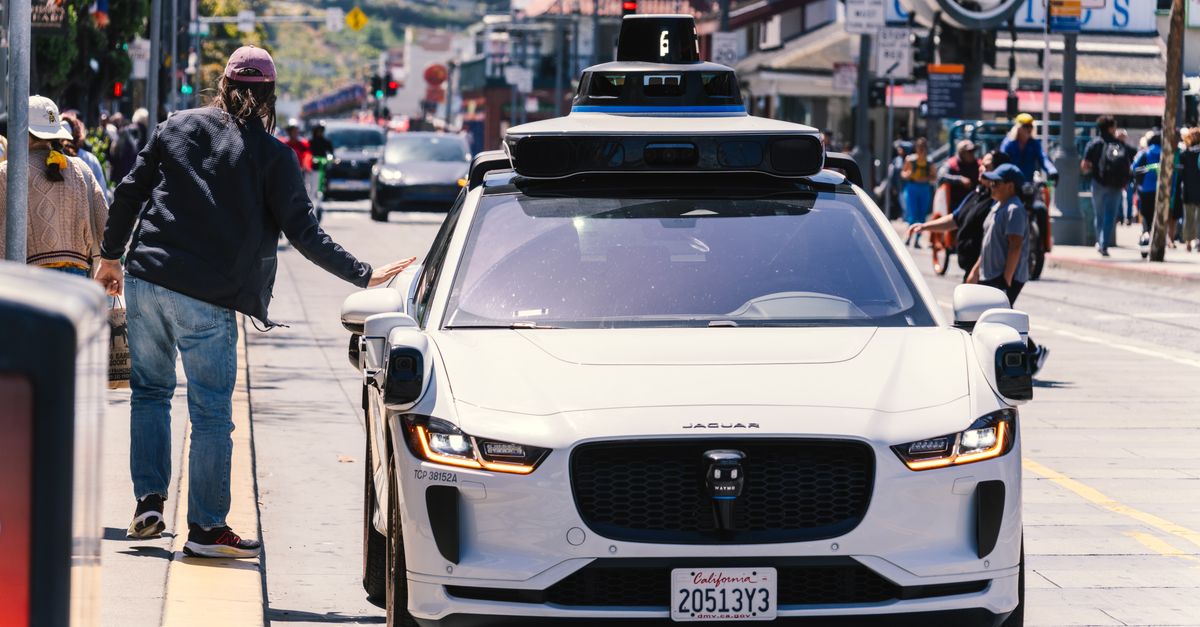
The Insurance Institute for Highway Safety published a study the week of July 26, 2026 showing Waymo self-driving vehicles had a crash rate 68% lower per vehicle mile traveled than human drivers in cities where Waymo operates. Waymo vehicles traveled roughly 50 million autonomous miles during the period studied, compared with about 222 billion human-driven miles in San Francisco, Phoenix, Los Angeles, and Austin. The result held on a city-by-city basis: the Waymo crash rate was 76% lower in Phoenix, 35% lower in San Francisco, and 71% lower in Los Angeles, while running 4% higher in Austin on a small sample. Waymo cars were involved in 85% fewer single-vehicle crashes and 81% fewer injury-causing crashes per VMT overall.
Researchers acknowledged that the underlying data make real-world comparisons difficult. NHTSA requires self-driving crashes to be reported but does not require companies to disclose mileage or how much was driven in autonomous mode, so it is impossible to know how common such crashes truly are. Waymo was the only company studied because it publishes vehicle-miles-traveled information others do not. After filtering redundant reports and incidents where the vehicle was not in autonomous mode, the IIHS found that only 22% of the 736 autonomous crashes reported during the study period were likely "police-reportable"; 89 of those involved Waymo, but only 64 were in autonomous mode. Study lead author Eric Teoh called the figures "encouraging signs for the future of driverless vehicles."
NHTSA pedal-free robotaxi brake rule enters final public-comment day
NHTSA's public-comment period on docket NHTSA-2026-0728 — a proposed amendment to Federal Motor Vehicle Safety Standard No. 135 that would remove the manual brake control requirement for vehicles designed exclusively for Automated Driving System operation — was scheduled to close July 27, 2026, with about 52 comments filed. Stopping-distance performance requirements would remain unchanged. If finalized as proposed, the rule would create the first permanent federal certification pathway for pedal-free, wheel-free robotaxis, ending the exemption-and-cap system that has constrained the industry.
Tesla took an unusual route to compliance. Rather than applying for a Part 555 exemption, Tesla engineered the Cybercab to meet Federal Motor Vehicle Safety Standards as written and waited for the rules to be updated. Production began at Gigafactory Texas in February 2026, with volume manufacturing in April; the Cybercab received an EPA Certificate of Conformity as a battery-electric vehicle on May 26, with an introduction-to-commerce date of May 29. EPA filings disclosed a single 163 kW front-wheel-drive motor, a 47.6 kWh battery, a 3,113 lb curb weight, and an adjusted real-world range target of about 293 miles. Tesla VP of Vehicle Engineering Lars Moravy confirmed on X that the Cybercab would not be subject to NHTSA's 2,500-unit annual production cap; drone footage on July 18 logged 245 Cybercab units staged at Gigafactory Texas, more than double the count from five weeks earlier.
Amazon's Zoox arrived at the same regulatory destination by petitioning for exemptions. NHTSA granted Zoox a demonstration exemption on August 6, 2025, under the expanded Automated Vehicle Exemption Program; that exemption required Zoox to remove all FMVSS-compliance statements. Since launching free public rides in Las Vegas in September 2025, Zoox has served more than 500,000 riders across four cities. The commercial exemption, which would allow Zoox to charge passengers, remained pending as of July 26, with NHTSA having opened a public-comment period.
Waymo plans independent service in Austin and Atlanta, signalling end of Uber partnership
Waymo has held internal discussions about exiting its partnership with Uber and has notified Uber it intends to launch its own independent ride-hailing service in Austin and Atlanta starting in January 2028 when its current contract permits, according to a Financial Times report cited on July 26, 2026. The two companies first joined forces in Phoenix in 2023, but relations have frayed as they have moved from collaboration to competition. In May 2026, the original Phoenix partnership lapsed.
Operational friction has mounted. Waymo has complained about the cleanliness and routing of vehicles and Uber's routing algorithms, while Uber has cited incidents such as dozens of Waymo robotaxis clogging a residential cul-de-sac in Atlanta, an issue Uber attributed to its own vehicle management. Uber has also complained that Waymo vehicles suddenly go offline during bad weather and noted that Waymo robotaxis passed stopped school buses in Austin in an incident that prompted a formal complaint to Waymo in December. Beyond operations, the two are competing in lobbying: Uber has pushed for "hybrid network" rules and, in New Jersey, proposed regulations requiring any robotaxi platform to have human drivers fulfil at least 85% of rides during a three-year pilot.
Tesla Robotaxi reaches Orlando and Tampa with a fleet far smaller than Waymo
Tesla expanded its Robotaxi service to Orlando and Tampa on July 21, 2026, running about 21 unsupervised vehicles across all US markets. The operating zones remain small: 12 to 15 square miles in Orlando's Conway and Lee Vista neighborhoods and 4 to 5 square miles in West Tampa, Tampa Heights, and Seminole Heights. Miami came online July 3; together with Austin, Dallas, and Houston, Tesla Robotaxi now operates in seven US markets, though the Bay Area remains supervised testing only. Austin's unsupervised fleet has actually shrunk from a peak of about 25 in April to 17, while Dallas runs roughly four.
The fleet sits well below Waymo's roughly 1,500 driverless cars completing around 500,000 paid trips each week across more than 1,400 square miles in 11 metro areas, with a stated target of one million weekly rides by year-end. Tesla's Full Self-Driving stack uses cameras only — no lidar or radar — while Waymo's 6th-generation Driver pairs 13 cameras with four lidar units and six radar sensors. In March 2026, NHTSA elevated its Tesla FSD investigation to an Engineering Analysis covering 3.2 million vehicles, citing FSD's failure to detect or warn drivers appropriately under degraded visibility conditions, with nine incidents and one fatality reviewed; Tesla's formal response to a 24-part information demand is due August 12. On July 21, NHTSA separately demanded an internal Tesla document titled "Radar Saves Us," underscoring engineers' earlier concerns about the camera-only architecture in the glare and heavy afternoon thunderstorms common in Florida.
In parallel, New Jersey state Senator Andrew Zwicker introduced S1677, which would require all commercial driverless vehicles in the state to carry cameras plus two additional sensing technologies — in practice radar and lidar — and 50,000 miles of supervised in-state testing before any driverless commercial operation, along with traditional steering-wheel and pedal controls and crash reporting. Tesla's Robotaxi and Cybercab fail every technical requirement in the bill, and a similar proposal is under discussion in New York; if S1677 passes, it would be the first state-level sensor mandate enacted into law.
Share this article