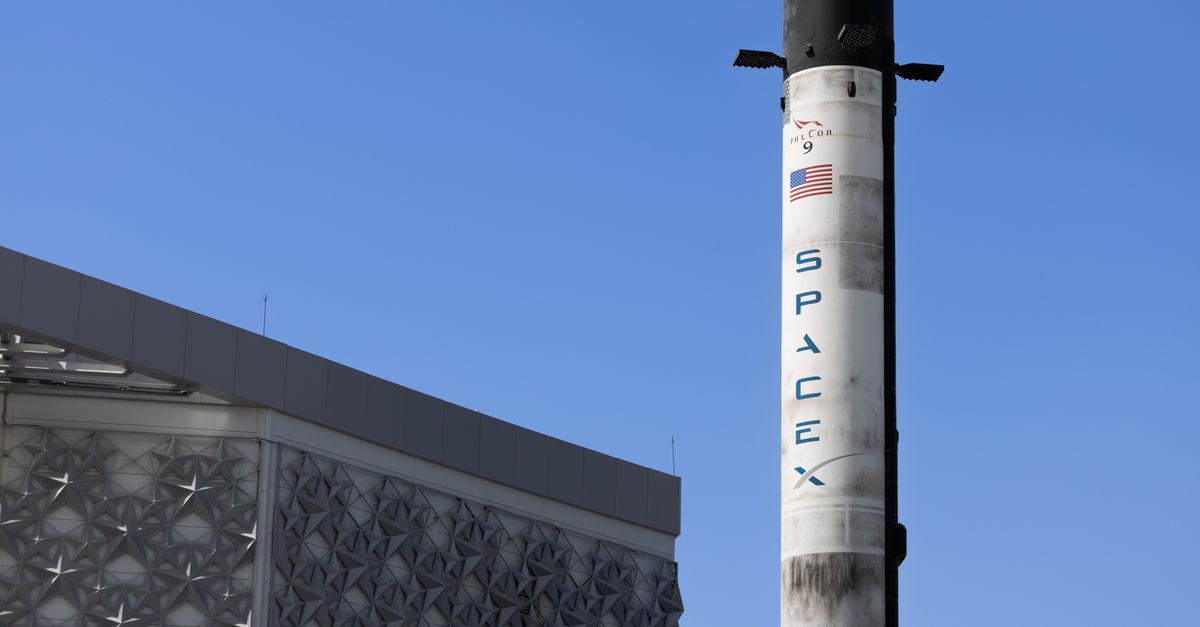
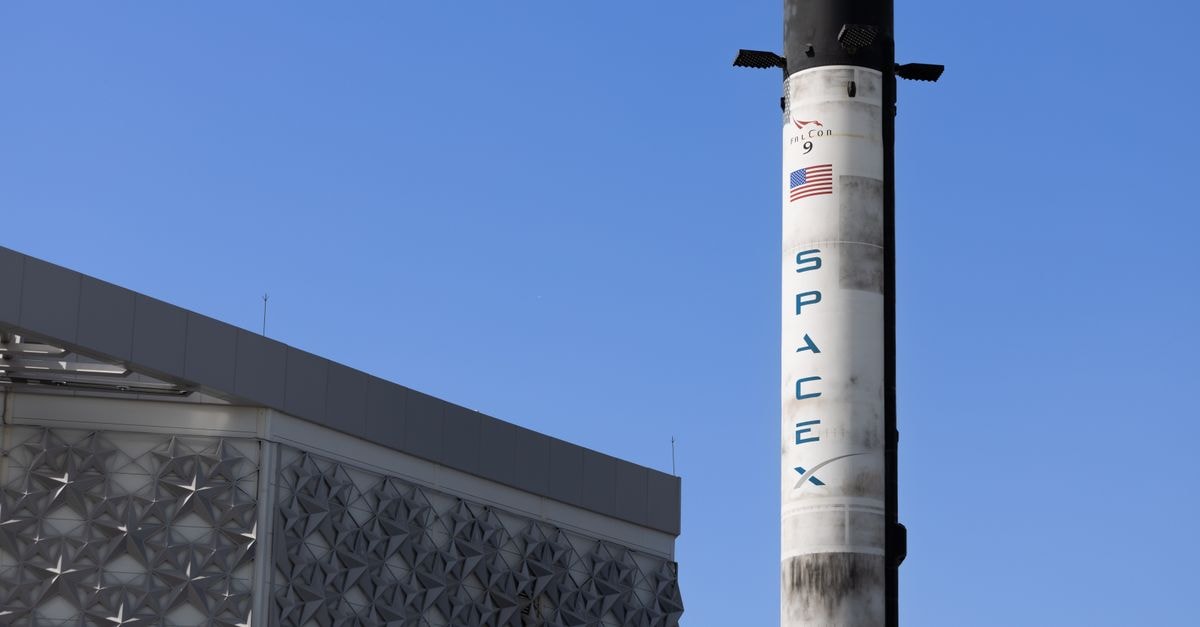
Liftoff from Cape Canaveral on a triple-booster Falcon Heavy

NASA's Nancy Grace Roman Space Telescope lifted off shortly after daybreak Sunday from Kennedy Space Center aboard a SpaceX Falcon Heavy rocket, beginning its journey to an observation point about 1 million miles (1.6 million kilometers) from Earth. The $4.3 billion mission is the agency's first space telescope named after a woman, honoring the late Nancy Grace Roman, NASA's first chief astronomer. The bus-sized observatory will take more than three months to reach its destination, where it will begin wide-field surveys of the cosmos.
Several minutes after launch, the rocket's two reusable side boosters returned tail-first to Cape Canaveral, producing sharp sonic booms as they landed. The telescope then separated successfully from the upper stage, drawing applause from ground controllers. NASA science mission director Nicky Fox, who was in tears watching the action unfold, called it "such a good day" and said Roman "is going to find thousands of supernovae, tens of thousands of planets, billions of galaxies and tens of billions of stars." NASA Administrator Jared Isaacman was holding a news conference a couple of hours later when his cellphone rang with a call from President Donald Trump, who had watched from afar after visiting Houston's Johnson Space Center on Friday to honor the Artemis II moon crew. Trump told the room, "Boy, it looked beautiful on television. You're the hottest in space."
A wider, faster eye to join Hubble and Webb
Roman's primary instrument is a wide-field 300-megapixel camera, built around a Hubble-class mirror originally fabricated for a reconnaissance satellite, that gives the telescope a field of view more than 100 times wider than Hubble's. According to senior project scientist Julie McEnery, Roman will scan the sky roughly 1,000 times faster than Hubble: a month of Milky Way observations by Roman would take Hubble about a century to complete. McEnery said on the eve of launch that "Roman's vast reach will allow us to find the weird, the rare and the unusual. We'll redefine what it means to find a needle in a haystack."
The new observatory is designed to operate alongside NASA's existing flagships, the 36-year-old Hubble Space Telescope and the James Webb Space Telescope, as well as the European Space Agency's Euclid spacecraft and the National Science Foundation's Vera C. Rubin Observatory in Chile. Roman's broad sky monitoring is expected to flag candidate exoplanets and transient cosmic events for the more narrowly focused, higher-resolution Webb to follow up on.
Dark energy, dark matter and the search for new worlds
Roman's top science priorities are the two forces that shape the large-scale behavior of the universe but remain poorly understood: dark matter, the invisible gravitational glue that holds galaxies together, and dark energy, the repulsive influence that NASA estimates makes up about 68% of the universe and is driving its accelerating expansion. By cataloging billions of galaxies, the telescope aims to refine measurements of how fast the universe is growing. According to NASA, Roman could also help uncover roughly 100,000 additional planets beyond the more than 6,300 already cataloged around other stars. A secondary technology-demonstration instrument, an experimental coronagraph with shape-shifting mirrors, is intended to dim the glare of distant suns so astronomers can analyze light reflected from planets orbiting them. Mission planners said the telescope is expected to operate for at least five years.
What's next for Roman
After a commissioning period of roughly three months that includes instrument calibration en route to its operational orbit, Roman is expected to release its first images in 2027, according to mission officials.
Share this article