NASA releases before-and-after lunar images

NASA on August 18, 2026 released before-and-after photographs of the fresh impact crater carved out by a SpaceX Falcon 9 rocket booster that struck the Moon on August 5. The images were captured by the agency's Lunar Reconnaissance Orbiter between August 11 and 12, from an altitude of about 60 miles while the spacecraft was travelling at roughly one mile per second. NASA said flight controllers had to tilt the orbiter so its cameras pointed toward the impact scene, and that it took six days before the crash site rotated into view. The space agency noted that if the camera had snapped even 10 seconds too early or too late, the target would have drifted off-centre by about 10 miles.
Measured size and appearance of the crater
Based on the LRO photographs and the length of the crater's shadow, NASA scientists determined the fresh crater to be approximately 60 feet (18 meters) across and less than 10 feet deep. The dark and bright streaks visible in the images fan out from the impact like butterfly wings. NASA said the darker lines represent excavated material that had sat near the surface and been altered over long periods by solar wind, galactic cosmic rays and micrometeorite strikes, while the brighter rays indicate fresh rocks and dirt hurled from deeper underground. South Korea's Danuri spacecraft was first to beam back images of the crash site, with the Korean space agency publishing pictures on August 6 taken a day earlier.
Booster's trajectory and impact details
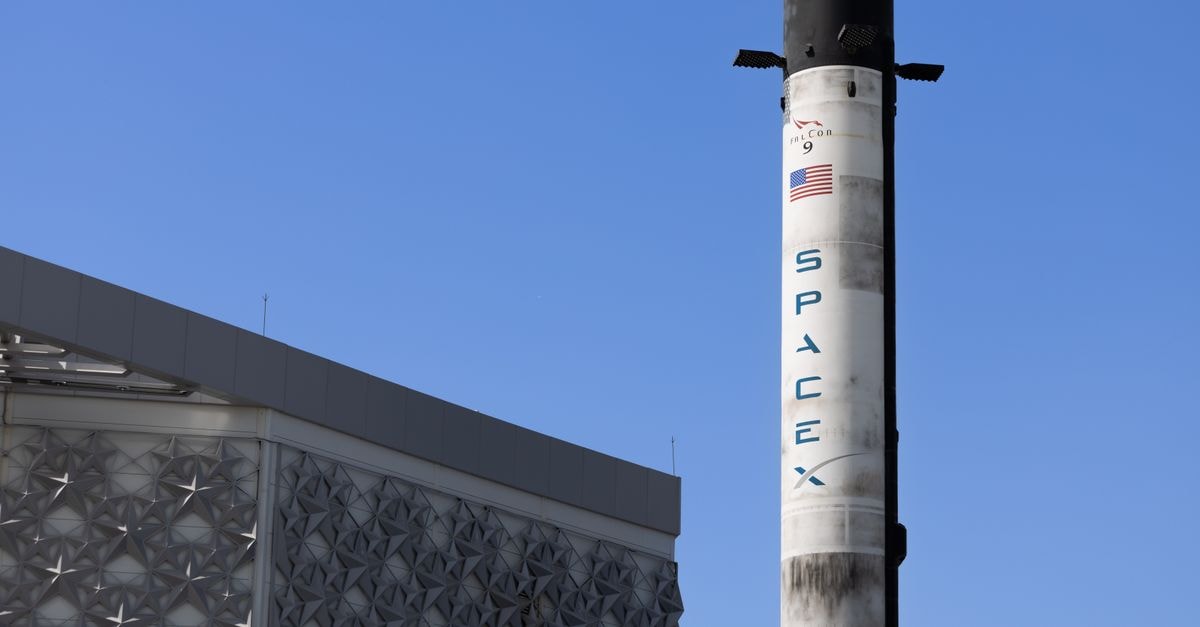
The impacting object was an 8,800-pound SpaceX Falcon 9 upper stage, roughly 45 feet long and 12 feet wide, that hit the Moon's Earth-facing side at about 5,400 miles per hour with a force equivalent to nearly 3 tons of TNT. The booster had been drifting through space for more than a year before the crash. It originally launched in January 2025 carrying Firefly Aerospace's Blue Ghost 1 lunar lander, a private mission that made a soft landing on the Moon. Artificial impacts on the Moon remain relatively rare, with most strikes coming from natural meteoroids.
Context from prior lunar missions
The LRO has been orbiting the Moon since 2009, serving as NASA's up-close eyes as the agency works to return astronauts to the lunar surface. In 2009, NASA intentionally crashed a rocket stage into a permanently shadowed crater at the Moon's south pole to search for water ice, an experiment that confirmed water ice exists at the location and helped make the region a prime target for future Moon bases planned by the U.S. and China.
Other developments
Separately, Elon Musk said SpaceX could exceed $1 trillion in annual revenue by 2030, one year faster than a previously stated timeline, according to a Yahoo Finance report. Elsewhere, Vietnam-based VinSpace announced a launch contract with SpaceX, described as a new milestone for the country's space industry.
Keywords: SpaceX Moon crash crater, NASA Lunar Reconnaissance Orbiter images, Falcon 9 upper stage impact, Blue Ghost 1 lander, lunar exploration 2026
Share this article