China's progress toward DUV mass production

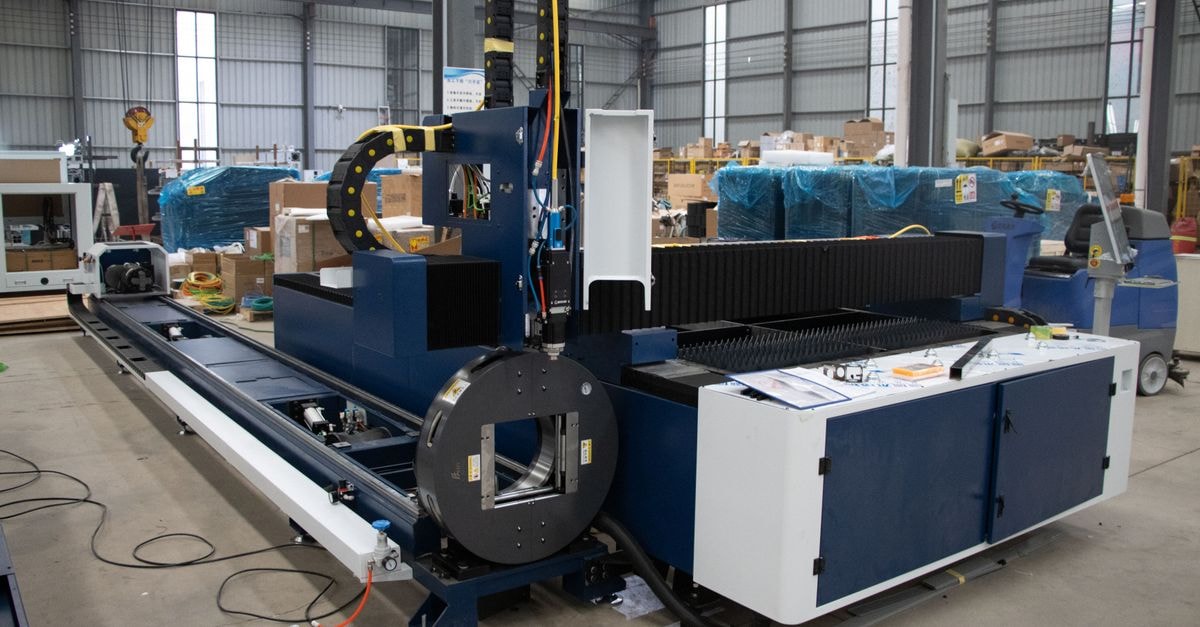
China is reportedly nearing the mass production stage for deep ultraviolet (DUV) lithography machines, a critical technology for advanced chipmaking that has long been dominated by Dutch firm ASML. According to reporting cited by Noah Intelligence and referencing The Information and Reuters, a state-backed company in Shanghai has begun building immersion DUV lithography machines for domestic use, an advance that Beijing is seeking to accelerate in order to reduce dependence on foreign semiconductor equipment.
The development comes amid renewed scrutiny of high price-to-earnings ratios across the chipmaking sector, as investors weigh whether the surge in artificial intelligence-related capital spending will translate into proportional returns. An Asian markets analyst cited by Anadolu described China's challenge as the first credible erosion of Western semiconductor superiority, noting that every lithography machine China acquires has historically been framed as a loss for the West.
Initial output scale and delivery targets
The first domestically produced immersion DUV systems are expected to be delivered to Semiconductor Manufacturing International Corporation (SMIC), Hua Hong Semiconductor and ChangXin Memory Technologies (CXMT), according to reports cited by Noah Intelligence. Output is projected at roughly five machines in 2026 and approximately 20 in 2027, a figure described as an important symbolic step rather than an immediate displacement of foreign supply.
For comparison, ASML sold about 131 DUV systems last year, underscoring how small the initial Chinese output remains relative to the global leader. Analysts cited in the reporting characterised the early deliveries as a pilot effort whose harder test is turning initial units into dependable equipment capable of continuous high-volume production.
Analyst caution on near-term impact
Experts warned against overestimating the immediate threat to ASML. Paul Triolo, partner and technology policy lead at DGA-Albright Stonebridge Group, told media outlets that producing immersion DUV tools is one thing, while making them commercially viable around the clock for a full year is quite another. Jefferies analyst William Beavington also urged caution, noting that earlier claims of Chinese progress in the area had not always held up and that Chinese chipmakers would continue to buy ASML equipment wherever possible because of its superior performance and reliability.
The Anadolu analyst, Sadi Kaymaz, said China's DUV machines emit longer-wavelength light than more advanced systems and cannot create fine patterns on silicon wafers in a single pass the way the leading tools can. While Kaymaz noted it would be extremely difficult for China to directly manufacture two- or three-nanometer chips using domestic DUV systems, he pointed out that Chinese producers have previously used Dutch DUV machines in various configurations to reach seven-nanometer output.
Continued Chinese dependence on imported equipment
China's reliance on imported semiconductor equipment appears far from broken. Bank of America data cited in the reporting showed that semiconductor equipment imports into Anhui province, where CXMT is based, rose sharply in March, with lithography accounting for most of the bill. The data suggests domestic production is still supplementing, rather than replacing, foreign tools, even as Chinese firms expand local sourcing.
Manufacturing a single machine is not the same as keeping it continuously running in a production plant, and yield remains a significant challenge for advanced Chinese chips, according to Kaymaz.
Export controls and policy risks
Analysts said the larger risk for ASML may stem less from direct Chinese competition than from proposed US export controls. Legislation aimed at restricting sales and servicing of immersion DUV systems could inadvertently accelerate China's learning curve by limiting its access to engineers, spare parts and technical support. Even so, experts cited in the reporting view it as more likely that China will build a distributed lithography ecosystem than a single ASML-style champion, with extreme ultraviolet systems remaining outside its reach and immersion DUV representing the most sophisticated option available to its chipmakers.
PLACES IN THIS STORY
Explore the destinations behind this report
China
Shanghai
Browse travel guides, places to stay, attractions and local food in Shanghai.
Explore Shanghai →Shanghai Travel Guide: Planning Tips, Costs and Things to DoShare this article