SpaceX wins $1.6 billion in Space Force launch orders

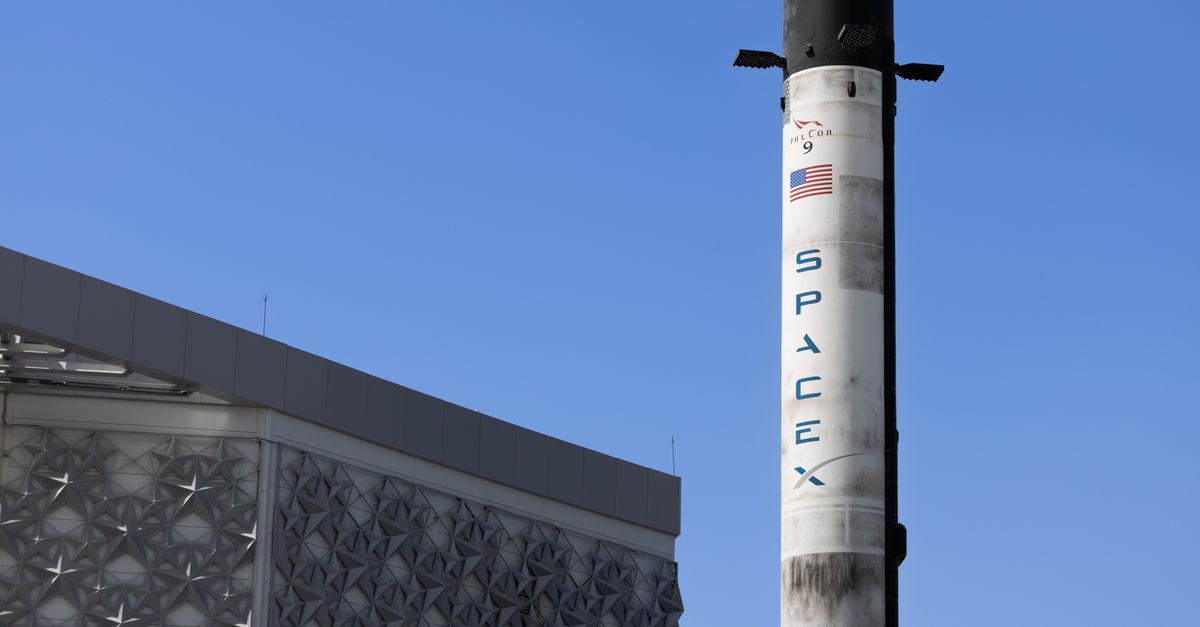
The U.S. Space Force awarded SpaceX $1.6 billion across two task orders under the National Security Space Launch (NSSL) Phase 3, Lane 1 program, covering 18 Falcon 9 launches from Vandenberg Space Force Base through the end of 2027. The missions will carry payloads for the Space Based Sensing and Targeting (SBST) portfolio, supporting the service's planned constellation for detecting and targeting airborne objects. Space Systems Command completed the awards in what acquisition official Col. Eric Zarybnisky described as an "unprecedented two-month acquisition timeline." The task orders are the first awarded since the service raised the Phase 3 Lane 1 contract ceiling to roughly $17 billion on July 17, lifting planned Lane 1 launches from 60 to 170 through 2034. SpaceX has now secured at least $7 billion in Pentagon launch and satellite contracts so far this year, including a $4.16 billion Space-Based Airborne Moving Target Indicator award on May 29 and a separate $2.29 billion communications-satellite task order days later.
NROL-95 mission closes Phase 2 commitments
Hours after the contract announcement, a Falcon 9 lifted off from Cape Canaveral Space Force Station at 3:10 a.m. carrying the classified NROL-95 payload for the National Reconnaissance Office. Booster B1096, on its seventh flight, touched down at Landing Zone 2 roughly 8.5 minutes after liftoff, marking the 642nd Falcon 9 booster recovery in program history and the 49th orbital launch from Florida's Space Coast in 2026. NROL-95 was SpaceX's third and final NRO mission under the NSSL Phase 2 contract awarded in August 2024, and the NRO's fourth launch of 2026. All 91 SpaceX Falcon missions flown during 2026 have succeeded without incident.
Rivals remain grounded as SpaceX dominance widens
With Phase 2 closed, both of SpaceX's Lane 2 competitors remain unable to fly national security payloads. United Launch Alliance's Vulcan Centaur has been grounded since February 2026 following a solid rocket motor booster-separation anomaly during its third flight, with the Space Force investigation still unresolved; four consecutive GPS III launches have already been redirected from ULA to SpaceX, and defense analysts warn that WGS-11 and Next-Generation Overhead Persistent Infrared satellites face uncertain futures on a grounded rocket. Blue Origin's New Glenn exploded on a Cape Canaveral launch pad on May 28 ahead of a flight that would have advanced its Lane 2 certification, destroying the pad and triggering a grounding expected to last through year's end. Phase 3 Lane 2 lists three certified providers on paper — SpaceX ($5.9 billion, 28 missions), ULA ($5.4 billion, 19 missions) and Blue Origin ($2.4 billion, 7 missions) — but SpaceX remains the only one capable of flying.
Starship Flight 13 aftermath and next-test plans
Five days after its 13th integrated test flight on July 24, the Starship upper stage was still floating in the Indian Ocean off Western Australia, visible in video Elon Musk shared on X. SpaceX called the splashdown the "softest" achieved with a Starship to date, and Musk said the precision of the landing meant the ship "would have been caught by the tower arms" and that SpaceX would attempt a tower catch on the next flight pending data review. The same test deployed 20 next-generation Starlink V3 satellites. Musk separately said Starship costs could "drop well below $100/kg to orbit" if the vehicle achieves immediate and complete reusability, and reaffirmed a target of putting humans on Mars "in roughly 5 to 7 years," with a Mars lander arriving "a few years sooner." He was responding to NASA Administrator Jared Isaacman, who suggested SpaceX had shifted priority toward the Moon. No date has been set for Flight 14, though SpaceX aims to have Starship operational by 2027 in time for NASA's Artemis III.
Market dynamics and investor concerns
Public-market sentiment has diverged sharply from the operational cadence. Shares (NASDAQ: SPCX) traded around $113.20 — up about 0.58% in early dealings on July 30 — but sat roughly 49% below the June 16 all-time high of $194.46 and only about 4.3% above the 52-week low. S3 Partners reports roughly 35% of the float is sold short, with notional short interest near $26 billion. A post-IPO lock-up structure opens staggered 7% tranches beginning around August 4, when SpaceX is due to release its first quarterly earnings as a public company; roughly 911 million insider-held shares become eligible about two days after that report. Analysts expect Q2 revenue of $6.82 billion and a net loss of $0.29 per share, with about three-quarters of the $10 billion in first-quarter capital spending flowing into AI data centers.
Thematic ETFs follow public debut
Following SpaceX's recent public listing, First Trust and Global X have each introduced space-economy exchange-traded funds offering exposure to the company. The products, trading under tickers FSPC and LUNR, reflect intensifying competition among thematic ETF sponsors targeting investors who want diversified access to the commercial space sector rather than a single name. The launches come amid what industry selectors have called a "phenomenal" wall of issuance tied to the broader space theme.
Share this article