Where the Two of Wands Sits in the Deck
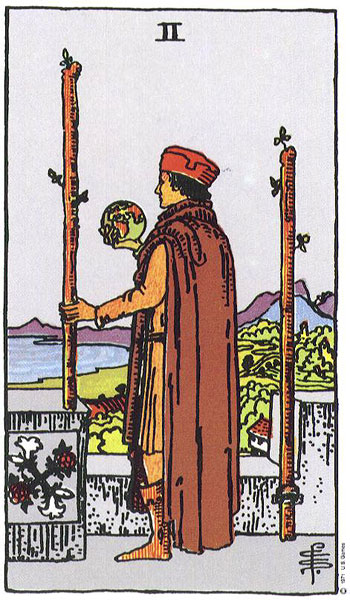
The Two of Wands belongs to the Minor Arcana, the part of a tarot deck that deals with day-to-day situations rather than large archetypal themes. Within the Minor Arcana, the suit of Wands is associated with initiative, creativity, and purposeful action, so any card in that suit touches on how energy is being directed rather than what is being felt emotionally or what resources are on the table. The number Two, in turn, signals pairing, comparison, or the act of weighing two paths at the same time.
When you pull this card for a two of wands tarot card meaning inquiry, you are not asking about destiny in the abstract. You are asking a much narrower question: which direction is the energy currently going, and is that direction chosen on purpose or just defaulted to? The rank and suit together set the frame: a small, practical card about how you steer creative momentum, not a sweeping statement about life purpose.
This positioning matters because readers often treat any card that mentions "choice" as a major life crossroads. The Two of Wands, by contrast, operates at a smaller scale. Its constructive direction is directing energy toward work that matters, not deciding the rest of your life in a single afternoon.
The Upright Two of Wands: Choice and Creative Action
In its upright position, the Two of Wands describes a deliberate moment of selection. You have at least two viable paths in front of you, and you are being asked to hold both in mind at once without collapsing the comparison into a premature decision. The card's constructive direction is pointing energy toward work that matters. Initiative, creativity, and action are all in play, but they are meant to be channeled rather than scattered.
A useful framing is that the upright Two of Wands rewards patience paired with momentum. You do not have to wait until every variable is known, but you also do not have to commit today. The card simply asks that whatever you do next be done on purpose, with the two options visible to you rather than one of them quietly ignored.
Notice the keywords bundled with this card: a choice, initiative, creativity, action. Those four words together suggest that the choice itself is creative. You are not picking from a menu. You are shaping what the choice means by how you frame it, what you compare, and what you decide is non-negotiable. The card's tone is mixed, which is worth sitting with: a card about choice is rarely pure relief or pure anxiety. It tends to be both, often within the same hour.
The Reversed Two of Wands: Blocked Direction and Burnout
When the Two of Wands appears reversed, the same pattern is still present, but it is showing its shadow. This position is described as the pattern being blocked, internalized, or expressed through burnout, impatience, or effort without a stable direction. In other words, the two-path structure has not disappeared; it has gone underground.
Three readings are common here, and they should be held alongside each other rather than collapsed into one:
- Burnout from holding too many directions. You are still trying to keep two paths alive, but the cost of doing so has become visible in fatigue or irritability. - Impatience with the comparison stage. You want to commit before you have actually compared the options, which often produces a decision that has to be re-decided later. - Effort without a stable direction. You are acting energetically, but the energy is not pointed at anything specific. This is the most common misread of the reversed card, because on the surface it can look like the upright version with extra motion.
The reversed card is not a punishment. It is a description of what happens when the choice at the heart of this card gets avoided or rushed. Recording this in your notes, rather than treating it as a verdict, keeps the reading honest.
Comparing Before Combining
The reflection prompt paired with this card is direct: what needs to be compared instead of prematurely combined? This is the practical hinge of the Two of Wands, and it is where most readers slip.
A simple way to apply the question is to write down two directions you are currently weighing and ask, for each one, three things: what does this option assume, what does it cost, and what does it leave out? If you cannot answer those three questions for an option, you are not comparing it yet. You are just listing it.
The danger of premature combination is that two half-formed plans can look like one solid plan once they are merged. The Two of Wands, both upright and reversed, asks you to keep the seams visible for a little longer. Comparison is not analysis paralysis. It is the stage where you actually find out whether what you are calling "two options" is really two options, or one option in two moods.
This is also where ambiguity should be recorded honestly. Sometimes the card appears when there is no real choice at all, only the wish for one. If that is the case, the honest reading is that the card is describing the felt experience of wanting a choice, not the fact of one. Noting this possibility keeps the reflection grounded in evidence rather than story.
A Low-Stakes Example: Choosing Between Two Projects
Imagine a freelance illustrator with two small commissions open at the same time. One is a quick logo refresh that pays modestly but finishes by Friday. The other is a larger editorial illustration with a later deadline and a longer portfolio payoff. Both are real, both are viable, and both are tempting for different reasons.
Pulling the Two of Wands here would not predict which project wins. It would describe the situation: you are holding two paths at once, and the work in front of you is to direct your creative energy on purpose rather than by reflex. The constructive aim is asking which project actually points toward work that matters to you right now, not just which one is louder in your inbox.
A misreading in this scenario would be to treat the card as telling you to take the bigger project because it is more creative. The card's keywords do not support that reading. They say the choice, the initiative, the creativity, and the action are all yours to weigh. If the illustrator takes the logo refresh because rent is due this week, that can be a perfectly aligned Two of Wands reading, as long as the choice was made on purpose rather than by avoidance.
The reverse also applies. If the illustrator takes the editorial piece and then spends the next two weeks resenting the deadline, that is the reversed pattern showing up: effort without a stable direction, because the direction was chosen from pressure rather than comparison.
Where This Card Gets Misread
A common misreading of the Two of Wands is to treat it as a card about travel, foreign opportunities, or far-reaching ambition. That reading is borrowed from older decks and is not supported by the keywords or description for this card. Without supplied visual details, the Two of Wands on this page is about choice, initiative, creativity, and action in their most local form. Calling it a travel card without supporting evidence is a category error.
A second misreading is to treat the card as a green light. The tone is mixed, and the keywords include both initiative and choice, which means the card is asking you to do something with the choice rather than telling you the choice is already correct. If you find yourself reading the Two of Wands and feeling relieved that the decision is made, it is worth pausing. The card describes the structure of the decision. It does not certify its outcome.
A third misreading, particularly for the reversed card, is to assume reversal always means failure. Reversal here means the same pattern is blocked, internalized, or showing as burnout or impatience. That can describe a setback, but it can also describe a healthy pause that has not yet been recognized as such. Disconfirming evidence matters: if your journal shows you are actually less burned out this week than last, the reversed card may be describing a transition rather than a crisis, and that should be recorded with the same care as a strong match.
Questions to Test the Reading in a Journal
Tarot is not a prediction, and the Two of Wands is a good card to test that framing against. The card describes a pattern; what you write in your journal is the evidence you bring to that pattern. The following questions are designed so that you can answer them with yes, no, or a number, which keeps the work verifiable rather than interpretive.
- What two directions am I currently weighing, and have I written down what each one assumes, costs, and leaves out? If you have not, the card is pointing at the comparison stage, not the decision. - Is the energy I am putting into this choice pointed or scattered? Pointed energy has a target. Scattered energy has motion without direction. Both can show up under this card. - Am I confusing the wish for a choice with the fact of one? If there is no real option on the table, the honest answer is to name that and stop pretending the choice is live. - What does "work that matters" mean to me this week, in plain language? That phrase from the keywords is worth translating into specifics before you act on it. - Where would disconfirming evidence show up? If the choice turns out well, what will I point to as evidence? If it turns out poorly, what would have been an early warning I missed? Writing both down in advance keeps the reading honest.
A useful habit is to date your entries and revisit them in two to four weeks. Tarot readings are most useful when they can be checked against what actually happened, including the things that did not match. The Two of Wands, with its emphasis on comparison and direction, is especially suited to that kind of follow-up because the choice you were weighing will have moved, one way or another, by then.
Share this article