What All Four Twos Share
Every card in this group belongs to the Minor Arcana and carries the same opening line in its description: a choice, a pairing, or an effort to hold two realities at once. That phrasing is not decorative. It is the structural spine of the Twos across Wands, Cups, Swords, and Pentacles. Each card then expresses that spine through a different element, which is why treating them as four faces of one pattern is often more useful than reading each in isolation.
The shared reflection question is also identical across all four cards: "What needs to be compared instead of prematurely combined?" That question is doing real work. It tells the reader that the Two is rarely a card of final answers; it is a card of disciplined holding-apart, a pause before a merge. When the description marks tone as "mixed," it is signaling that the card is neither a clear green light nor a red light. It is a request to weigh.
The constructive direction also follows a similar arc in each suit. The upright Two suggests something generative if held well: directing energy, recognizing emotional reality, using clear distinctions, building through steady practice. The reversed Two then names the failure mode when that holding is forced or rushed: burnout, projection, overthinking, scarcity fixation. In other words, the upright Two rewards patience, while the reversed Two exposes what impatience costs.
For a reader, the practical takeaway is that the Twos in tarot across suits are best treated as a family. The number Two asks a parallel question in every suit, and the suit answers it with its own materials.
How Each Suit Tilts the Same Pattern
The shared pattern tilts in four distinct directions, and each tilt changes both the medium of the choice and the kind of evidence that would confirm or disconfirm a reading.
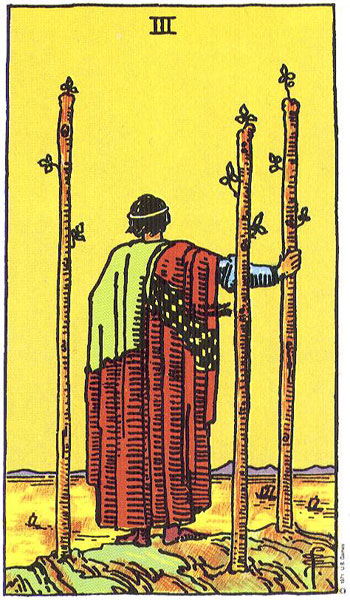
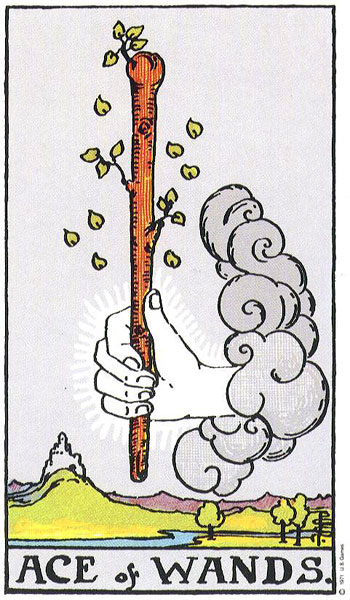
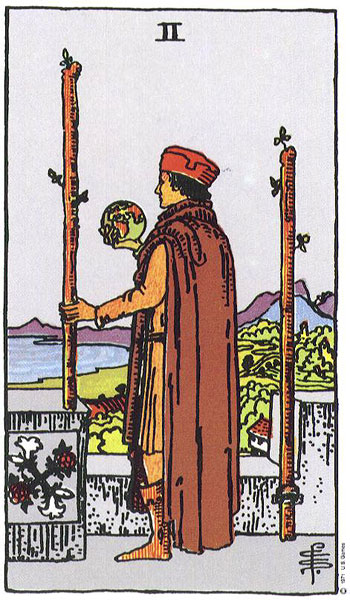
The **Two of Wands** tilts the pattern toward initiative, creativity, and purposeful action. The choice is about where to direct available energy. The constructive direction is work that matters; the shadow is effort without a stable direction, or the impatience of starting many threads and finishing none. If this card appears upright, the live question is whether the available initiative is being aimed at something real. If reversed, the question is whether burnout or scattered starts have quietly replaced aim.
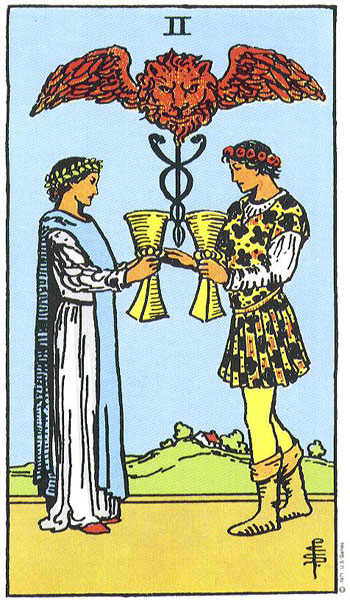
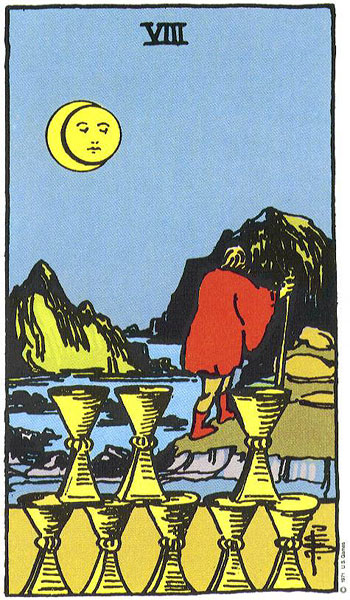
The **Two of Cups** tilts the same structure toward feeling, relationship, imagination, and emotional response. The choice is about what to recognize and communicate about an emotional reality. The constructive direction is naming what is actually being felt rather than collapsing two feelings into one convenient story. The shadow is projection, avoidance, or letting an untested feeling swell until it runs the room. Here, evidence tends to live in conversations, body language, and the gap between what someone says and what they do.
The **Two of Swords** tilts toward thought, language, decisions, and conflict. The constructive direction is clear distinctions and honest communication. The shadow is overthinking, rigid conclusions, or words used as weapons. With this card, a reader should look for whether a decision has been avoided in the name of being balanced, or whether a balanced decision is actually being made.
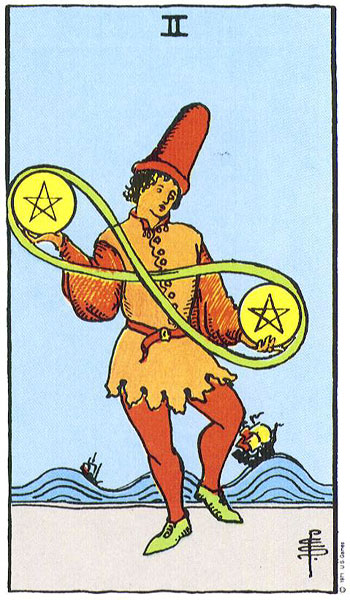
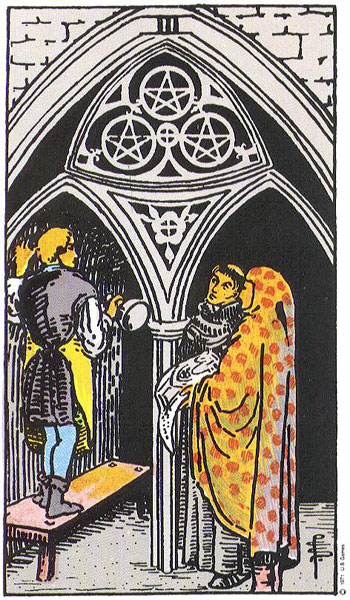
The **Two of Pentacles** tilts the pattern toward work, resources, the body, routine, and material conditions. The constructive direction is building something useful through steady, observable practice. The shadow is scarcity fixation, stagnation, or treating measurable value as the only value. Evidence here tends to be visible: bank statements, calendars, the state of a desk, hours slept, weight tracked.
The number is the same; the medium of the choice shifts. That shift is what makes the Twos useful in context rather than as a generic symbol of "duality."
Where Interpretations Diverge
A reader can land on very different readings of a Two because the same surface supports several plausible stories. The card data names these competing interpretations without resolving them, which is honest about the medium itself. Tarot is not a prediction, and the Twos make that especially clear because they explicitly hold two readings open.
Three interpretive forks appear regularly:
1. **Choice versus pairing.** Is the Two offering a genuine fork between two options, or is it describing the work of holding two parts of one situation in mind? Some readers default to "decide." Others read the card as "integrate." The reflection question steers toward integration: "What needs to be compared instead of prematurely combined?" Treat premature combination as a real risk to flag.
2. **Constructive versus stuck.** The upright description names a constructive direction; the reversed names its shadow. But a card drawn upright does not guarantee the constructive direction will be followed, and a card drawn reversed does not guarantee collapse. Tone is marked "mixed" precisely because context decides.
3. **External versus internal.** In some readings, the Two describes a relationship or a partnership, especially in Cups. In others, it describes an internal split. Both readings can be valid; the suit and surrounding cards usually nudge which is more probable, and a journal check can distinguish between them after the fact.
Recording ambiguity as carefully as an apparent match is part of working with Tarot honestly. When a Two appears, the responsible move is to name which interpretations are open and what would settle the question in real life, then wait for evidence rather than forcing a verdict.
A Low-Stakes Example
Consider a reader who draws the Two of Swords around the question, "Should I take a new freelance contract?" A common reading would be: this is a decision card, balance the scales, decide. That is one interpretation. Another, supported just as directly by the description, is: use clear distinctions and honest communication before committing; do not let the appearance of balance replace actual weighing.
The reader writes down both readings. They then look for evidence in the next week: did they get the contract terms in writing, did they notice which questions they were avoiding, did they speak with one person who had worked with the client before? If the evidence shows they never actually weighed the costs and simply accepted, the reading that warned against premature combination was the better fit. If the evidence shows they weighed carefully and decided on the merits, both readings remain valid, and the card may have served as a prompt rather than a verdict.
This is the kind of small, observable experiment that Tarot supports well. It is not prediction. It is a structured invitation to notice.
How to Test Competing Readings
The card descriptions name the constructive direction for each Two. That gives a reader a built-in test. Once a Two appears, the reader can ask: is the constructive direction being followed, or is the shadow being lived? The test should be small, dated, and reviewable.
A workable method:
- Write down the Two drawn, the question asked, and one sentence for each competing interpretation. - For each interpretation, list one observable thing that would confirm it and one that would disconfirm it within a week. - Set a date to revisit the entry and mark which interpretation the evidence supported, which it weakened, and which it left open. - Note surprises. Sometimes a reading lands in a part of life the reader did not initially associate with the question. That is information, not failure.
A Two of Cups upright, for example, predicts a constructive direction only if emotional reality is being communicated. If the reader notices over the week that no one in the relevant situation has actually spoken honestly, the shadow reading becomes live even though the card appeared upright. Record that. It is more useful than pretending the upright was wrong. Disconfirming evidence is data, not a flaw in the method.
Journal Questions for the Twos
The shared reflection question is a starting point, not a finish line. The following prompts extend it for each suit. They are written to be answerable in a few sentences with concrete examples.
- For any Two: what are the two things I am holding apart right now, and what would I lose by collapsing them? - Two of Wands: where is my initiative actually aimed, and where is it just motion? - Two of Cups: what emotional reality am I avoiding naming, and to whom could I name it this week? - Two of Swords: where am I using "balance" as a way to postpone a decision I could make with available information? - Two of Pentacles: what small, steady practice is asking for my attention, and what would I notice in a week if I did it daily?
When you write, name something specific. "Communication" without an example does not generate evidence; "the conversation I postponed with my colleague about hours" does. Vague entries are not wrong, but they rarely teach the reader anything new on a second read.
The Limits of Any Two Reading
The Twos are useful precisely because they ask the reader to hold options open rather than collapse them. That is also their limit. They cannot tell you which option is right. They cannot predict outcomes. They cannot substitute for medical, legal, financial, safety, or crisis decisions, which require qualified professionals and direct evidence.
Treating Tarot as a prompt for clearer thinking, more honest conversation, and steadier practice is a fair use of the medium. Treating it as a prediction tool overstates what the cards can do. The descriptions in this comparison are deliberately written to keep that distinction visible. When a Two appears and the constructive direction is named, the next step belongs to the reader, not to the deck. The cards are a mirror with a useful tilt, not an oracle.
Share this article