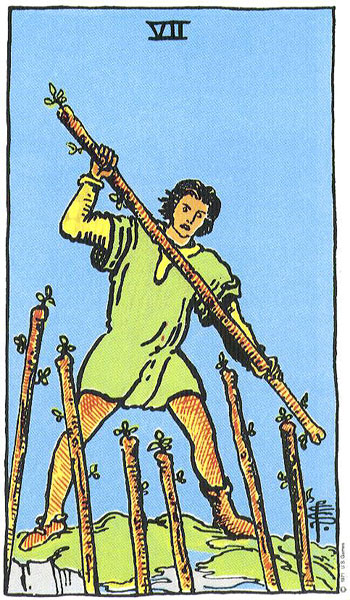
What the Seven pattern actually shares across suits
When you place the four sevens in tarot across suits side by side, a striking thing happens: the upright statement is identical, almost word for word. Each one describes assessment, competing possibilities, and the need to choose a standard. Each carries the same reflective question: which option still makes sense after its cost is included. And each is marked tone: mixed. That repetition is not decorative. It is the editorial point of the number.
The Sevens in tarot across suits are a study in what the number contributes on its own: a turning point where the earlier six's work gets weighed, and a standard is required before further movement. The keyword that leads every upright list is assessment. That word is the spine the suits decorate.
What stays stable across all four:
- A posture of weighing options rather than acting on impulse. - An awareness that several paths are open and a single chosen measure is required. - A reflective stance: cost, not just appeal, must be considered. - A mixed tone, meaning the situation holds both promise and pressure. - A shared reversed shadow: the pattern may be blocked, internalized, or showing its underside.
What changes is what is being weighed, and through which faculty of self.
How each suit shifts the shared seven
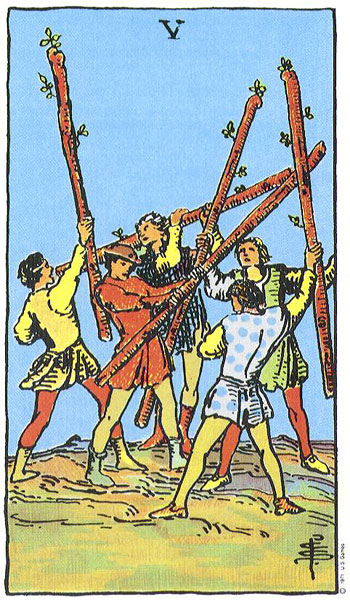
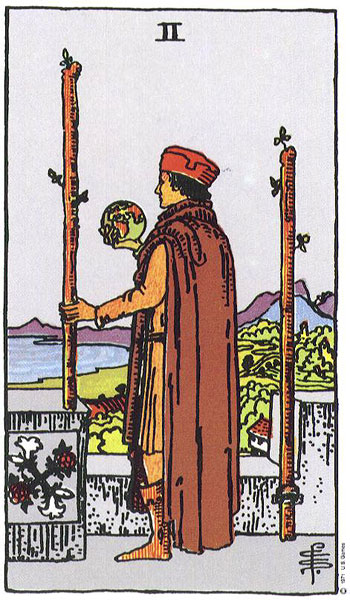
The Seven of Wands frames the assessment through initiative, creativity, and purposeful action. The constructive direction is directing energy toward work that matters. When the pattern turns shadow, the same fire shows up as burnout, impatience, or effort without a stable direction. The reading question for Wands is what you are spending energy on, and whether the choice is about where to aim or about moving.
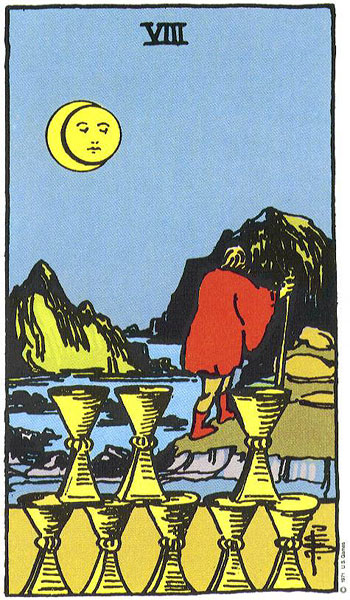
The Seven of Cups moves the same weighing into feeling, imagination, and relationship. Constructive direction is recognizing and communicating the emotional reality of a situation. The shadow here is projection, avoidance, or becoming overwhelmed by an untested feeling. For Cups, the question is which attractive possibility is grounded in something you have actually felt, and which is a mood you are borrowing.
The Seven of Swords carries the weighing through thought, language, decisions, and conflict. Constructive direction uses clear distinctions and honest communication. The reverse falls into overthinking, rigid conclusions, or words used as weapons. For Swords: is your clarity real, or have you arranged language to justify a decision you already made?
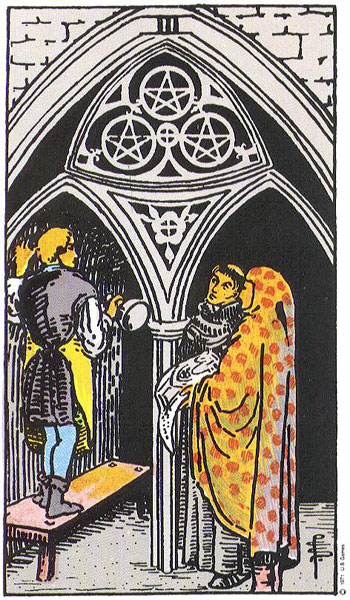
The Seven of Pentacles anchors the assessment in work, resources, the body, routine, and material conditions. Constructive direction is building something useful through steady, observable practice. The reverse lands on scarcity fixation, stagnation, or treating measurable value as the only value. For Pentacles: are you measuring what actually matters, or only what is easy to count?
The same weighing sits underneath each. The substance being weighed, and the failure mode when it goes wrong, is what the suit supplies.
Where readers most often misread the suit difference
The most common slip is treating the sevens as if they all meant the same single thing: indecision. Indecisive is part of it, but the card is not saying you cannot choose. It is saying you have not yet named the standard by which you would choose. A reader who hears only stuck misses the action-oriented instruction of Wands, the relational instruction of Cups, the analytic instruction of Swords, and the practical instruction of Pentacles.
Another slip is reading the reversed too quickly as bad outcome. The card data describes a shadow that is blocked, internalized, or simply turned against itself. The reverse of Wands is not do nothing, it is effort without a stable direction. The reverse of Cups is not feel nothing, it is becoming overwhelmed by an untested feeling. The reverse of Swords is not be silent, it is rigid conclusions. The reverse of Pentacles is not lose money, it is scarcity fixation. Holding the failure mode as descriptive rather than predictive keeps the reading honest.
A third slip is projecting a single visual image onto all four cards, then using that image as a universal meaning. The supplied card data deliberately separates image from meaning so that the suit and the number carry the interpretation. If you find yourself arguing from a figure or object instead of from the suit and number, you are reading the picture instead of the structure.
A low-stakes scenario for testing competing readings
Consider a quiet evening decision about whether to start a weekly writing practice. Three cards from a small spread land: Seven of Wands, Seven of Cups, and Seven of Pentacles. The reading is not a prediction of success or failure. It is a structured way to surface the parts of the decision that deserve attention.
Reading 1, the Wands-only frame: the assessment is about initiative. Where should creative energy go? The constructive direction points to work that matters. The honest question is whether the writing practice is being chosen because it matters to you or because it offers a flattering image of yourself. The shadow here would be burnout from a project that was never really yours.
Reading 2, the Cups-only frame: the assessment is about feeling and imagination. The pull toward writing could be a real desire or an attractive fantasy of who you would become. The shadow is becoming overwhelmed by an untested feeling about being a writer. The useful move is to recognize and communicate the emotional reality of the situation, perhaps by writing one paragraph tonight and noticing what actually shows up.
Reading 3, the Pentacles-only frame: the assessment is about resources, routine, and material conditions. Can a weekly practice fit the actual shape of your week? The shadow is treating measurable output (word count, posts published) as the only measure of value. The constructive direction is building something useful through steady, observable practice, which includes practicing badly on purpose.
Each reading is true to its suit. None of them is the whole truth. A reader who wants to honor all three would ask: does this practice honor initiative, name a real feeling rather than a fantasy, and fit the conditions of an ordinary week? Where two of the three readings point opposite directions, that is a signal to slow down, not to force a verdict. The scenario is deliberately low stakes. Tarot is not a prediction tool, and a small weekly experiment is a fair place to test competing interpretations against lived experience.
Interpretation choices that keep the reading honest
Three working rules help a reader stay grounded when the sevens appear together.
First, name the standard before naming the choice. The card requires a chosen measure, not just a chosen answer. In Wands the standard might be what work matters. In Cups it might be what is actually felt. In Swords it might be what can be defended in clear language. In Pentacles it might be what fits the conditions. Without the standard, the choice is decorative.
Second, hold the reversed as descriptive, not predictive. Blocked, internalized, or showing its shadow is a way of describing what is happening, not a forecast of what will happen. The shadow can be acknowledged without being obeyed. A reading that names a shadow accurately is useful precisely because it leaves room for a different direction.
Third, record disconfirming evidence as carefully as an apparent match. If a Seven of Swords reading suggested overthinking and the situation turns out to have been simple and well-communicated, note that. If a Seven of Pentacles reading flagged scarcity thinking and the day was generous, note that too. A reflective practice keeps a record of when the structure did not fit, so future readings can be calibrated. If a result contradicts the reading, treat that as data, not as a sign the cards were unkind.
Fourth, when the sevens appear together, resist the urge to blend them into one mood. They are four different ways of asking the same weighing question. Saying all four points to confusion dilutes what each one is actually pointing at. Saying they point in four different directions is closer to the truth, and that tension is exactly what the structure is for.
Journal questions for verifying what you noticed
These prompts use the shared reflection of the sevens, which option still makes sense after its cost is included, and adapt it to each suit. They are designed to be written into a journal, not answered in the head.
- Wands: which initiative in your current week still makes sense after its cost in time, attention, and energy is included? Where might effort be running without a stable direction? - Cups: which feeling about a relationship or future still makes sense after its cost in disappointment risk and emotional bandwidth is included? Which untested feeling is doing more work than it should? - Swords: which conclusion still makes sense after its cost in accuracy and in how it lands on others is included? Are clear distinctions being used, or have words become weapons? - Pentacles: which routine or resource plan still makes sense after its cost in time, attention, and physical energy is included? Are you measuring what matters, or only what is easy to count? - Combined: if more than one Seven appears in a single spread, which standard are you willing to apply, and which option survives all four costs at once? What would change your mind tomorrow?
Write the answers on the same day, then revisit them in two weeks. The point is not to confirm a reading. The point is to test whether the structure helped you see more clearly than you would have without it. Where it did, keep the practice. Where it did not, adjust the question. A reading is a tool for reflection, not a verdict about the future, and the only honest way to know whether a tool is helping is to look at what the tool helped you notice, and what it missed, with equal care.
Share this article