What a Reversed Card Actually Is (or Isn't)
A reversed card is simply a card that has been drawn and then turned upside down in the spread, so that the figure or scene on the artwork faces the opposite direction from the way it was printed. There is no mystical machinery that activates when a card is upside down. The reversal is a layout choice made by a reader, and the meaning assigned to it is one of several interpretation choices a reader can make.
Some decks are designed to be read in either orientation, and the artist has built two pictures into the same card. Other decks were painted only for upright use, so the inverted image is essentially the same image, only flipped. The orientation itself is neutral. What matters is what the reader and the querent decide it means in a given context.
This is the starting point for any honest conversation about tarot reversals explained. The reversal is not a warning siren. It is one of several possible cues. Treating it as an automatic negative is the most common error, and one of the most harmful, because it pushes readers toward confirmation bias: once you expect bad news, every card can be read as bad news.
Why Reversals Don't Automatically Mean "Bad"
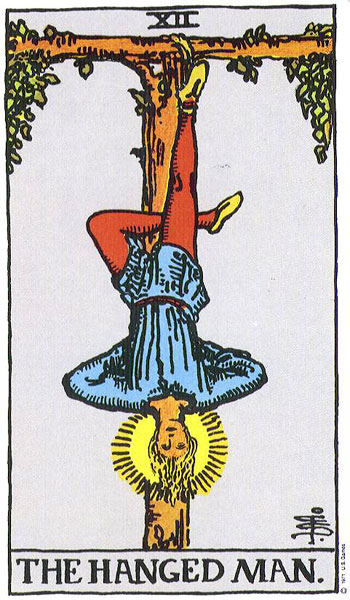
Tarot has a long folk tradition of treating reversals as obstacles, blocks, or warning signs. That tradition is real and has historical weight, but it is not a scientific finding and it is not the only workable system. Many contemporary readers treat reversals as internalized themes rather than external events. In that frame, an upright The Hanged Man suggests an external pause that you are participating in. A reversed The Hanged Man suggests a pause or sacrifice that is happening inside you, sometimes without your consent, sometimes without clear reason.
In this sense, a reversal is not the opposite of the upright meaning. It is a related meaning with a different direction. The card has not flipped into a villain. It has simply turned to show a different facet.
Two cautions follow. First, a reader who insists that every reversal is negative will tend to find negatives everywhere, because human perception is good at confirming what it expects. Second, a reader who insists that every reversal is positive will have the opposite problem. The honest stance is to record what the reversal seems to point toward, write down the alternatives, and let evidence do the work.
Three Responsible Methods Side by Side
Several methods are widely used. None is the only correct one. It helps to name them and then to choose the one that fits the reading in front of you.
The blocked method treats the reversed card as the upright meaning with friction. The energy is present but stuck, delayed, or met with resistance. The card's keywords still apply, but they are harder to access. For The Hanged Man reversed in this method, the pause is real, but insight is not arriving. For The Moon reversed, confusion is present but is being held in place rather than dissolving.
The internalized method treats the reversal as the theme turned inward. The situation described by the card is happening in the querent's mind, body, or private life rather than in the visible world. A reversed The Hanged Man under this method points to a private suspension, perhaps an internal holding pattern that the outside world does not see. A reversed The Moon points to private anxiety, dreams, or fears filling gaps in information.
The opposite or shadow method treats the reversal as the polar opposite of the upright meaning, or as the repressed underside. This is the most aggressive method and the one most prone to error. The Hanged Man reversed becomes impulsive action rather than pause; The Moon reversed becomes clarity rather than ambiguity. This method can be useful in skilled hands, but it requires checking against reality, because opposites are easy to assert and hard to verify.
A responsible reader will often blend two of these. The blocked-and-internalized combination is especially common, because most difficulties are both stuck and partly private.
Imagery and Symbolism: Reading the Card Honestly
Reversals also change how the imagery reads. A figure whose gaze was outward in the upright card now appears to look in a different direction. A horizon line that suggested openness can read as a barrier. A figure suspended in the upright Hanged Man becomes, when reversed, a figure who appears to have fallen or to be rising, depending on the deck.
This is observation, not interpretation. It is the same kind of work you would do looking at a painting in a museum. You describe what is in front of you before you decide what it means. The Moon, when reversed, can show the same moon and water but with the moon's face turned away, or with the path between the towers running in the opposite direction. Those are visual facts. They do not, by themselves, tell you what your week will look like.
The discipline is to describe what you see, then to consider what it could mean, then to ask which of those meanings fit the situation. The card is a prompt, not a verdict.
A Low-Stakes Example Using The Hanged Man and The Moon
Imagine a reader draws The Hanged Man reversed and The Moon reversed in a spread about a small creative project. The reader is not asking whether the project will succeed or fail. They are asking what to pay attention to over the next few weeks.
The blocked reading: the project feels stuck in some way. The pause the upright Hanged Man would suggest is no longer producing fresh perspective. The Moon reversed here could mean that the confusion is lifting, but slowly, and there is a risk of jumping to a conclusion before the picture is complete.
The internalized reading: the blockage is not in the project itself but in the reader's relationship to it. Perhaps they have been going through the motions without telling themselves why. The Moon reversed points to private worry filling the gaps where information is missing.
The opposite reading: the Hanged Man reversed becomes a warning against forced stillness, suggesting that some action is overdue. The Moon reversed becomes a suggestion of clarity arriving, perhaps because anxiety has peaked.
Each reading is plausible. The work is to compare them against evidence. If the reader has, in fact, been forcing themselves to wait on a project that has already had enough time, the opposite reading fits. If the reader has been quietly anxious without telling anyone, the internalized reading fits. If the project is genuinely stuck for external reasons, the blocked reading fits.
Notice that the cards did not answer the question. They narrowed the questions worth asking. That is the most a card can honestly do.
How to Keep a Reversal Journal Without Fooling Yourself
A reversal journaling practice works best when it is structured like a small experiment. For each reversed card, write down the spread question, the date, the method you used (blocked, internalized, opposite, or blended), and the one or two meanings you chose. Then leave space to revisit the entry a few days or a few weeks later.
When you revisit, ask three things. First, did the meaning match what actually happened? Second, what alternative meaning also fits, and how strong is the case for it? Third, what would have to be true for this reading to be wrong, and is any of it true?
This last question is the most important and the easiest to skip. A reader who records only confirming evidence will eventually believe that every reversal was accurate. A reader who also records disconfirming evidence, or simply ambiguity, has a more honest record. Treat each entry as a small piece of journaling rather than a divination record, and the practice will hold up better over time.
Sample journal prompts, suitable for either The Hanged Man or The Moon in any orientation:
- What part of this situation is actually paused, and what part is only pausing in my perception of it? - Which piece of what I am feeling is observed, which is inferred, and which is feared? - What would I be doing differently this week if I took this card at face value? - What would I have to give up if this card turned out to be wrong, and is that cost worth it?
The goal is not to prove the cards right. The goal is to learn how you read, so that your reading gets sharper over time.
Limits, Evidence, and When to Ask a Human
Tarot is not a prediction. It is a structured reflection tool that uses images and prompts to help a person think about a situation. It does not know the future. It does not read other people's minds. It does not diagnose illness, settle legal questions, or replace financial planning. When a question is about health, safety, money, the law, or a crisis, the right next step is a qualified human professional, not another shuffle of the deck.
The same is true for high-stakes emotional decisions about other people. A reading can help you clarify your own thinking. It is a poor source of evidence about what another person is feeling, intending, or doing. If you find yourself using the cards to justify a decision you have already made, that is a signal to slow down and check with someone whose judgment you trust in real life.
Used carefully, tarot reversals explained as blocked, internalized, or shadow themes can be a calm way to widen your attention. Used carelessly, they become a way to dress up your anxieties in symbolic language. The difference is the discipline of writing things down, noting ambiguity, and treating apparent matches with the same care as apparent misses.
That is the practice. Not magic, not prediction, just a more careful way of looking at what is already in front of you.
Share this article