A few things to know before you go
- Choose the description closest to the record, even when it is less dramatic.
- Use the cards to compare explanations, not to rank them as causes.
- Use real evidence and qualified help for medical, legal, financial, safety, or crisis decisions.
Selected from this article · 2026-10-21
Explore the details below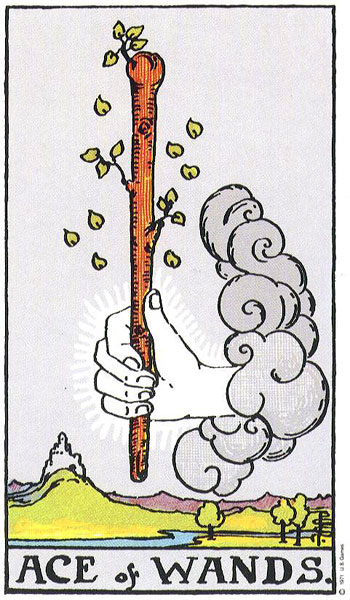
Begin with a process, not a verdict
Tarot is not a prediction. In this practice, the cards are reflective prompts, not evidence about your worth, talent, or future. A creative block tarot spread can organize attention around what happened in the work: where energy went, what repeated, what communication occurred, and which conditions shaped access to making. The aim is to test a process description, not to diagnose the artist or a mental health condition.
Begin with a short, factual baseline. Record the task you hoped to complete, what you actually did, when you stopped, what feedback you had received, and what limited the session. Separate observations from explanations. Revising an introduction four times is an observation; deciding that you are too self-critical is an interpretation. Not receiving a response to a question is observable; assuming that another person did not care assigns a thought you cannot know.
One lens can ask about beginnings, creative energy, purposeful action, and stable direction. The other can ask about repetition, communication, clear distinctions, and the relationship between patterns and results. These are possibilities to compare with your baseline, not conclusions to announce.
Give each interpretation one of three labels: supported, uncertain, or not supported. A supported reading has specific evidence from your notes. An uncertain reading has a plausible clue but competing explanations. A not-supported reading is left in view instead of being bent to fit. This makes disagreement useful. If a card does not fit, it does not need rescuing.
Use the Ace of Wands for direction and energy
In its upright position, the Ace of Wands describes a concentrated beginning or opening expressed through initiative, creative energy, and purposeful action. Its constructive direction is to direct energy toward work that matters. When this description matches your notes, the card can help you identify a focused next action rather than asking why the entire project feels difficult.
When reversed, the same pattern may be blocked or internalized, or may show its shadow through burnout, impatience, or effort without a stable direction. These are interpretation choices, not a required sequence and not a diagnosis. Use your baseline to choose among them:
- For direction, check whether your notes show repeated effort without a clearly defined purpose or next visible result. - For energy, check for observable signs associated with the card’s word of burnout. Low output alone does not establish burnout. - For impatience, look for recorded instances of rushing, switching, or acting before the purpose became clear. - For beginning, identify whether initiative exists but has not been given a limited, practical form.
The reflection question is especially useful: *What small beginning would let you learn quickly?* A small beginning could be one bounded piece of work whose result helps you decide what to do next. Its value comes from the information it produces, not from an assurance that creativity will suddenly appear.
Disconfirming evidence matters. If your purpose, audience, and next output are already stable and your energy is consistently available, unstable direction and burnout would be weak explanations. Record that mismatch rather than treating the reversal as universally meaningful. The card remains useful only if its language helps you notice something your notes can test.
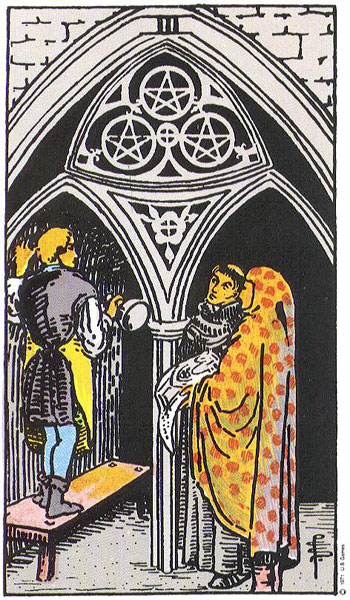
Use the Eight of Swords for repetition and feedback
In its upright position, the Eight of Swords describes repetition, movement, skill, or a pattern becoming harder to ignore. These processes are expressed through thought, language, decisions, and conflict. Its constructive direction is clear distinctions and honest communication. This makes it a lens for recurring actions and feedback loops, but it does not automatically show that conflict is present.
When reversed, the same pattern may be blocked or internalized, or show its shadow through overthinking, rigid conclusions, or words used as weapons. Again, the choice must come from evidence. Overthinking is a possible explanation if your notes show repeated reconsideration without a recorded decision. A rigid conclusion is a possibility if you repeatedly treat one assumption as settled. Words used as weapons should be considered only when your own records show harsh, dismissive, or attacking language in what you actually wrote or said.
For missing feedback, this card offers a communication prompt rather than proof that feedback is absent. The upright constructive direction mentions honest communication and clear distinctions. Ask whether you have received specific responses, whether those responses distinguish unclear parts of the work, and whether you have had an opportunity to ask a direct question. You cannot know another person’s thoughts from silence; record the observable exchange and any actual reply.
Perfectionism is not named directly by either card, so it should remain a hypothesis rather than a reading conclusion. Repetition and rigid conclusions may justify checking whether repeated revision is keeping the work fixed. They do not justify labeling yourself. A bounded rough version can test whether a fear of finishing is organizing the block, especially when the purpose is otherwise clear.
Disconfirming evidence also belongs here. If several sessions show different actions, usable feedback, and changing results, a rigid repeated pattern may not fit. If work is progressing through practice, the upright meanings of movement and skill may fit better than a block narrative. Choose the description closest to the record, even when it is less dramatic.
Test five explanations without diagnosing
Use the cards to compare explanations, not to rank them as causes. For each hypothesis, write what supports it, what weakens it, and what small action could test it.
1. **Unclear goals.** Effort without a stable direction is a direct possibility in the reversed Ace. Supporting evidence might include changing definitions of the task, repeated starts, or difficulty naming what completion would look like. Test clarity by writing one purpose and one next visible output. Disconfirming evidence is a stable brief, a clear result, and a known next step despite temporary difficulty beginning.
2. **Depleted energy.** The reversed Ace explicitly names burnout, but the card cannot measure your health. Look for patterns across more than one session: available energy before work, interruptions, recovery time, and whether the task becomes possible after conditions change. Low motivation by itself is not enough. If fatigue, sleep changes, or loss of functioning is persistent or concerning, use real health information and seek qualified medical help rather than relying on a card.
3. **Perfectionism.** Neither card names perfectionism as a fact. Treat it as a behavioral hypothesis when your notes connect repetition with a rigid conclusion about what finished work must satisfy. A useful test is to define the rough version in advance and limit revision to a chosen stopping point. Evidence against the hypothesis would be a clear rough draft followed by no meaningful difficulty. Evidence for it would be repeated revision that prevents even a bounded test.
4. **Missing feedback.** The upright Eight of Swords highlights clear distinctions and honest communication, but it does not establish that feedback is missing. Check whether you have access to an appropriate source, whether your question is specific, and whether any response has actually arrived. Ask for one observable distinction, such as which part of the intended result remains unclear. A reply can support or disconfirm the interpretation; silence should not be filled with assumptions.
5. **Environmental constraints.** Neither card directly identifies material conditions. Time, space, access to materials, interruptions, obligations, or an unsafe setting may still be decisive. Write the constraint as a measurable fact: when work can occur, how long access lasts, what must be present, and what repeatedly prevents the next action. If changing one condition makes the work possible, that is useful evidence. If conditions change and the block remains unchanged, look for another explanation rather than claiming the card identified the cause.
These categories can overlap. An unclear goal may consume energy, missing feedback may produce repeated revision, and an environmental constraint may make all of them harder to test. The purpose is not to force one root cause. It is to find the next observation that can separate competing descriptions.
Apply the cards in a low-stakes practice
Suppose you have agreed to draft a one-paragraph description for a small workshop. During three work sessions, you open the draft, change the opening, and stop. Your notes show two unresolved choices: the intended audience and the action readers should take next. You have not asked for clarification, and interruptions shortened each session. This is a process example, not a diagnosis.
Suppose the first card is reversed and the second is upright. For the first card, both effort without stable direction and burnout are plausible. The unresolved audience and desired action support the direction explanation. Interrupted sessions and low available energy may also support the energy explanation. The evidence does not require choosing one as the hidden cause; both can be tested. If your energy was steady across comparable sessions, however, the burnout branch would be less supported.
For the second card, repeated opening revisions and the unanswered question make repetition and communication useful themes. Its constructive direction suggests making a clear distinction and asking for an honest response. The next step could be one short drafting session in which uncertain points are marked, followed by one precise question to the workshop coordinator. Record the actual reply rather than predicting it.
After the next session, ask what changed. Did the unresolved choice become clearer? Did the rough paragraph become easier to assess? Did interruptions still prevent sustained work? If clarity improved while interruptions remained, both descriptions need revision. Do not claim that the cards caused the change; the experiment only shows what happened under the new conditions.
If the second card were reversed instead, a rigid conclusion might be tested by making one bounded draft before deciding that the wording is unusable. Words used as weapons would remain an unsupported branch unless your own notes showed that language. Interpretation should follow evidence, not a preference for a more intense reading.
Use journal questions to test the reading
A journal makes the reading accountable. For each session, answer these journal questions:
- What did I actually do, and under what conditions? - What stopped, paused, or changed the work? - Which card description matches an observable part of that record? - Which part remains uncertain? - What evidence would count against my interpretation? - What other explanation could produce the same result? - What is the smallest reversible test for today? - What happened after I acted?
Keep facts and interpretations in separate columns. A fact records the action, timing, feedback, or constraint. An interpretation names the proposed pattern. Then add a third column for disconfirming evidence. This prevents a promising match from erasing inconvenient details.
Compare entries across several ordinary work sessions rather than relying on the most memorable one. A reading becomes less convincing when it needs a new explanation every time. Confidence should fall when the match depends on broad phrases such as effort or repetition but not on a specific action. It becomes more useful when the reading predicts what you can observe and helps you notice a condition worth changing.
The outcome of a test is not automatically proof that the reading was correct. A small action may help for several reasons. Still, the record can show whether the proposed explanation was more useful than its alternatives. If the result is mixed, record it as mixed. Ambiguity and partial evidence are part of responsible reflection, not failures to overcome.
Close with a reversible next step
End the spread by choosing one modest change: clarify the next visible output, define a rough stopping point, ask one specific question, alter one practical condition, or pause work that is not safe or sustainable. The cards can organize that choice, but they do not establish motive, diagnosis, or future outcome.
Use real evidence and qualified help for medical, legal, financial, safety, or crisis decisions. If a creative block is accompanied by substantial distress or changes in daily functioning, a qualified health professional can offer support that a reflection exercise cannot. Otherwise, keep the next step small enough to test today and honest enough to revise tomorrow. Ask: Which description of the process am I willing to test, question, or reject?
Share this article