Why Named Positions Matter in Three Card Tarot Spreads
Three card tarot spreads work because the positions carry meaning before any card is drawn. A position tells you what kind of question that slot answers. Without that scaffolding, even an interesting card becomes an isolated image floating beside other isolated images. With it, the same three cards can describe a timeline, a tension, or a relationship, depending only on which roles you assigned them.
This matters because most readers are not seeking a prophecy. They are looking for a structure that helps them notice what is already in front of them. A position names the lens: past, present, future; situation, obstacle, advice; self, other, relationship; mind, body, action; option A, option B, and a tie-breaker. The cards then serve as prompts, not verdicts.
It is also worth saying plainly at the outset: tarot is not a prediction. A position can highlight a pattern, a feeling, or a question, but it cannot tell you what will happen tomorrow, who is thinking about you, or whether a decision is safe. For decisions about health, law, money, safety, or emotional crisis, use qualified professionals and direct evidence. Treat the cards as reflective tools, the way you might treat a thoughtful question from a friend.
A short note on how to read what follows. The card meanings offered here are short, balanced, and tied to the supplied card data. Tarot imagery is described in general terms because most decks share a long visual tradition. Where a card could be read several ways, the article records that ambiguity rather than collapsing it into a single confident line.
The Three Positions That Anchor Most Readings
Although the names vary by tradition, three position roles cover most practical reading needs.
The first is the anchor: a card that names the current situation or the question itself. The second is the tension or movement: a card that points to what is pressing, what is hidden, or what is changing. The third is the response or next step: a card that suggests a posture, a question, or an action the reader can verify in real life.
Every structure below is a specific way of filling those three slots. The difference between a Past-Present-Next Step spread and a Situation-Obstacle-Advice spread is not which cards appear. It is which question each slot is being asked to answer.
When you name the positions aloud or write them at the top of your page, you remove a great deal of vagueness. A vague feeling that the middle card feels hard becomes the more useful observation that the obstacle card is asking what is in the way. The card has not changed. The lens has, and that is most of the work.
Spread Structure One: Past, Present, and Next Step
The Past, Present, and Next Step layout is the most familiar of the three card tarot spreads because it maps onto the way people already think about time. The first position names what brought you here: a habit, an earlier choice, or a feeling that is still relevant. The second position names what is actually true right now, including what you may be minimizing. The third position names a small, verifiable step you can take this week.
This layout is especially useful when someone feels stuck between two stories about themselves. The first card offers one story, the second card offers another, and the third card asks which one you would like to act on. It is gentle in tone and rarely confronts the reader with a single dramatic verdict.
Sample questions for each position: - Past: What pattern or earlier decision is still shaping this? - Present: What is honestly true about this moment? - Next Step: What is one small action I could take this week and then note in a journal entry?
Because this structure focuses on time, it works well for low-stakes planning. Choosing what to cook, deciding when to schedule a difficult conversation, or reviewing how a project unfolded are appropriate uses. It is less useful for binary predictions, such as whether a job offer will arrive. The layout is descriptive, not adjudicative.
Spread Structure Two: Situation, Obstacle, and Advice
The Situation, Obstacle, and Advice layout shifts the focus from time to problem-solving. The first position names the situation as precisely as you can. The second position names the obstacle, which may be internal, external, or a mixture of both. The third position offers a posture rather than a command.
This layout asks you to look at something you have been avoiding. The obstacle card often reveals what you already suspected but had not written down. Naming it is not the same as solving it, but it does change what you are working with. Problems described on paper are usually easier to handle than problems described only in the back of the mind.
Sample questions for each position: - Situation: What is the actual shape of what I am dealing with? - Obstacle: What is making this harder than it needs to be? - Advice: What posture or small practice would help me meet this well?
This structure is helpful when the reader is ruminating rather than acting. Because the obstacle card is named explicitly, it discourages the common habit of treating every reading as confirmation of what you already hoped. If the obstacle card seems to flatter you rather than challenge you, that is worth recording in your notes rather than dismissing. A flattering obstacle is usually a clue that the reading has slipped into agreement, not insight.
Spread Structure Three: Self, Other, and Relationship
The Self, Other, and Relationship layout is designed for interpersonal questions of moderate stakes, such as how a friendship is changing or how a working partnership is shifting. The first position names you in this dynamic. The second position names the other person or group. The third position names the relationship itself, treated as its own thing rather than as the sum of two individuals.
This is a useful layout because it gently counters the tendency to flatten other people into projections. The third card resists that by asking you to describe the dynamic on its own terms. You may find that the third card describes something neither party would choose to say aloud, which is often the most honest part of the reading.
Sample questions for each position: - Self: What am I bringing to this, that I can see clearly? - Other: What is true about the other person or group that I may not be noticing? - Relationship: What is the dynamic itself asking of both of us?
This layout is not a way to read another person's mind, which is neither possible nor ethical. It is a way to notice your own posture inside a relationship and to consider what the relationship, as a separate entity, seems to want. Treat any insight as a hypothesis to test by direct conversation rather than a hidden truth.
Working With Imagery Without Overreaching
Tarot imagery is rich, and that richness can be a gift or a trap. The gift is that a well-described image can put a reader in touch with a feeling they had not yet named. The trap is the temptation to read each visual element as a coded fact about the world.
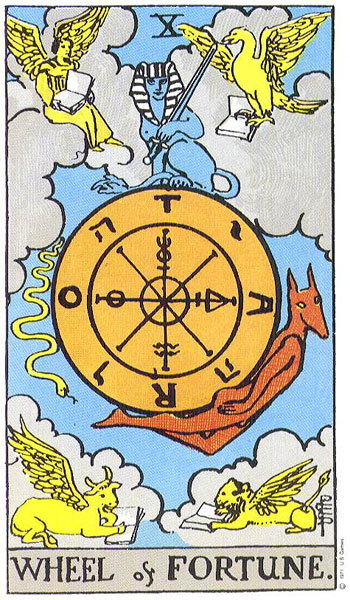
A calm practice is to begin with one or two obvious elements and stop there. The Wheel of Fortune, for example, often shows a turning wheel, sometimes with figures rising and falling on its rim. Justice is frequently depicted with a sword and scales. Strength often appears as a figure calmly holding open the jaws of a lion. These images are symbolic and traditional, not literal evidence about your life.
When you describe what you see, do so in plain language. A turning wheel suggests change, cycles, or something outside your direct control. A sword and scales suggest weighing, evidence, or proportion. A figure beside a lion suggests patience, self-regulation, and courage that does not need force. If your interpretation leans on details the card does not actually show, set that detail aside and return to what is clearly present.
This restraint is part of why positions matter. The image gives you a tone, and the position tells you what question the tone is answering. The two together are more useful than either alone, and both become more useful when you refuse to make claims that the card and the layout cannot actually support.
A Worked Example Using Three Supplied Cards
Suppose a reader has been struggling with a recurring pattern at work, where every few months a small crisis occurs and they end up over-functioning for the team. They sit down with three cards and choose the Situation, Obstacle, and Advice structure.
The first card is Strength, upright. In the Situation position, Strength suggests that the reader's steadiness is already part of what holds the team together. The patience and self-regulation keywords are not flattery. They are a description of a posture the reader has been using, possibly for years, often without acknowledgment from anyone else.
The second card is the Wheel of Fortune, upright. In the Obstacle position, the Wheel points to something outside the reader's direct control. Cycles at the workplace are turning on their own schedule. Whatever the reader does inside those cycles, the cycles themselves will continue. This is a useful observation precisely because it is humbling. The obstacle is not that the reader is failing. The obstacle is that they are trying to fix a turning wheel by holding it still.
The third card is Justice, upright. In the Advice position, Justice suggests evidence, accountability, and proportion. A reasonable next step might be to write down the actual hours contributed during the last two cycles, to ask which tasks are genuinely theirs, and to bring that written account to a calm conversation. The card does not say the conversation will go well. It says the posture worth trying is one of proportion and clear evidence, and that posture is something the reader can verify in their own behavior regardless of the outcome.
Now the careful part. A reader who already felt overburdened might welcome this reading as confirmation that the workplace is unfair. That is an apparent match, but it is only one possible match. An equally plausible reading is that the reader, like many generous people, has been quietly taking on work that did not require them, and that Justice is asking them to look at their own role in the cycle rather than only at the wheel. Both readings are consistent with the cards. Both should be recorded.
This is where ambiguity and disconfirming evidence deserve the same care as an apparent match. Before treating the reading as final, the reader could ask: when in the last two cycles did I volunteer for work no one asked me to do? Did I say yes when no would have been reasonable? Is there a pattern that is mine to change, separate from the wheel? If the answer to those questions is yes, then the reading is not about external unfairness at all. If the answer is no, then the obstacle is genuinely external and the posture of proportion still helps.
A short journal entry after the reading could include: - What I saw on each card, in plain words. - What I expected the reading to say, before I drew. - What the reading actually said, including parts that surprised me. - One small, verifiable action for the coming week. - What would change my mind about this reading if it happened.
That last question is the most important one. It turns the spread from a verdict into a hypothesis, which is what reflective tarot is for. It also gives the reader a built-in safeguard against the most common failure mode of any reflective practice, which is the gentle slide from noticing into believing. Positions, cards, and questions are best treated as tools for clearer observation, not as authorities on what is true. That humility is what keeps three card tarot spreads useful over time, rather than turning them into a habit of asking cards to do the thinking a careful journal entry was already doing.
Share this article